There is a distinct, almost metallic tang that rises when you pry open a tin of cheap tomato paste under the humming fluorescent lights of a Tuesday night kitchen. It smells sharp, overly bright, and entirely incomplete, lacking the warmth of a finished dish.
You usually scoop it straight into a pot of pale onions, hoping the raw edge mellows over an hour of gentle simmering. The standard routine relies heavily on time, letting the aggressive acidity slowly exhaust itself into something palatable.
But professional kitchens rarely rely on passive waiting when they need depth in a hurry. They force the issue, looking at that dense, crimson paste not as a finished ingredient, but as raw, volatile fuel waiting for a spark.
By introducing a seemingly hostile element—bitter instant espresso—you force a violent flavour collision that bypasses hours of coaxing. This simple two-ingredient modification mimics the dark, jammy profile of an expensive aged marinara in mere minutes.
The Alchemy of Bitter and Bright
For decades, home cooks have been taught to fight tomato acidity with handfuls of white sugar. It is a blunt instrument that flattens the sauce, turning a vibrant fruit into a dull, cloying syrup that coats the tongue heavily.
Think of tomato paste as a tightly coiled acidic spring. When you drop it into hot olive oil and introduce the dark, roasted notes of instant espresso, you aren’t masking the acid; you are giving it something heavy and resonant to push against.
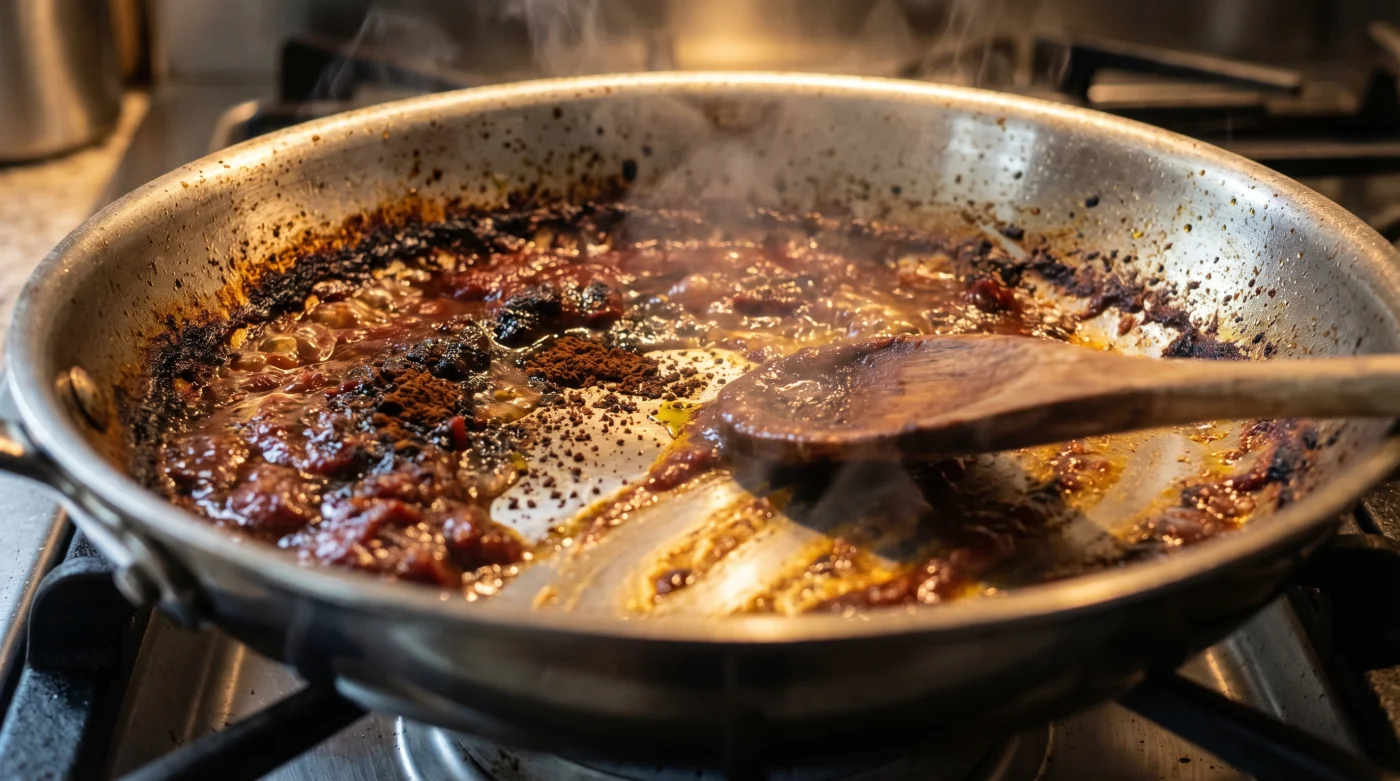
The coffee crystals act as an anchor. As the paste roasts and begins to shift to a brick-red hue, the espresso deepens the Maillard reaction, accelerating the browning of natural fruit sugars. What was once sharp and metallic becomes remarkably earthy.
Elias Thorne, a fifty-eight-year-old prep cook working the back alley doors of a high-volume Toronto trattoria, built his reputation on this exact pivot. When December snowstorms delayed their import of San Marzano tomatoes, he didn’t panic. He took the cheapest local paste he could find, tossed in a spoonful of instant diner coffee, and blistered it in a cast-iron pan until it smelled like burnt sugar and damp earth. “You don’t hide the tin,” he would say, scraping the pan. “You burn the tin out of it.”
Adjustment Layers for Your Evening Routine
This technique adapts beautifully depending on what you are trying to rescue from the pantry, allowing you to scale the intensity to fit your schedule.
For the Weeknight Purist, you want a sauce that finishes before pasta water even comes to a rolling boil. Keep the heat medium-high. Two tablespoons of paste, a half-teaspoon of espresso powder, and a heavy pour of olive oil. Let it fry until it rusts in colour, then deglaze immediately.
For the Slow-Cooker Strategist, building a braise for tough cuts of winter beef requires a foundation that will not get lost over six hours of gentle heat.
Double the espresso ratio for a foundation that will not fade, and let the paste stick to the bottom of your Dutch oven just a fraction longer than feels comfortable. The resulting fond becomes an umami bedrock.
For the Batch-Cooking Planner, you can roast an entire tin of paste on a Sunday afternoon. Multiply the ratio, fry it down until deeply caramelized, and portion it into an ice cube tray.
These frozen flavour bombs will build a robust flavour memory in whatever you cook later in the week, from weekday chilies to quick pan sauces for chicken.
Executing the Pivot
This process requires your undivided attention for exactly three minutes. Do not walk away to chop garlic or check your phone. The line between roasted and ruined is remarkably thin.
Start with a cold pan. Pour the oil, then drop in your paste and espresso before applying heat. As the pan warms, the ingredients will bloom together, which helps prevent the bitter coffee scorching in dry heat.
Watch the texture closely. The paste will transition from a thick smear to a granular, separated gravel as the water evaporates and the natural oils begin to fry the sugars.
The air will momentarily smell like damp forest floor before the heavy, rounded sweetness rushes forward to fill the kitchen.
- Heat two tablespoons of olive oil over medium heat.
- Add three tablespoons of canned tomato paste and one level teaspoon of instant espresso powder.
- Press the mixture flat against the pan with a wooden spoon, maximizing surface area.
- Wait for the colour to shift from bright cherry to a dark, rusted terracotta (roughly ninety seconds).
- Deglaze immediately with a splash of water, broth, or wine to halt the roasting.
Tactical Toolkit: Keep your temperature locked at medium heat. Aim for ninety to one hundred and twenty seconds of direct roasting. Watch for the visual cue of the oil separating from the paste and turning a distinct orange hue.
Reclaiming the Pantry
Relying on premium, imported ingredients is a luxury of circumstance. But bending a cheap, unyielding staple to your will is a matter of pure skill and culinary resourcefulness.
Mastering this quick friction of heat and bitterness frees you from the tyranny of long-simmering weekend sauces. It gives you the power to pull complexity out of thin air on a dark Thursday evening.
You stop looking at the cans in your cupboard as compromises. They become concentrated potential, waiting for the right catalyst to shift their entire profile.
The kitchen becomes a place where the rules of raw simmering fade, replaced by an understanding of how contrasting forces—the bright and the dark—balance the scales of a truly memorable meal.
“You don’t hide the metallic bite of a cheap tomato; you exhaust it with heat and anchor it with earth.” — Elias Thorne
| Key Point | Detail | Added Value for the Reader |
|---|---|---|
| Raw Simmering | Relies on hours of low heat to reduce acidity. | Wastes time; often requires added white sugar to mask flaws. |
| Espresso Roasting | Uses high heat and bitter coffee to force a fast Maillard reaction. | Creates intense umami depth in under three minutes of active cooking. |
| Immediate Deglazing | Halts the cooking process instantly with a splash of cold liquid. | Captures the complex caramelized sugars safely before they burn. |
Frequently Asked Questions
Does this make the sauce taste like coffee? No. The coffee acts entirely as a bittering agent, disappearing into the background to highlight the natural sugars of the tomato.
Can I use brewed espresso instead of instant powder? Brewed coffee introduces too much water too early, preventing the paste from frying in the oil. Stick to the dry crystals.
What kind of pan works best for this technique? A stainless steel or cast iron skillet is ideal. Non-stick pans will not develop the sticky fond necessary for the flavour transfer.
Will this trick work with fresh tomatoes? Fresh tomatoes hold too much moisture. This specific friction requires the dense, dehydrated nature of canned paste.
How do I store the leftover paste? Scrape the remaining paste onto a piece of parchment paper, roll it into a tight log, and freeze it. Slice off coins as needed.