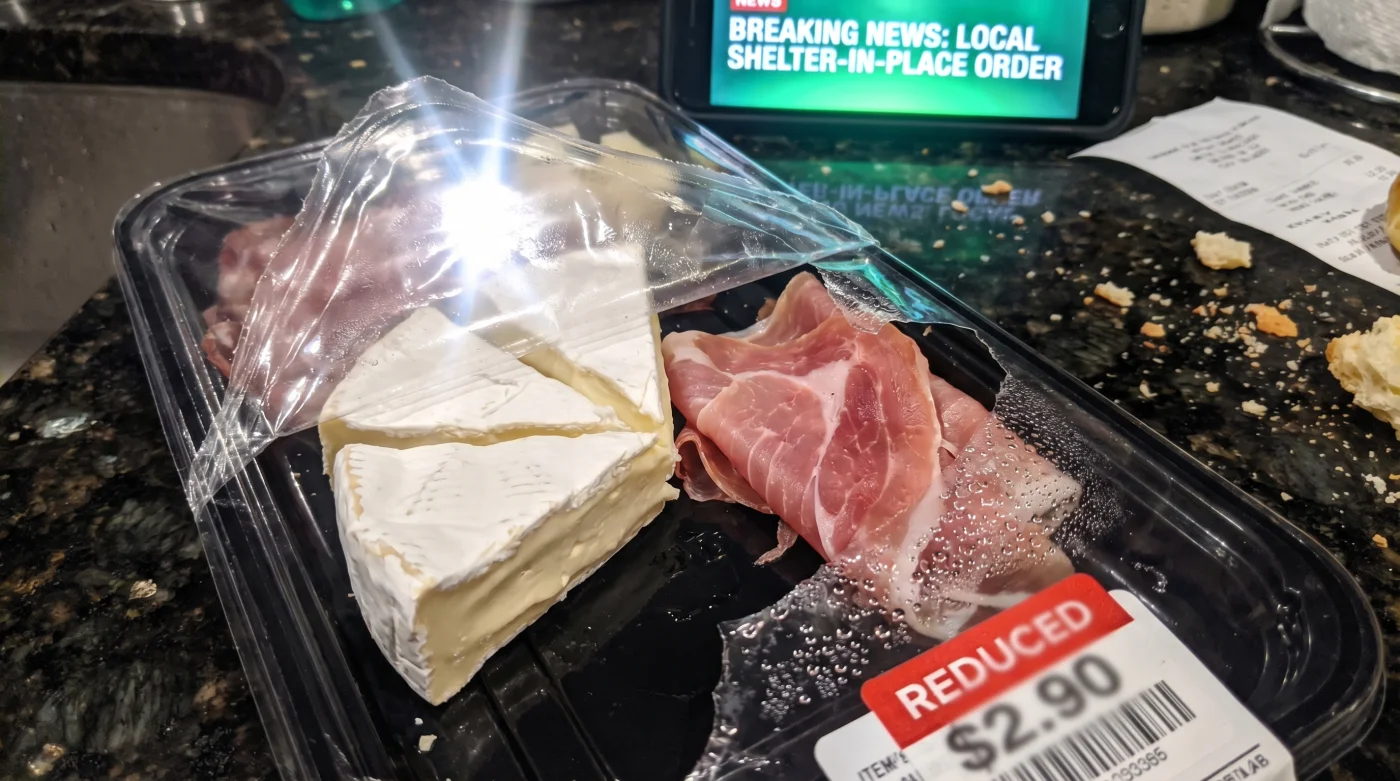
The Friday evening ritual feels entirely predictable. You pull the sealed plastic tray from the fridge, the familiar Sobeys label promising an effortless transition from a long work week to a relaxed evening. The sharp cheddar and cured salami sit in neat, uniform rows, waiting to be fanned across a wooden board. It is the modern convenience of the pre-packaged charcuterie duo, a quiet staple of modern hosting that demands nothing but an open package.
But the sudden buzz of a news alert against your countertop shatters that quiet anticipation. A province-wide recall cascades across your screen, targeting the exact lot number resting in your hands. Trust in pre-packaged convenience evaporates in an instant. What felt like an impenetrable seal of food safety is suddenly revealed as a highly fragile, invisible vulnerability stretching across the country.
We tend to view cold, tight plastic wrapping as a guarantee against the outside world. The expectation is that an industrial facility operates with sterile, surgical precision, protecting our homes from microscopic threats. The reality, however, is that these massive, interconnected supply lines act more like a sprawling, nervous system, where a single, unexpected pathogen in one corner can trigger a massive sweep across entire provinces in a matter of hours.
The Illusion of the Plastic Shield
Think of your grocery supply chain like a shared municipal water pipe. If a contaminant enters at the source, turning off your tap won’t solve the underlying issue. The current Sobeys cheese recalls aren’t just an isolated hiccup; they represent a fundamental crack in handling high-volume, ready-to-eat foods across long distances.
We have been conditioned to see a plastic tray as a finished, static object. The truth is far messier. That sealed package is a living, breathing ecosystem temporarily paused by a 4-degree Celsius refrigerator. When a rogue pathogen slips past the initial screening, the heavily engineered packaging acts as a perfect incubator, protecting the bacteria from outside interference while it multiplies silently in the dark.
Consider the perspective of Marc Lavoie, a 52-year-old food safety auditor based in Montreal. Last Thursday, Marc stood in a sprawling distribution centre, tracing the invisible footprint of this exact contamination. He noticed a microscopic scoring mark on a high-speed slicing blade—a scratch invisible to the naked eye, but wide enough to harbour bacteria through three standard sanitation cycles. Marc realized instantly that the flaw wasn’t in the cheese itself, but in the friction of the mechanical pivot. That single blade linked a basic supermarket staple to a massive sweep of provincial bans, turning a mundane mechanical detail into a critical public health failure.
Navigating the Fallout by Household
The impact of these sweeping bans ripples differently depending on how your kitchen operates. The sudden absence of staples forces an immediate shift in routine, and recognizing where you fit in the recall radius is the first step toward reclaiming control over your grocery budget.
For the Weekend Host
If you rely on grab-and-go boards for sudden gatherings, the panic sets in quickly when half your fridge is suddenly off-limits. The instinct is to throw everything away. Instead, shift focus to uncut blocks of hard cheeses. Pathogens typically require surface moisture to multiply aggressively. An uncut block of aged Cheddar or Parmesan is significantly less vulnerable than an industrially pre-sliced, moisture-rich havarti that has been exposed to factory machinery.
For the Lunchbox Packer
Morning routines are fragile, and finding out your child’s favourite cured meat is subject to a provincial ban is entirely disruptive. Parents must become instant detectives. The recall codes aren’t always glaring; they hide in faint, dot-matrix ink along the bottom lip of the plastic seal. Transitioning to small-batch, locally roasted meats sliced directly at a trusted deli counter removes you from the industrial slicing risk pool entirely.
For the Budget Shopper
Food waste is expensive, and tossing out thirty dollars of groceries hurts. The recall mandates mean you do not need a receipt to return the affected Sobeys brands to the store. You simply need the physical packaging with the matching UPC and lot code. Do not open the packages to inspect them; bag them tightly in a secondary plastic bag to prevent cross-contamination in your vehicle or reusable grocery tote.
The Kitchen Reset Protocol
Discovering a recalled item in your crisper drawer requires a methodical, quiet response rather than a frantic scrubbing session. Breathe deeply and move carefully. Your goal is to neutralize without spreading invisible spores to your fresh produce or touching other surfaces.
- Isolate and Bag: Carefully lift the affected Sobeys cheese or charcuterie package without pressing the air out of the plastic. Place it immediately into a sealable bag.
- The 70-Degree Rule: Common pathogens cannot survive high heat. If you used a cutting board alongside the recalled product, run it through a dishwasher cycle that reaches at least 70 degrees Celsius.
- The Diluted Wipe: Empty the shelf where the product sat. Mix one tablespoon of bleach into a litre of warm water. Wipe the glass and plastic shelving down, letting the surface air-dry completely. The drying process is what breaks the bacterial walls.
- Monitor the Margins: Check adjacent foods. Any unsealed produce that shared the same drawer as the recalled meat or cheese should unfortunately be discarded due to high humidity transfer.
A Quieter, Slower Pantry
This widespread disruption is deeply unsettling, but it serves as a stark reminder of our relationship with the food we eat. We traded visibility for speed, accepting the quiet hum of the factory over the tangible reality of the farm and the local butcher.
When an unexpected recall shatters that illusion, it forces a beautiful, albeit forced, return to basics. Buying a whole block of cheese and taking the two minutes to slice it yourself isn’t just a nostalgic chore; it is an act of reclaiming your quiet kitchen boundary. It connects you back to the texture of the rind, the resistance of the knife, and the quiet satisfaction of knowing exactly where your food has been.
“Food safety isn’t found in tighter plastic wrap; it is found in shorter distances between the blade and the plate.” — Marc Lavoie, Food Safety Auditor
| Key Point | Detail | Added Value for the Reader |
|---|---|---|
| Code Identification | Locate the dot-matrix ink on the bottom seam of Sobeys packaging. | Saves you from throwing away safe, unaffected batches of groceries. |
| Surface Moisture Risk | Pre-sliced meats and cheeses hold more moisture, acting as incubators. | Guides you toward buying safer, whole-block hard cheeses during outbreaks. |
| Sanitation Threshold | Wiping isn’t enough; water must reach 70 degrees Celsius to neutralize. | Provides a definitive, measurable target for restoring peace of mind. |
Frequently Asked Questions
Can I just cook the recalled charcuterie to make it safe?
While heat kills most bacteria, toxins left behind by multiplying pathogens can survive cooking. It is never worth the risk; bag and return the item.Do I need my original Sobeys receipt for a recall refund?
No. Provincial mandates dictate that the physical package with the matching lot code is sufficient for a full refund at the customer service desk.How long does the bacteria live on my fridge shelf?
Without proper sanitation, microscopic pathogens can survive for weeks in a cold, dark 4-degree Celsius environment. A diluted bleach wipe is mandatory.Why are only specific brands banned if they use the same factory?
Cross-contamination often occurs on specific processing lines or during a specific shift. Recalls trace the exact mechanical pathway of the failure.Are local deli meats safer than pre-packaged ones?
Generally, yes. Slicing meat to order reduces the time the product sits in a moisture-rich environment, drastically lowering the window for bacterial growth.