You slide into the vinyl booth, the winter condensation weeping down the windowpanes as the early morning dark presses against the glass. The heavy ceramic mug arrives before you even open the laminated menu, smelling of roasted robusta, lingering flat-top grease, and the reassuring promise of diner routine. You can hear the rhythmic clatter of cutlery in the back, the low murmur of shift workers trading stories, and the scrape of a steel spatula against a hot grill. This is the sacred morning rhythm, a quiet Canadian sanctuary built on the assumption that certain culinary comforts are permanent, unyielding fixtures of the dawn.
For decades, the crispy golden potato hash was the silent, steadfast anchor of that porcelain plate. It was the crucial sponge for the over-easy yolks, the textural foil to the soft diner eggs, and the salty bridge between the bacon and the toast. You never questioned its presence, trusting the diner kitchen to operate like an infinite, subterranean larder that simply manifested starch and salt on demand, day after day, regardless of the weather screaming outside the doors.
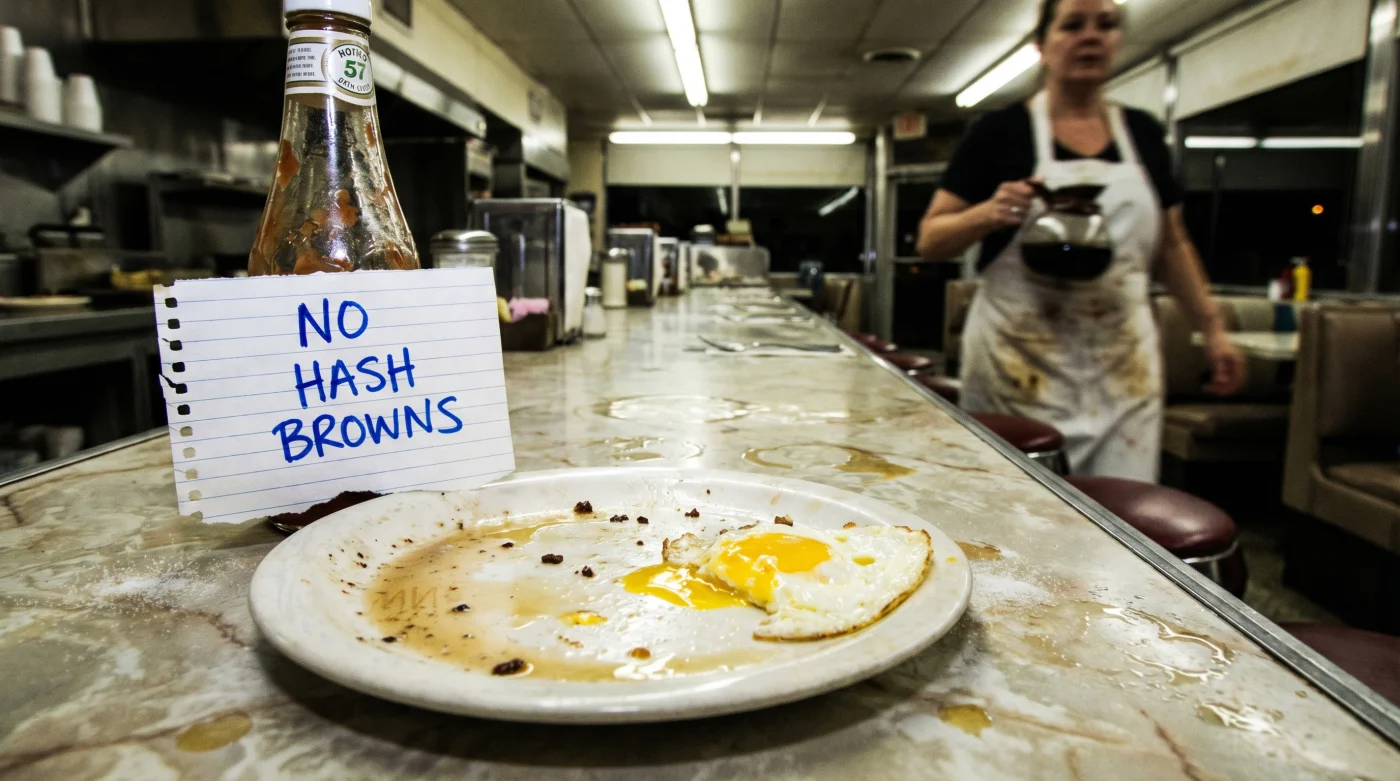
But the agricultural reality has forcefully cracked the laminate of that familiar menu. Across the country, Denny’s breakfast platters are suddenly arriving with a glaring, unexpected omission that disrupts the entire geometry of the meal. The legendary hash browns are quietly being swapped out, replaced by alternative sides as regional supply lines fracture under the immense, invisible weight of a sudden potato shortage.
We have grown far too accustomed to the illusion of endless supply, treating menus as static corporate promises rather than what they truly are: fragile, seasonal reflections of the earth. When a major brand suddenly pivots on its core standards, it forces you to look at your morning meal not as a guaranteed consumer right, but as a precarious assembly of vulnerable crops, erratic weather patterns, and desperate logistics.
The Fragile Architecture of Diner Defaults
When you order a classic breakfast platter, you expect a very specific choreography of ingredients to arrive at your table. The plate is constructed like a familiar, well-zoned neighbourhood. The eggs serve as the foundational bedrock, the meats provide the structural framing, and the shredded potatoes are the vital mortar holding the disparate bites together. Taking away the potato is like breathing through a pillow; everything suddenly feels slightly off-balance, muffled, and frustratingly incomplete.
The problem, entirely hidden from the dining room, lies deep within the freezing Canadian soil. A harsh, unpredictable blend of unseasonal frost in the Maritimes and prolonged, arid spells across the western prairie provinces aggressively stunted the tuber yields this year. Supply chains snapped almost silently, leaving massive hospitality networks and regional managers scrambling in the dark to secure the millions of tonnes required to feed the relentless morning rush. This menu pivot isn’t a playful culinary experiment or a corporate rebrand; it is a rapid, desperate triage response to a failing crop.
Instead of viewing this absence as a personal slight from the kitchen or a decline in restaurant standards, see it as a sudden, stark thinning of the veil between the rural farm and your suburban booth. The restaurant is merely reacting to the earth’s refusal to cooperate. The potatoes simply do not exist in the required volume, forcing a massive-scale substitution protocol that fundamentally alters the texture, weight, and rhythm of the classic breakfast platter you have known for years.
Consider the daily reality of Marcus Lavoie, a 48-year-old agricultural logistics director based in rural Quebec. For the last twenty years, Marcus has coordinated the complex, time-sensitive movement of root vegetables from provincial fields to corporate freezers across the continent. Last month, he stared at a glowing spreadsheet showing a catastrophic fifty percent deficit in russets, the exact starchy potatoes required for that specific diner crispness. ‘You cannot negotiate with a frozen, unyielding field,’ he noted over a black coffee, his hands worn from decades in the industry. ‘When the yield is gone, you do not just switch to another supplier down the road. You have to change the menu entirely. You are forced to change the morning habits of two million people before the sun even comes up, and you hope they understand.’
Decoding the Platter Replacements
With the hash brown indefinitely sidelined, your Denny’s breakfast platters require an entirely new carbohydrate strategy. You will need to navigate the familiar menu with a slightly different palate, deliberately selecting replacements that serve the exact same mechanical and emotional purpose on the plate.
If you historically relied on the potatoes purely for their shattered, fried crunch, the sudden, overwhelming softness of the plate will be incredibly jarring to your senses. Your best, most immediate maneuver is to request extra-crispy bacon or heavily toasted, dark rye bread to reclaim that lost friction. It will not carry the residual grease in exactly the same luxurious way, but it successfully prevents the entire meal from devolving into a monotonous, unappealing soft bite that leaves you thoroughly unsatisfied.
When the primary goal is sheer, unapologetic sustenance before facing a long, brutally cold day in the elements, the potato was always the heavy lifter. Swapping in a short stack of thick buttermilk pancakes or a steaming side of baked beans will successfully anchor your stomach against the chill. Beans offer a robust, deeply savoury weight that closely mimics the heavy satiety of the potato, while soaking up the residual egg yolk with a surprising, delightful efficiency.
Perhaps this forced culinary pivot is actually a subtle, hidden advantage for your daily routine. Replacing the deep-fried, oil-heavy starch with sliced seasonal fruit or freshly grilled tomatoes drastically changes the entire metabolism of your morning. You leave the vinyl booth feeling bright and energized rather than weighed down and sluggish, finding an unexpected lightness in heavy routine that completely reframes how you approach diner eating.
Calibrating Your Morning Order
Adapting to this significant menu shift requires only a few deliberate, mindful choices before the server approaches. Do not let the server’s sudden, unexpected question about side substitutions throw off your morning ritual or cause a moment of table panic.
Approach the new era of Denny’s breakfast platters with a clear, pre-planned alternative that protects your peace of mind. Keep these specific, tactical adjustments in mind when constructing your revised order:
- Specify the exact toast doneness: Request ‘dry, dark toast’ to artificially mimic the structural rigidity and crunch of the missing hash brown.
- Leverage the yolk strategically: If choosing pancakes as the carbohydrate substitute, insist they arrive on a completely separate plate to prevent the sweet syrup from mingling with the savoury eggs.
- Embrace the grilled tomato: A thick tomato slice offers a bright hit of umami and comforting warmth, sitting at a perfect 70 degrees Celsius alongside your sunny-side-up eggs without overwhelming the palate.
- Double the protein load: If your morning budget allows, substituting the missing potato for a few extra sausage links or turkey bacon leans into a much more satiating, fat-forward profile that carries you straight through to dinner.
Beyond the Golden Starch
It is genuinely strange to feel a profound sense of loss over a mass-produced, fast-casual side dish. Yet, as humans, we instinctively anchor our chaotic days to these small, hyper-predictable comforts. The sudden, jarring disappearance of the hash brown breaks the hypnotic trance of modern convenience, reminding you that every single meal you consume is tethered to a very real, incredibly vulnerable global ecosystem.
When you sit down, sip your coffee, and accept the unexpected substitution without complaint, you are actively participating in a global reality. You are quietly acknowledging that the brutal frost in a distant, unseen field directly affects the ceramic plate sitting right in front of you. It beautifully grounds the diner experience, stripping away the glossy corporate polish to reveal the raw, unpredictable agricultural truth beneath the laminated menu.
The next time you slide into that familiar booth, brush the snow off your coat, and order your breakfast, look at the adapted platter with a generous bit of grace. The missing potato is not a ruined morning or a failure of service. It is a quiet, powerful reminder to deeply appreciate the shifting seasons, the fragile supply chains, and the immense, coordinated human effort it takes to bring even the absolute simplest comforts to your neighbourhood table.
A menu is not a guarantee; it is a daily negotiation with the soil.
— Marcus Lavoie, Agricultural Logistics Director
| Key Point | Detail | Added Value for the Reader |
|---|---|---|
| Textural Loss | Missing potato crunch | Swap to dark, dry rye toast for friction. |
| Volume Gap | Less calorie density | Use baked beans for heavy, savoury satiety. |
| Table Panic | Sudden server questions | Pre-plan the substitution to protect morning peace. |
Frequently Asked Questions
Are the hash browns gone forever? No, this is a seasonal triage response to agricultural yields across the provinces, not a permanent menu erasure.
Do Denny’s breakfast platters cost the same without potatoes? Yes, the substitutions are designed to offer equivalent plate value without adjusting the final bill.
Can I bring my own potatoes? While tempting, health and safety regulations strictly prohibit outside food in the diner environment.
Why are fries still available if hash browns are gone? Hash browns require a specific russet starch profile that binds when shredded; fries can be sourced from different potato varieties.
Will other diner chains follow this trend? Supply chain shortages are industry-wide, so expect similar carbohydrate pivots across the Canadian hospitality sector.