The morning ritual demands precision. You measure the dark, glossy beans by the gram, listening to the heavy rattle as they hit the hopper. The grinder whirs, filling the cool air of your kitchen with a rich, heavy bloom of toasted hazelnut and dark chocolate. You expect that vibrant crema to tremble against the rim of your cup, signalling a perfect start to the day.
Instead, the brew tastes flat, like dust settling on a dry paved road. You descale the machine, adjust the grind size, and eventually blame the roaster. Treating those premium bags like delicate cargo, you immediately place them into the deep freeze, right next to the frozen berries, convinced the cold will hold time in place and preserve their fragile vitality.
The reality of professional coffee preservation defies our domestic instincts. A cold environment feels like a sanctuary for freshness, but inside that frosty bag, microscopic violence occurs daily. What you are actually drinking is the ghost of a coffee bean, drained of its oils before hot water ever touches the grounds.
Leaving beans sitting quietly at room temperature feels risky, akin to leaving fresh dairy on the counter. But coffee behaves more like a baked good. You would never freeze a warm, delicate croissant and expect it to shatter with buttery perfection days later. The freezer is not a vault; it is a dehydrator in disguise.
The Cold Myth and the Cellular Sponge
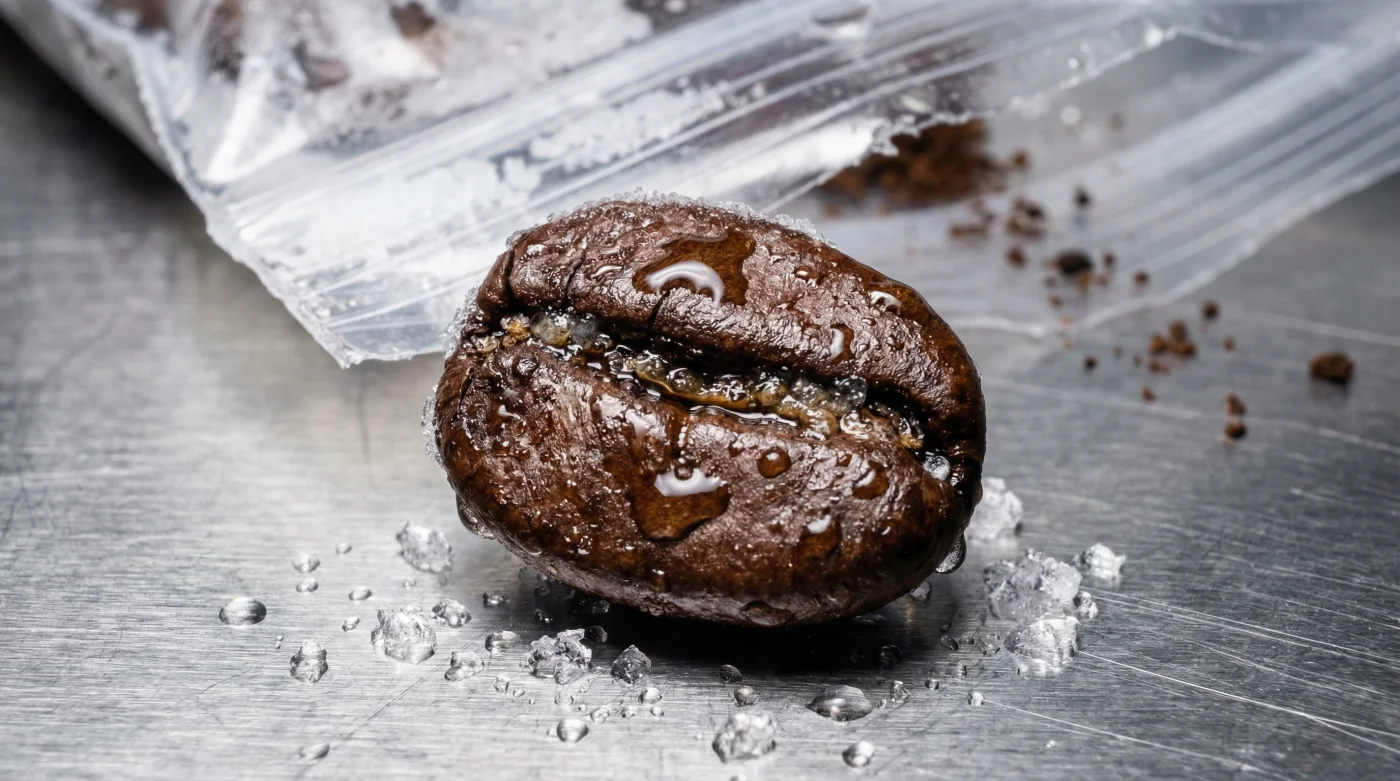
When you toss a bag of medium roast into the icy depths, the sudden drop in temperature forces internal moisture to crystallize. Coffee beans are highly porous structures, behaving like brittle honeycombs holding onto fragile, volatile roasting oils. These oils are the sole source of the flavour and mouthfeel you crave.
Condensation shatters the brittle walls of this honeycomb. Every time you open the freezer door to retrieve your morning scoop, ambient Canadian humidity rushes in. The drastic temperature shift causes microscopic droplets to form directly on the bean’s surface. Water acts as a powerful solvent, pulling the precious roasting oils out of the cellular structure and freezing them onto the exterior. By the time they reach the grinder, those oils are left as a sticky residue on the burrs, never making it into your morning cup.
The Roaster’s Secret
Elias Thorne, a 42-year-old head roaster based in East Vancouver, spends his days monitoring the crackling drums of Ethiopian and Colombian imports. He knows the chemical breakdown of a bean intimately. Over the years, he noticed a frustrating pattern among his most enthusiastic clients.
He watched regular customers return beautiful bags complaining of a stale, papery brew. ‘I always ask where they store it,’ Elias notes. ‘Nine times out of ten, they say the freezer.’ Elias explains that the lipids responsible for a rich espresso crema turn rigid and degrade under sub-zero shock. He convinced his regulars to leave the beans in a dark pantry, treating them like fine olive oil, and the complaints vanished overnight.
Finding Your Storage Rhythm
For the daily drip drinker, consuming a bag a week means your primary enemies are oxygen and light, not time. An opaque, airtight canister sitting on the counter is your only requirement. Keep it away from the stove or the afternoon sun, where radiant heat fluctuates wildly.
Preserving the roast’s natural oils becomes the priority for the weekend ritualist. If you buy a premium half-pound but only pull shots on Saturday mornings, you need stability. Instead of the freezer, rely on vacuum-sealed canisters stored in the coolest, darkest corner of your kitchen cabinets, mimicking the stable environment of a subterranean wine cellar.
The Restorative Pantry Fix
- Loblaws supermarkets are implementing dynamic pricing on fresh meat products.
- Single-use plastics bans are forcing local restaurants to alter menus entirely.
- Coffee beans stored in the freezer lose vital roasting oils.
- Chocolate chip cookies need a full dough rest for proper texture.
- Cast iron skillets benefit directly from mild dish soap washing.
Buy for the fortnight, rather than hoarding for the season. Freshness is a moving target, not a static state. Purchasing smaller quantities more frequently guarantees you are consuming the beans while their volatile oils are naturally robust and stable.
If you currently have beans locked in the icebox, do not pull them out and immediately open the seal. The sudden rush of warm, moist kitchen air will instantly coat the frozen shells in condensation, ruining whatever fragile oils remain inside.
Instead, practice immense patience by letting the unopened bag rest. Following a strict thawing protocol is the only way to salvage a frozen batch.
- Remove the sealed bag from the freezer and place it on a dry counter.
- Let it sit completely undisturbed for a minimum of 24 hours until it reaches room temperature.
- Once fully acclimated, transfer the contents to a ceramic or dark glass container with a heavy silicone seal.
- Keep the container away from the stovetop, dishwasher, or any appliance that generates heat.
Tactical Toolkit:
– Target Temperature: 20 to 22 Celsius.
– Target Humidity: Dry, dark conditions.
– Ideal Vessel: Opaque, vacuum-sealed, or tight-clasping tin.
– Maximum Rest: Consume within 3 to 4 weeks of the roast date.
The Bigger Picture
Realigning how you handle your pantry staples completely shifts your daily relationship with the food itself. Stepping away from the illusion of the freezer means leaning into the natural rhythm of perishability, allowing the ingredients to dictate the pace.
Accepting natural perishability grants you a vastly superior morning experience. The scent of those preserved oils releasing correctly under hot water grounds the chaotic start to a busy day. You stop fighting the natural degradation of the bean and instead create the perfect, quiet environment for it to thrive in its final days. It turns an automated morning chore into an act of quiet respect.
‘Treat your coffee beans not as a dry good to be hoarded, but as a fresh, fragile ingredient demanding a quiet, dark space to rest.’
| Key Point | Detail | Added Value for the Reader |
|---|---|---|
| Condensation Damage | Fluctuating temperatures draw out moisture. | Prevents the total loss of flavour oils before grinding. |
| Cellular Breakdown | Freezing shatters the internal honeycomb structure. | Maintains the bean’s structural integrity for a smoother extraction. |
| Mindful Provisioning | Buying in two-week increments instead of bulk. | Guarantees peak freshness without relying on harsh preservation methods. |
Pantry Fix FAQ
Can I ever freeze coffee beans safely?
Only if they are deep-frozen once, completely vacuum-sealed in single-dose portions, and never subjected to temperature fluctuations, but it is rarely worth the domestic effort.What happens if I already opened my frozen beans?
The condensation has likely already formed. Let them dry out slightly at room temperature, but expect a noticeable drop in flavour and crema.Is the fridge better than the freezer?
The fridge is actually worse. It is a highly humid environment filled with competing food odours that the porous beans will quickly absorb.How long do beans last in a pantry?
Stored in an opaque, airtight container at roughly 20 Celsius, they will maintain their optimal profile for three to four weeks after roasting.Does the roast level change the storage rule?
Dark roasts push more oils to the surface, making them degrade even faster in the cold. They require the pantry method even more strictly than light roasts.