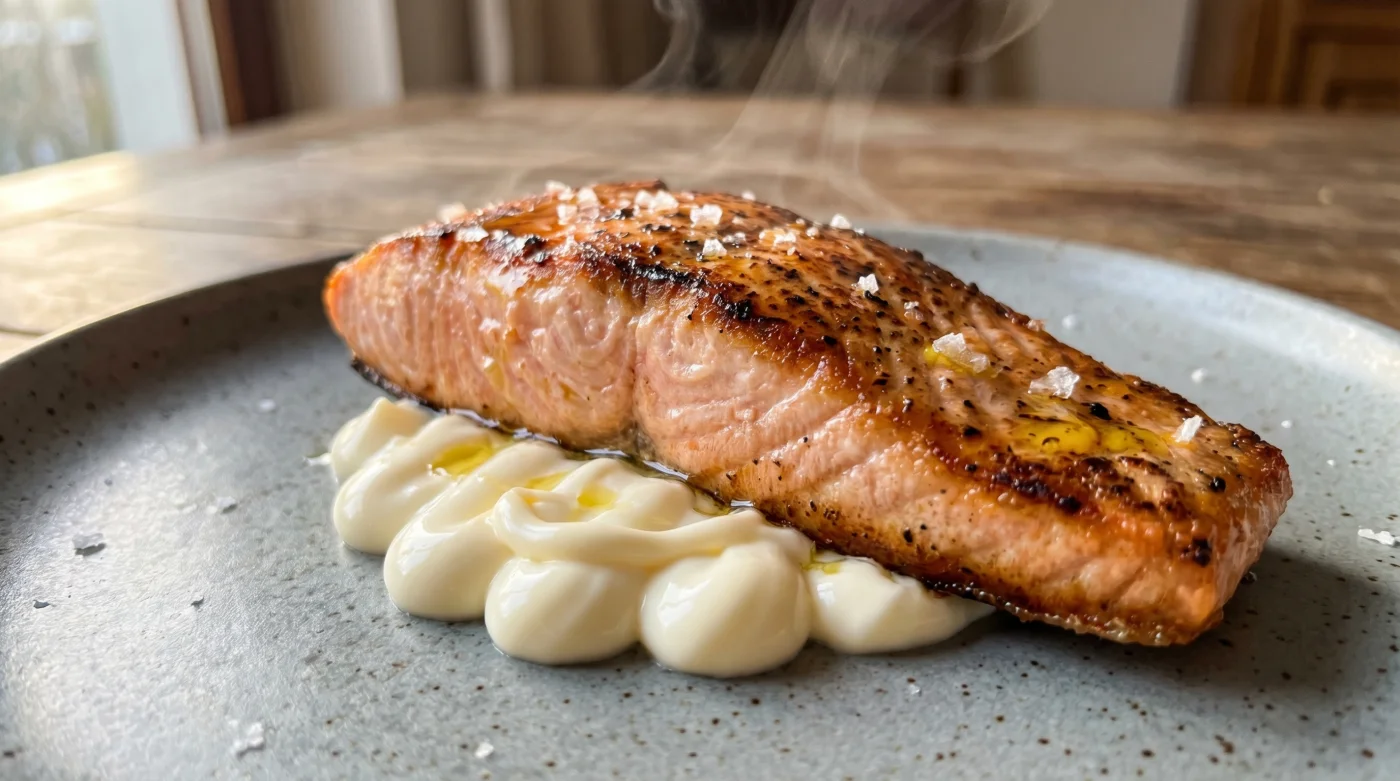
Imagine the Tuesday evening kitchen. The heavy cast-iron pan is smoking lightly. A piece of Atlantic salmon sizzles against the dark metal, the edges crisping to a pale, brittle gold. You have salted it generously, perhaps squeezed a little lemon over the searing flesh as the heat does its work, filling the room with the sharp, comforting smell of browned butter and citrus.
Normally, the final act involves slathering a dollop of sauce directly onto that beautifully crisp crust. It tastes perfectly fine, but it immediately turns a meticulously timed, restaurant-quality sear into a soggy, domestic compromise.
Consider the delicate, brittle texture you just spent ten minutes carefully building over the burner. When you carelessly mask the hot protein under a heavy, opaque blanket of flavoured mayonnaise, you steal its visual identity. Worse, the moisture from the condiment seeps downward, instantly turning a hard-won crust into a soggy disappointment.
Instead, think of the plate as an empty canvas where the sauce becomes the foundation. By placing your emulsion beneath the fish, you preserve the integrity of the cook while introducing a striking, upscale aesthetic to a fast weeknight meal.
The Architecture of the Plate
We are conditioned by decades of casual dining to treat sauces like unpredictable weather, letting them fall indiscriminately over everything resting on the ceramic. We pour, we drizzle, we flood. But a truly memorable dish relies on intentional architecture, where the protein acts as the clear focal point and the accompaniments support it quietly from the shadows.
When you pipe mayonnaise beneath grilled salmon, you create a structural secret. The hot fish rests gently on the cool emulsion, and as your fork presses down, the rich fat rises to meet the flake, blending instantly without ever muddying the initial presentation.
It is a complete reversal of domestic habit. You are no longer frantically dressing the fish to hide its flaws; you are setting a deliberately austere stage for it to command attention.
Marcus, a 38-year-old sous chef working the line at a busy seafood spot in Vancouver, calls this technique the anchor drop. He spends his evenings plating hundreds of coho portions during the dinner rush. If I put the dill-lemon mayo on top, it slides off under the heat lamps and looks like a melted mess, he explains. But a tight ring of emulsion underneath? It holds the fish steady, keeps the plate immaculate, and forces the diner to discover the flavour intentionally.
Adapting the Hidden Emulsion
Your approach to the hidden sauce shifts entirely depending on the mood of your evening and the limits of your current pantry supplies.
For the visual purist, you want absolute precision. Transfer your homemade or high-quality store-bought mayonnaise into a simple squeeze bottle to draw a perfect, thick circle across a warmed, dark ceramic plate.
Place the sizzling salmon slightly off-centre against the rigid line of the sauce. The negative space feels expensive, mimicking the deliberate quietness of a high-end tasting menu without requiring a single minute of extra effort on a busy Tuesday.
For the weeknight scrambler, there is no time for decanting into squeeze bottles. Instead, drop a single, hefty tablespoon of your infused mayo and drag it swiftly to create a dramatic, sweeping teardrop smear using the back of a soup spoon.
Drop the fish right onto the thickest part of the teardrop. The trailing tail of the smear provides a beautiful, contrasting visual line that naturally draws the eye directly toward the crispy golden crust of your salmon.
If your dinner includes a granular side like quinoa or pearl couscous, the mayonnaise acts as a silent binding agent. Pipe a small rosette directly beneath the salmon, then gently surround the fish with the grains to keep everything contained.
Executing the Clean Plating Method
Plating beautifully requires presence. It asks you to pause for thirty brief seconds between the chaos of cooking and the act of sitting down to eat.
You do not need specialized tools, just a steady hand and a willingness to respect the negative space on your dinner plate.
Here is your tactical toolkit for executing the technique flawlessly:
- Temperature Control: Ensure your mayonnaise is chilled (around 4 Celsius) to contrast the hot protein and prevent the fat from splitting on contact.
- The Tool: A standard piping bag, a cheap plastic squeeze bottle, or even a ziplock bag with a tiny corner snipped off.
- The Placement: Squeeze a loonie-sized mound in the lower third of the plate, consciously avoiding the dead centre.
- The Landing: Transfer the salmon from the pan using a fish spatula. Rest the bottom of the filet gently on the sauce mound, pressing lightly to secure it.
Wipe the rim of the plate carefully with a damp cloth before carrying it to the table. This single deliberate finishing gesture bridges the gap between home-cooked utility and meticulously curated dining.
The Quiet Dignity of a Well-Plated Dinner
Changing how you apply a simple condiment might seem like an unnecessary fuss for a tired Tuesday night at the kitchen island. But the way we present our food drastically dictates how we mentally consume it.
When you throw everything carelessly into a bowl, you eat quickly, distracted by the lingering stress of the day. Taking thirty seconds to build a thoughtful, beautiful plate forces your breathing to slow down.
That hidden dollop of mayonnaise does more than just keep your salmon skin perfectly crispy and dry. It subtly signals a definitive end to the demands of the workday.
It transforms an inexpensive piece of fish and a basic pantry staple into an event worthy of attention, gently reminding you that dinner is a daily ritual meant to be tasted, not rushed.
Marcus, Vancouver Sous Chef — The sauce is the anchor, not the blanket; it grounds the dish while letting the sear speak entirely for itself.
| Key Point | Detail | Added Value for the Reader |
|---|---|---|
| Texture Preservation | Placing sauce beneath the fish prevents moisture transfer to the skin. | Maintains the deeply satisfying crunch of a pan-sear. |
| Visual Contrast | The opaque emulsion acts as a sharp frame against the dark plate. | Makes highly inexpensive ingredients look professionally curated. |
| Flavour Pacing | Diners control the exact ratio of fish to sauce with every bite. | Prevents the palate from being heavily overwhelmed by pure fat. |
Frequently Asked Questions
Why shouldn’t I just pour the sauce on top? Pouring sauce over hot protein traps steam and moisture, immediately destroying the crispy texture of the skin you just spent valuable time rendering.
Do I need a professional piping bag for this? Not at all. A simple plastic squeeze bottle from the dollar store or a standard ziplock bag with a tiny corner snipped off works perfectly.
Will the mayonnaise split under the hot fish? If the fish is resting briefly and the mayonnaise is properly chilled (around 4 Celsius), the thick emulsion will hold its shape beautifully without breaking down into oil.
Can I use this technique with other proteins? Absolutely. A hidden smear of cool sauce works brilliantly under seared chicken thighs, pork chops, or even roasted cauliflower steaks.
What kind of plate works best for this visual? Dark matte ceramics or plain white plates with wide rims offer the absolute best contrast, allowing the negative space to do the heavy lifting visually.