You stand over the ceramic bowl, watching the paddle attachment struggle in the fading afternoon light. The mixture, which just moments ago looked like velvet, has suddenly clumped into stubborn, dusty shrapnel against the cold steel of the beater. It sounds heavy, a dull thudding that signals something has gone wrong in the emulsion.
You pinch a piece between your fingers, hoping the warmth of your skin will coax it to bind. Instead, it crumbles onto the counter, leaving a trail of dry disappointment. The instinct is always the same: scrape it into the bin, wash the bowl, and mourn the wasted butter.
But that rigid mass isn’t a failure. It is simply a dough that has tensed up, gripping its ingredients too tightly. We treat baking like a rigid science where one wrong turn means immediate ruin, but dough is a living, breathing thing that occasionally just needs to relax.
The fix is entirely counterintuitive, yet rooted in pure culinary logic. You do not need to cut in more butter, nor do you need to dilute the flavour with a splash of milk. You need a single spoonful of gently warmed, dark molasses.
Reversing the Dry Dough Death Sentence
Think of overworked cookie dough like a cramped calf muscle after a long winter run. The friction from the mixer has caused the gluten strands to tangle and seize up, locking the moisture out and creating a barrier that refuses to yield.
When you try to force water or milk into the bowl to fix it, the flour simply turns to glue, making the resulting texture heavy and pallid. But molasses behaves entirely differently. It carries an acidic, inverted sugar profile that acts like a warm compress on those tight protein bonds.
The natural acid subtly breaks down the stubborn gluten network, while the rich, viscous sugars trap ambient moisture without adding excess water weight. Suddenly, what looked like a crumbly disaster becomes pliable, supple, and texturally superior to what the original recipe intended.
Claire Tremblay, a pastry chef running a bustling bakery in Montreal’s Plateau neighbourhood, discovered this by sheer necessity during a frantic holiday rush. Facing a broken heating system that left her kitchen hovering around 14 Celsius, she refused to throw away her seized dough. She warmed a small pot of fancy molasses on the stove and folded it in by hand. She managed to salvage twenty kilograms of dough, producing the chewiest, most deeply flavoured cookies her bakery had ever sold.
Tailoring the Rescue to Your Recipe
Not all stiff doughs behave the same way, and how you introduce this dark, rich syrup matters deeply depending on the base ingredients currently sitting in your mixing bowl.
For the Chocolate Chip Purist: The rich caramel notes of the molasses will naturally amplify the brown sugar you have already incorporated. You will notice the edges bake up with a distinct, satisfying crispness, while the centre remains beautifully fudge-like. Use exactly one tablespoon.
For the Oatmeal Traditionalist: Rolled oats are famously greedy, soaking up hydration relentlessly long after the mixing has stopped. If your oatmeal dough resembles dry gravel, warm one and a half tablespoons of molasses. The syrup coats the oats, preventing them from stealing any more moisture from the flour.
For the Sugar Cookie Delicate: You might reasonably worry that a dark syrup will ruin the pale, pristine aesthetic of a cutout cookie. Opt for a light or golden molasses here. Half a tablespoon gently massaged into the crumbles will restore the rollable texture without turning your frosted snowmen into gingerbread.
The Tactile Rescue Protocol
Fixing the dough requires a gentle, deliberate hand. The stand mixer is your enemy right now, as further mechanical agitation will only create tougher cookies. You need to feel the physical transformation happen under your palms.
Step away from the machine and clear your workspace on the counter. The ambient heat from your hands, combined with the warm syrup, provides the exact thermal nudge required to mend the broken emulsion and bring the dough back together.
- Measure precisely one tablespoon of molasses into a small, microwave-safe ramekin.
- Heat it for barely five seconds, just until the surface quivers; it should feel like warm bathwater.
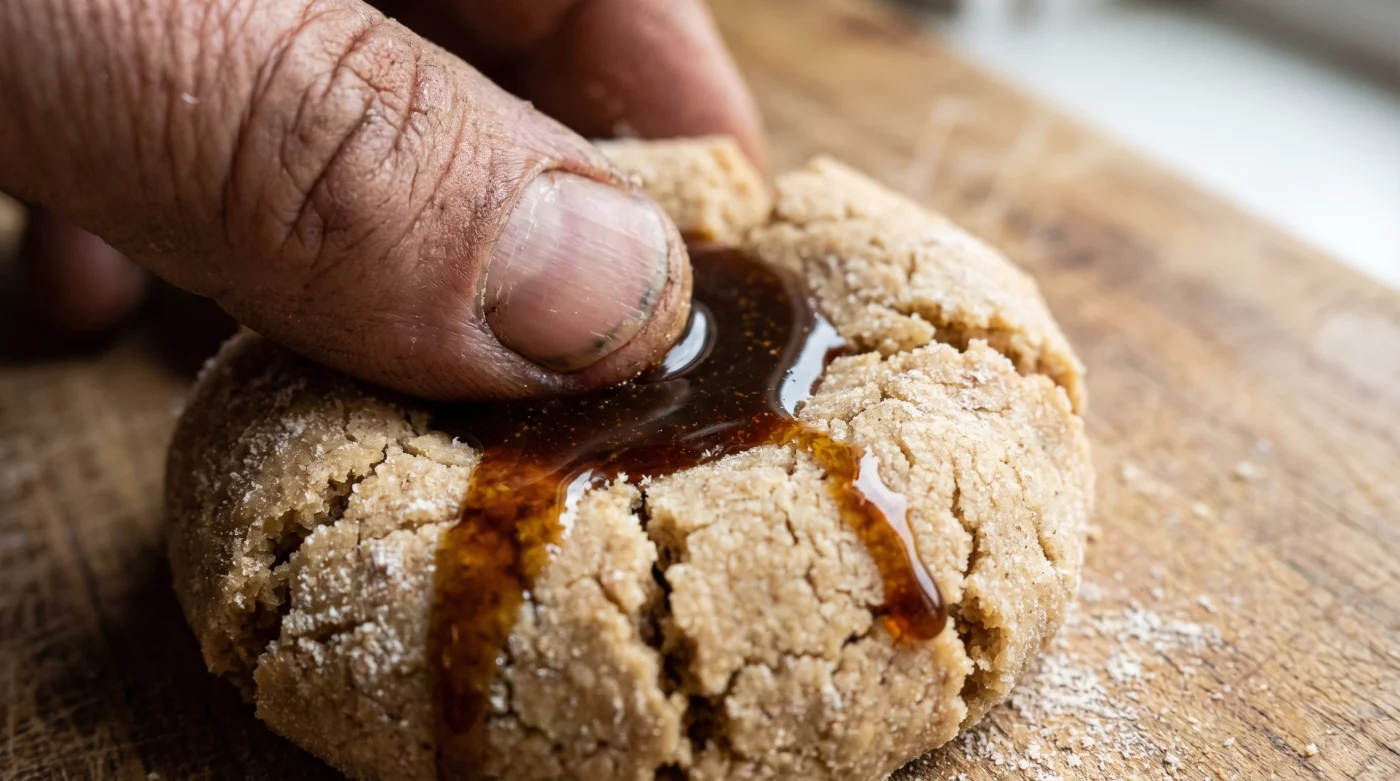
- Drizzle the syrup evenly over the crumbled dough.
- Using your bare hands, gently fold the mixture from the outside in, pressing the crumbles into the centre using a soft, kneading motion.
- Stop the exact second the dough forms a cohesive, slightly tacky ball.
The Tactical Toolkit dictates a target temperature of 35 Celsius for the molasses, a maximum folding time of forty-five seconds, and a mandatory ten-minute rest period. Resist the urge to overwork it; once the acidic moisture relaxes the gluten, the dough needs a moment of absolute stillness to stabilize before baking.
Finding Forgiveness in the Kitchen
We spend so much of our time striving for exactness in our domestic lives. We level our measuring cups with the flat edge of a knife, calibrate our oven thermometers, and panic when a sudden drop in humidity alters the texture of our evening baking projects.
But mastering the kitchen is rarely about avoiding mistakes entirely; rather, it is about knowing how to pivot gracefully. A dry, unyielding bowl of dough is a small, quiet crisis, but it is also a beautiful opportunity to understand the nature of your ingredients rather than just blindly commanding them.
When you fold that warm, dark syrup into the dusty crumbles and feel the mass yield into something soft and willing, you are doing far more than saving a batch of evening cookies. You are learning to read the environment, adapting to the elements, and finding a little bit of grace right there on the countertop.
A ruined dough is rarely a dead end; it is usually just asking for a change in temperature or a shift in pH to find its way back to life. – Claire Tremblay
| Key Point | Detail | Added Value for the Reader |
|---|---|---|
| The Catalyst | Warm dark molasses (1 tbsp) | Resurrects dry dough without adding heavy water weight. |
| The Mechanism | Acidic inverted sugars | Relaxes tight gluten strands instantly for a tender bite. |
| The Technique | Manual hand folding | Prevents further overworking and lets you feel the texture shift. |
Frequent Rescues
Can I use maple syrup instead of molasses? Maple syrup lacks the required acidity to break down the gluten bonds; it will add flavour but may leave the dough tough.
Will the molasses make my cookies taste like gingerbread? A single tablespoon in a standard batch only deepens the caramel notes, especially enhancing brown sugar, without overpowering the primary flavour.
How warm should the molasses be? Heat it until it feels like warm bathwater (around 35 Celsius); if it is too hot, it will melt the butter and cause the cookies to spread flat.
What if my dough is still crumbly after one tablespoon? Wait ten minutes. The hydration takes a moment to absorb. If it remains dusty, add a half tablespoon of neutral oil, not more syrup.
Does this trick work for gluten-free cookie dough? Yes, but for a different reason. Gluten-free flours absorb massive amounts of liquid; the inverted sugar helps bind the starches gracefully.