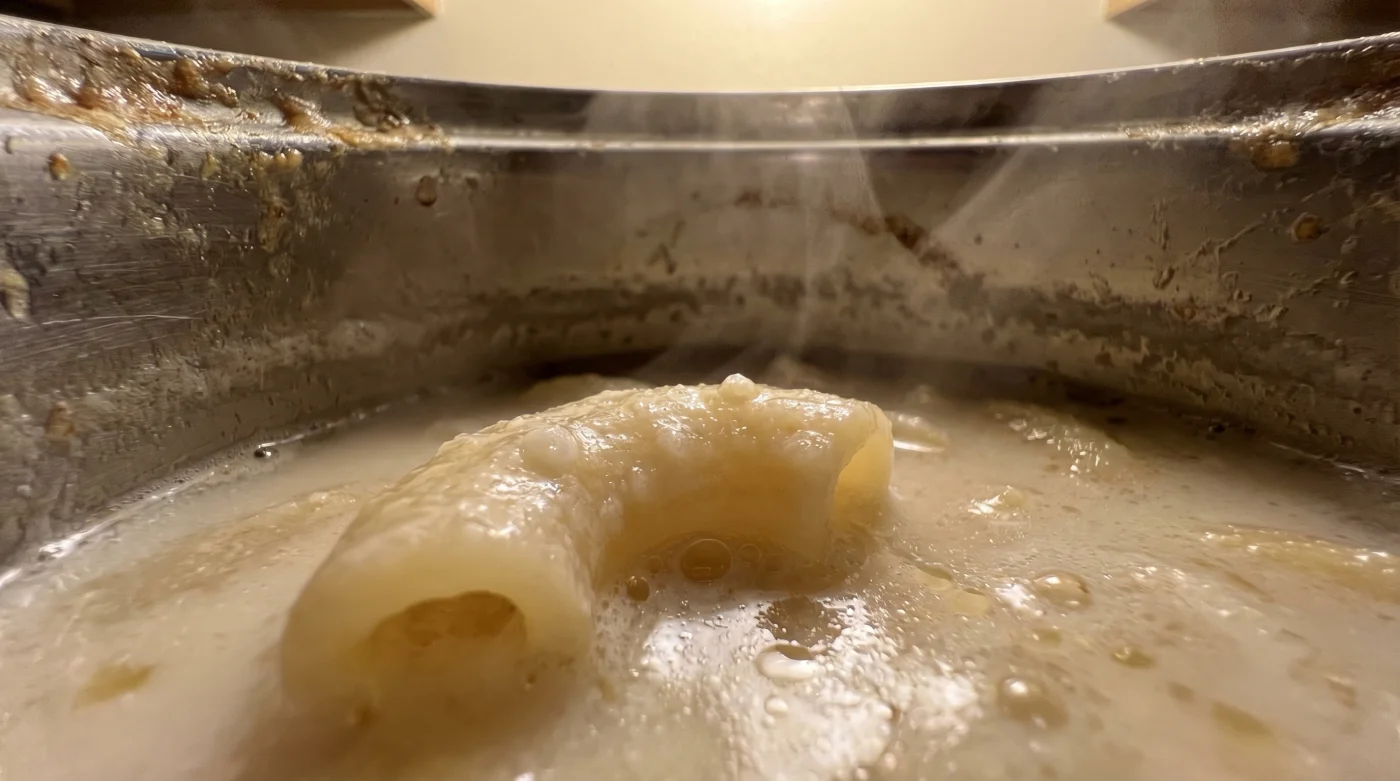
The sound of dried macaroni hitting a metal colander is a Tuesday night symphony in most Canadian kitchens. Steam clouds the frosted window above the sink, obscuring the snowy driveway outside. You wait for the massive pot of water to come to a rolling boil, toss in a handful of salt, and tip in the boxed noodles. It is the ritual you learned before you were tall enough to reach the stovetop safely.
Yet, as that starchy, cloudy water drains away down the sink, it takes with it the very foundation of a truly luxurious sauce. You are throwing away liquid gold, replacing it later with heavy cream and butter in a frantic attempt to build back the texture you just discarded. The standard method teaches us that pasta must be submerged in an ocean of water, but this creates a barrier between the noodle and the fat it desperately wants to cling to.
Consider a different approach, one that feels completely counterintuitive. Instead of bringing water to a roaring boil, you gently warm a shallow pool of whole milk. You pour the dry pasta directly into this creamy bath. As the noodles soften, they drink in the dairy, and the milk itself thickens into a glossy, perfectly bound base. It is a quiet rebellion against the oldest rule in the kitchen.
Rethinking the Boiling Ritual
The golden rule of pasta—boiling it in aggressively salted water—operates on the assumption that starch is a nuisance to be washed away. But think of starch not as dirt, but as the mortar holding the bricks of your sauce together. When you boil dried pasta in water, you are essentially washing away the structural integrity of your macaroni and cheese.
By pivoting to milk, you initiate a completely different chemical dialogue. The milk hydrates the starch directly, coaxing out a velvety texture without the need for a separate roux or an avalanche of heavy cream. It is a two-ingredient modification that yields restaurant-calibre results on a mundane weeknight. The pasta cooks, the sauce thickens, and nothing is wasted down the drain.
Clara Tremblay, a 42-year-old former catering chef operating a small neighbourhood bistro in Montreal, relies entirely on this method when the evening rush hits. She never had the stovetop space to boil massive pots of water during a busy winter dinner service. Instead, she began dropping dried cavatappi directly into simmering milk infused with a garlic clove and a pinch of dry mustard. The pasta released its starch into the dairy, creating an instant, unbreakable emulsion. Clara realized she was no longer just cooking noodles; she was actively brewing the sauce from the inside out, cutting her prep time in half while creating a profoundly rich dish.
Adapting the Dairy Bath
Not every kitchen operates at the same rhythm, and this method flexes beautifully to match your specific constraints. Understanding how to manipulate the dairy bath allows you to fine-tune the final gloss of your macaroni.
For the Purist: If you want an unadulterated, deeply savoury profile, use precisely 3.25 percent whole milk. The fat content is completely non-negotiable here, as skim milk lacks the lipids necessary to coat the starch molecules, resulting in a gritty, broken sauce. Keep the heat at a gentle whisper, stirring with a wooden spoon so the starches release slowly and evenly.
For the Time-Starved Parent: When patience is running thin, blend half whole milk with half chicken or vegetable broth. The broth accelerates the hydration of the dried pasta by lowering the viscosity of the cooking liquid, bringing the noodles to a tender finish about three minutes faster. You still retain enough dairy fat to bind the cheese you will fold in at the end.
For the Texture Seeker: If you crave those coveted crispy edges, slightly undercook the pasta in the milk—leaving it with a firm bite in the centre. Pour the entire thickened mixture into a cast-iron skillet, blanket it in sharp aged Canadian cheddar, and place it under the broiler for exactly four minutes. The milk-starch base bubbles up and creates a caramelized, golden crust that a traditional water-boiled pasta simply cannot achieve.
The Methodology of Simmering
Executing this technique requires a shift from passive waiting to active observation. You are no longer abandoning a pot on the back burner; you are nursing an emulsion.
The secret lies in heat management. Milk is notoriously fragile and will scorch if aggressively boiled. You want a gentle simmer, hovering around 85 degrees Celsius, where the surface barely trembles.
- Measure precisely 4 cups of whole milk for every 250 grams of dried pasta (short shapes like elbows or shells work best).
- Place the milk in a wide, heavy-bottomed Dutch oven over medium-low heat. Do not let it reach a hard bubble.
- Add the dry pasta and a generous pinch of kosher salt as soon as the milk begins to steam.
- Stir continuously for the first two minutes to prevent the noodles from fusing to the bottom of the pot.
- Simmer for 10 to 12 minutes, or until the liquid has reduced to a heavy cream consistency and the pasta is tender.
Remove the pot from the heat completely before introducing your cheese. The residual warmth is more than enough to melt sharp cheddar or Gruyere without causing the proteins to seize and separate.
Reclaiming the Ritual
There is a profound satisfaction in streamlining a process that has historically felt clunky. Skipping the massive pot of water does more than just save you ten minutes of waiting for a boil; it fundamentally alters the physics of your dinner.
You are taking a mundane, boxed staple and treating it with the reverence of a slow-braised risotto. The starch becomes your ally, the single pot becomes your canvas, and the dreaded pile of dishes in the sink shrinks to almost nothing.
It brings a quiet calm to the evening routine. By breaking the oldest rule of pasta preparation, you remove the friction from cooking from scratch. You are left with a single pot, a wooden spoon, and a deeply satisfying meal that feels crafted rather than merely assembled.
"When you stop fighting the natural starches of your ingredients, you stop needing to mask them with heavy creams and artificial thickeners."
| Key Point | Detail | Added Value for the Reader |
|---|---|---|
| Liquid Base | 3.25% Whole Milk | Provides necessary milk fats for a stable, velvety emulsion without relying on heavy cream. |
| Heat Level | Gentle, trembling simmer | Prevents the milk sugars from scorching and ruining the delicate savoury flavour profile. |
| Stirring Cadence | Frequent, especially early on | Encourages maximum starch release to naturally thicken the built-in cheese sauce base. |
Frequently Asked Questions
Can I use a dairy-free alternative for this method?
Yes, but choose an unsweetened oat milk with a high fat content, often labelled as a barista blend. Almond milk tends to separate when heated and lacks the body to carry the starch.Why is my pasta taking longer to cook than the box suggests?
Cooking in a denser liquid like milk slows down the hydration process. Expect to add 3 to 5 minutes to the traditional boiling time printed on the package.Do I still need to salt the milk?
Absolutely. While you do not need the intense salinity of a traditional water boil, a generous pinch of salt is crucial to permeate the noodle as it swells.What shapes of dried pasta work best here?
Stick to short, tubular, or curved shapes like macaroni, cavatappi, or small shells. Long strands like spaghetti tend to clump together in the shallow milk bath.Can I make this ahead of time and reheat it?
Because this sauce relies on the delicate balance of milk and starch, it is best eaten immediately. If you must reheat, add a splash of fresh milk to loosen the emulsion gently over low heat.