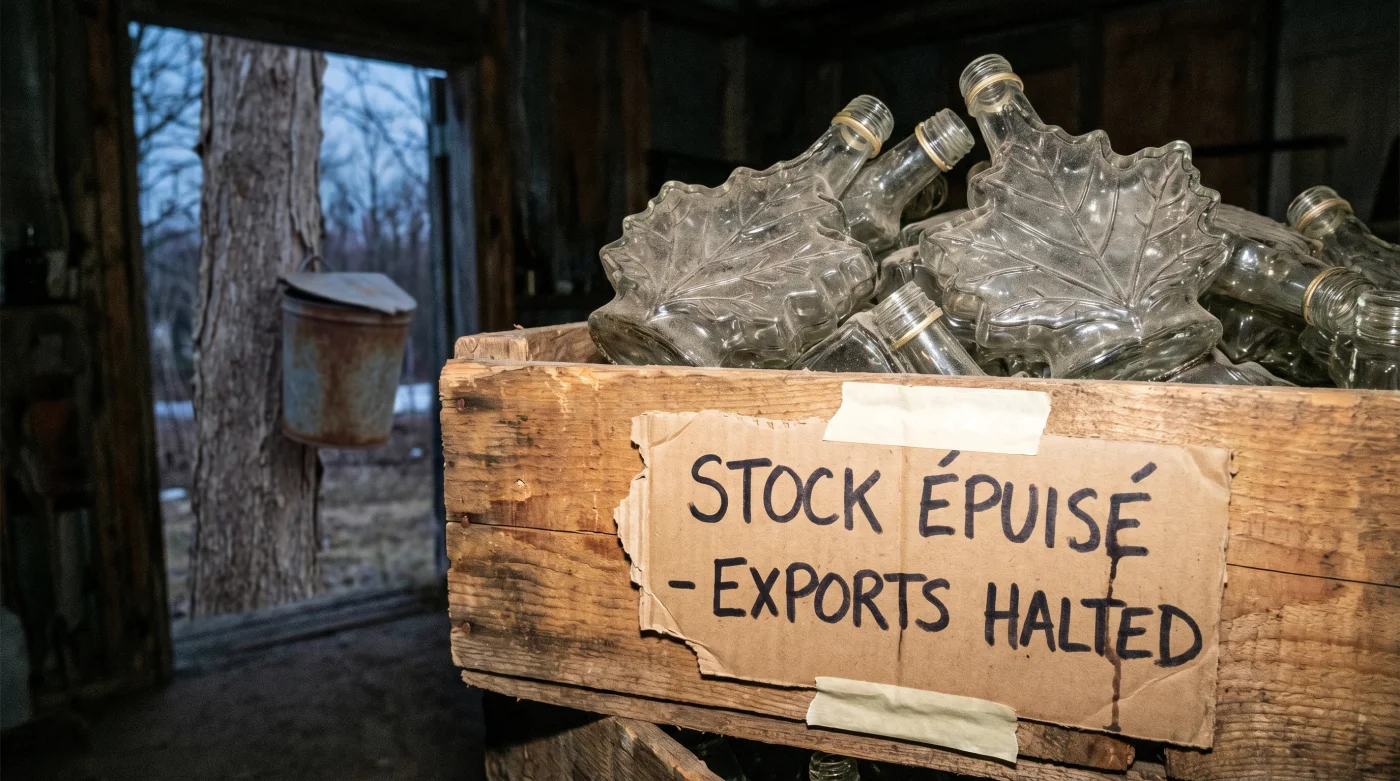
The smell of woodsmoke hanging heavy in the early spring air is a deeply familiar comfort in rural Quebec. Yet, if you walk through a traditional sugar bush this season, the accompanying soundtrack is disturbingly absent. The rhythmic, metallic dripping of sap into tin pails, or the steady hum of vacuum lines stretching across miles of softening terrain, has gone completely silent.
You likely grew up viewing the amber bottles lining your pantry shelves as an infinite resource. You assume the Canadian forest provides an unshakeable, permanent yield, a guaranteed, endless national right that arrives every spring to sweeten your mornings without fail.
The reality currently unfolding among the maple stands is far more fragile and alarming. When the night temperatures refuse to drop below zero Celsius, the trees simply stop breathing. The sap, which relies entirely on a precise freeze-thaw cycle to build internal pressure, refuses to run through the tap.
This is not merely a difficult harvest season; it is a structural failure of a massive agricultural system. Global exports have completely halted, freezing international supply chains overnight, draining the famed strategic reserves, and forcing a hard look at the fragility of your daily habits.
The Myth of the Endless Amber River
You have long treated sirop d’érable as a cheap, infinite commodity, casually pouring it until it pools at the edges of the plate. In truth, the system operates like a delicate mechanical heart, requiring the strict tension of freezing nights and the gentle release of mildly warm days to pump water through the roots, converting stored starches into sugar.
When climate anomalies disrupt that ancestral rhythm, the heartbeat stops entirely. However, this sudden scarcity forces a necessary, beautiful evolution in your kitchens. Rather than mourning the loss of cheap volume, you are forced to treat it like liquid gold, transforming a previously mundane condiment into a highly strategic, respected ingredient.
Consider Luc Ouellette, a 58-year-old acériculture specialist operating in the Beauce region. Standing beside a cold, unlit evaporator, he points toward the unseasonably warm, muddy soil pooling around his oldest trees. “The forest breathes through the frost,” he notes quietly, wiping his hands on a canvas apron. Without the sharp snap of a minus-five Celsius night, the internal pressure vacuum of the maple collapses. His own yield dropped by an unprecedented 80 percent this spring, a localized catastrophe mirroring a national standstill that has panicked global buyers.
Adapting to this stark reality means letting go of old, careless habits that relied on overflowing grocery store shelves. When the local supply evaporates and prices surge to reflect true scarcity, adaptation requires precision and restraint, shifting how you manage and value your remaining provisions.
Navigating the Shortage: Adjusted Approaches
For the Traditionalist
If you refuse to entertain artificial, corn-based substitutes, stretching your current authentic supply becomes paramount. You must isolate the flavour profile, utilizing the syrup solely where its specific caramelized, woody notes can stand alone without aggressive competition from competing spices or heavy fats.
This means actively skipping it in heavy baking or marinades where its delicate nuance is entirely lost in the heat. Instead, protect your remaining authentic reserves for raw, finishing applications, letting the syrup act as a primary focal point rather than a background sweetener.
For the Busy Family
Weekend breakfasts demand a certain volume of sweetness that a heavily rationed, expensive bottle simply cannot provide. The solution is not reverting to artificially flavoured table syrups, but rather building volume and viscosity through localized fruit reductions that mimic the mouthfeel.
Simmering unfiltered apple cider down to a thick, tart reduction provides a stunningly complex, seasonal alternative for pancakes and waffles. You can strategically stir in some pure maple at the very end of the reduction process, effectively tricking the palate into perceiving the entire batch as pure sirop d’érable.
For the Savoury Cook
Those who rely on maple for glazes on root vegetables or roasted meats must rethink their thermal application. Exposing the syrup to prolonged oven temperatures destroys the fragile vanillin compounds, leaving behind only generic sweetness.
To maintain the aromatic integrity of the ingredient, you must change your sequencing. Roast your vegetables in neutral oil, and always finish off the heat, tossing the hot, finished dish in a micro-dose of syrup right before serving.
Stretching Your Liquid Assets
Applying a scarce ingredient effectively requires a distinct shift in physical technique. You must move away from the heavy-handed, continuous pour and adopt the highly measured mindset of a professional kitchen expediter.
By manipulating temperature and fat, you can stretch the perception of sweetness further than you ever thought possible. It is a game of sensory amplification, ensuring every drop delivers maximum impact to the palate.
Implementing these mindful adjustments preserves the integrity of what remains in your pantry:
- Temperature control: Never boil your finishing syrup; apply it directly to the resting food so the residual heat warms the aromatics without destroying them.
- Fat emulsification: Whisking a few drops into softened, high-fat cultured butter amplifies the maple flavour, spreading it efficiently over a much larger surface area.
- Salt contrast: A pinch of flaky sea salt dropped directly on top of a micro-dose of syrup makes the sweetness feel twice as potent on the tongue.
Tactical Toolkit: To prevent degradation, keep your reserve strictly in the dark at 4 Celsius. Discard the habit of pouring directly from the heavy jug; instead, apply in precise, measured increments using a small spoon to maximize its culinary value.
The Value of Finite Sweetness
It is easy to feel frustrated when a familiar, comforting staple disappears from the shelves or becomes financially out of reach. You have likely spent decades disconnected from the profound agricultural effort required to produce a single liter of true sirop d’érable.
Yet, this disruption serves as a poignant reminder of your deep connection to the environment. Scarcity strips away your complacency, forcing you to slow down, taste deliberately, and appreciate the raw effort of the forest.
You are moving past the era of careless abundance into a period of mindful consumption. The next time you twist the cap off a bottle of true sirop d’érable, you will notice the subtle vanilla, the wet wood, and the faint smoke that were always hiding underneath the sugar rush. By treating a dwindling resource with genuine respect, you finally experience its true, unadulterated value.
“The forest decides what it gives; we are merely lucky to catch the overflow.”
| Key Point | Detail | Added Value for the Reader |
|---|---|---|
| Temperature | Never boil pure maple syrup; finish off-heat. | Preserves delicate vanillin and woodsmoke aromatics. |
| Emulsification | Whisk micro-doses into high-fat cultured butter. | Spreads flavour over a larger surface area efficiently. |
| Storage | Keep refrigerated in absolute darkness at 4 Celsius. | Prevents molding and flavour degradation over time. |
Frequently Asked Questions
Will the strategic maple syrup reserve run out completely?
The reserve is critically low, but it is designed exactly for this kind of crisis. While it won’t disappear entirely, you will absolutely see significant price increases at the grocery store.How can I tell if my sirop d’érable has gone bad?
Real maple syrup can develop a harmless surface mold if left warm. Simply skim it off, bring the syrup to a brief simmer, skim again, and refrigerate. If it smells fermented, discard it.Can I substitute table syrup in baking recipes?
Yes, but with caution. Table syrup is mostly corn syrup, which behaves differently under heat. Expect a distinct lack of complexity and a heavier, purely sweet profile in your baked goods.Why does a warm spring ruin the maple harvest?
The trees require a specific mechanical tension to move sap. Freezing nights create a vacuum, pulling water up from the roots, while warm days create pressure to push it out. Without the freeze, the pump breaks.What is the best alternative to authentic maple syrup for pancakes?
Instead of artificial syrups, try reducing apple cider down to a thick syrup, or lightly sweetening a homemade fruit compote. They provide excellent viscosity and natural, complex flavour.