It’s 3:00 AM on a Tuesday in February, and the frost creeping up the corner of the diner window looks like shattered glass. You slide into the cracked vinyl booth, the air smelling faintly of toasted rye and aggressive sanitizer. You don’t even need to look at the laminated pages. The Grand Slam is a Canadian institution, a static anchor in a chaotic world. Or, at least, it was.
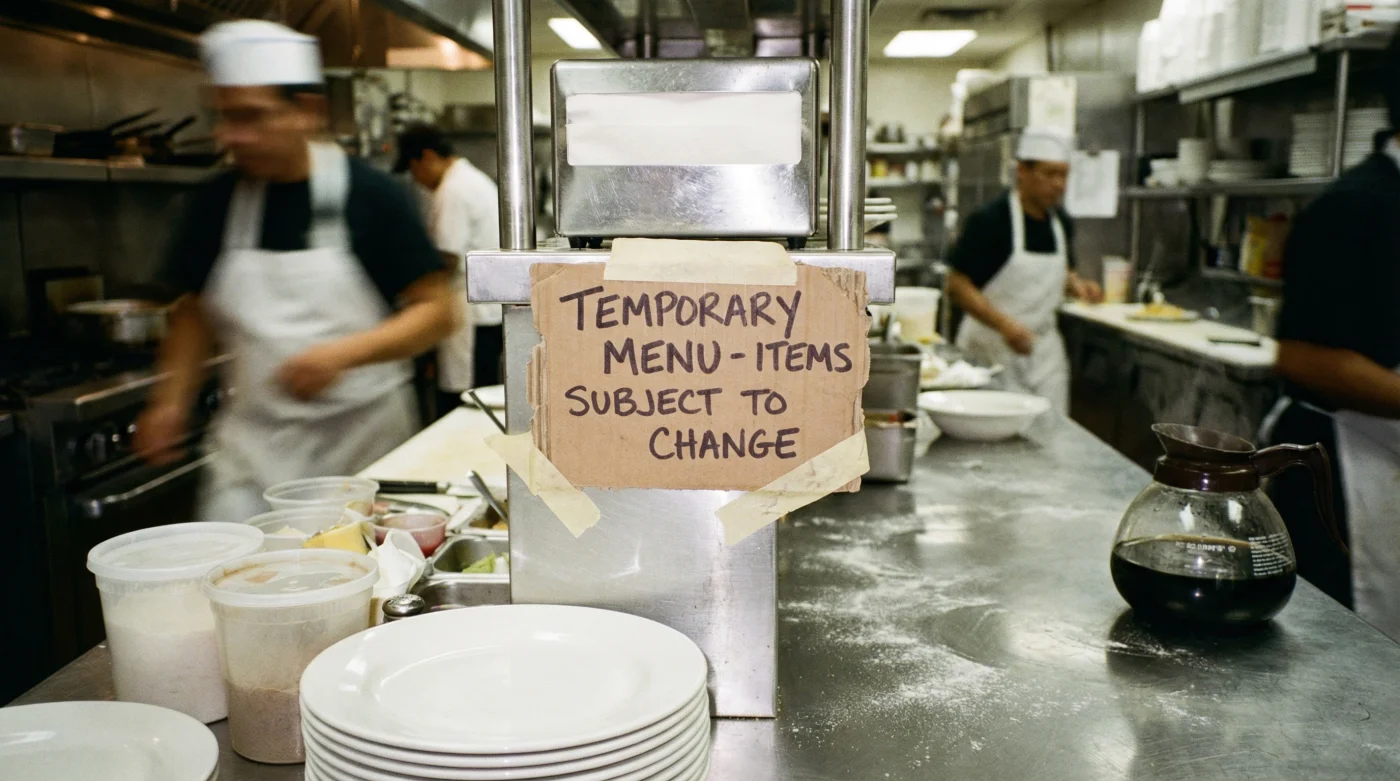
Overnight, that comforting predictability vanished. The sprawling, encyclopedic list of pancakes, skillets, and endless pork products has been quietly, ruthlessly trimmed. If you walked into any location from Halifax to Victoria this morning, you likely found yourself staring at a piece of cardstock that feels remarkably light and unfamiliar.
This isn’t a subtle seasonal tweak. We are witnessing an unprecedented overhaul of classic breakfast staples, forced by fragile global supply lines and shifting domestic agricultural costs. The diner menu, long thought to be immune to the whims of the outside world, is bending to reality.
The Myth of Infinite Eggs
For decades, we treated diner chain offerings like an endless tap. Turn the handle, and the bacon flows. But a menu is actually a living, breathing agricultural document, highly sensitive to weather, fuel prices, and labour gaps. The illusion of consistency required massive logistical force to maintain.
Now, the system has buckled, but this rupture offers a surprising relief. Instead of fighting gravity to ship frozen, pre-portioned breakfast meats across thousands of kilometres, the pivot forces regional pragmatism.
What feels like a sudden restriction is actually an insulation tactic. Trimming the excess bloat allows the kitchen to focus on what arrives fresh and remains affordable. The mundane reality of supply chain shortages is quietly upgrading the quality of what actually lands on your heavy ceramic plate.
Consider the reality of Marcus Thorne, a 48-year-old regional logistics director based out of a warehouse in Mississauga. Last month, Thorne watched the wholesale price of processed hashbrowns and specific cuts of imported pork spike by forty percent in a single week. The math simply stopped working. Rather than serving a compromised product or doubling the price of a Tuesday morning staple, Thorne and his team made the brutal call to strip away a third of the menu overnight. They swapped out heavily processed international components for regionally sourced alternatives, forcing an industry-wide pivot that prioritizes availability over nostalgia.
Adjusting Your Order
This overnight shift hits different patrons in entirely different ways. The laminated anchor is gone, but your routine doesn’t have to break. You simply need to read the room with a little more care.
For the Grand Slam Purist
You are used to the exact geometry of two eggs, two pancakes, two strips of bacon, and two sausages. The core remains, but the periphery has shifted. Expect thicker, differently sourced bacon, and perhaps a localized sausage blend that no longer matches the perfectly uniform cylinders of your childhood. You will notice a rougher, more rustic texture.
For the Midnight Grazer
The late-night impulse order has seen the heaviest pruning. Those sprawling appetizer pages featuring seven different types of loaded fries and obscure chicken strip variations are gone. The late-night kitchen relies on speed and simplicity now. If you want comfort at 2 AM, you are pivoting back to pure breakfast foods, which require fewer fryers and less cross-contamination prep.
For the Value Seeker
The severely discounted value menu era was subsidized by an agricultural reality that no longer exists in Canada. The new value propositions are built entirely around eggs and local starches. The price points remain accessible, but they lean heavily on carbohydrates rather than heavily processed proteins.
Navigating the New Morning
When you sit down at the sticky table this weekend, do not panic when the server hands you a single-page insert. The diner experience hasn’t vanished; it just needs a slightly different strategic navigation approach.
First, look at the specials board. What used to be a marketing gimmick is now the actual reflection of what the kitchen received off the truck that morning. Second, be highly specific about your starch substitutions. With frozen hashbrown shortages, many locations are pivoting to home fries, sliced tomatoes, or extra toast.
- Ask about the egg sourcing: Many locations have shifted to local liquid egg suppliers for scrambles; if you want a whole egg, order them sunny-side up.
- Check the meat alternatives: Regional supply chains mean peameal bacon might suddenly be cheaper and more available than standard strips in Ontario, while Alberta locations lean into local beef sausage.
- Embrace the pancake: Flour and buttermilk remain stable. When protein prices surge, the griddle is your safest bet for a filling, consistent meal.
- Watch the coffee: Filter coffee remains untouched, but the dairy creamers are facing regional shortages. Expect to see milk or alternative milks offered by default in some provinces.
The Tactical Toolkit
If you want to master this new landscape, you need to adjust your timing and expectations. The kitchen operates differently when the safety net of endless frozen inventory is removed.
- Optimal Arrival: 8:00 AM to 9:30 AM. Kitchens are prioritizing early prep; late morning runs the risk of sold-out items.
- Temperature Check: Expect griddle items to arrive hotter. A smaller menu means the line cooks are no longer juggling twenty different pan temperatures.
- The Golden Rule: Tip generously. The front-of-house staff are currently bearing the brunt of customer frustration over a menu shift they did not cause.
Finding Comfort in Constraint
We go to these glowing, neon-lit rooms not because we crave a specific, mathematically perfect sausage link. We go because the diner is a third space. It is a refuge from the cold rain, a quiet corner to read a book, a place to sober up, or a booth to catch up with an old friend over a heavy ceramic mug that never empties.
The sudden vanishing of a dozen menu items feels jarring because we mistake the food for the feeling. But the feeling remains entirely intact. In fact, a kitchen that is no longer stressed by an impossible, sprawling inventory is a kitchen that cooks with a little more care. You are participating in a quiet culinary reset. The menu is shorter, but the coffee is still hot, the booth is still yours, and the morning still waits just outside the window.
A menu is not a promise; it is a negotiation with the morning’s reality. When we simplify the order, we let the kitchen breathe.
| Key Point | Detail | Added Value for the Reader |
|---|---|---|
| Regional Sourcing | Swapping imported frozen meats for local farm alternatives. | Fresher ingredients with a more rustic, satisfying texture. |
| Streamlined Menus | Removal of 30% of low-performing or complex items. | Faster ticket times and hotter food arriving at your table. |
| Starch Pivots | Replacing standard hashbrowns with home fries or toast. | More reliable availability and localized flavour profiles. |
FAQ
Why did my local Denny’s suddenly change the menu overnight? Massive shifts in global supply chains and domestic agricultural costs forced the chain to pivot away from imported, heavily processed items in favour of stable, regional ingredients.
Will the classic Grand Slam ever return to normal? The core concept of the Grand Slam remains, but the exact sourcing of the bacon and sausage will likely continue to vary based on what is locally available.
Why are hashbrowns being replaced with home fries? Processed, uniform frozen potato products have seen severe price spikes; raw local potatoes cut in-house are far more cost-effective to serve.
Are prices going up across the board? While some premium proteins have seen increases, the menu trim was actually a strategy to prevent massive price hikes by removing the most expensive logistical items.
How should I order if I have strict dietary needs now? Stick to whole foods. Order eggs sunny-side up instead of scrambled, and rely on basic griddle staples like pancakes which have not been subjected to recipe alterations.