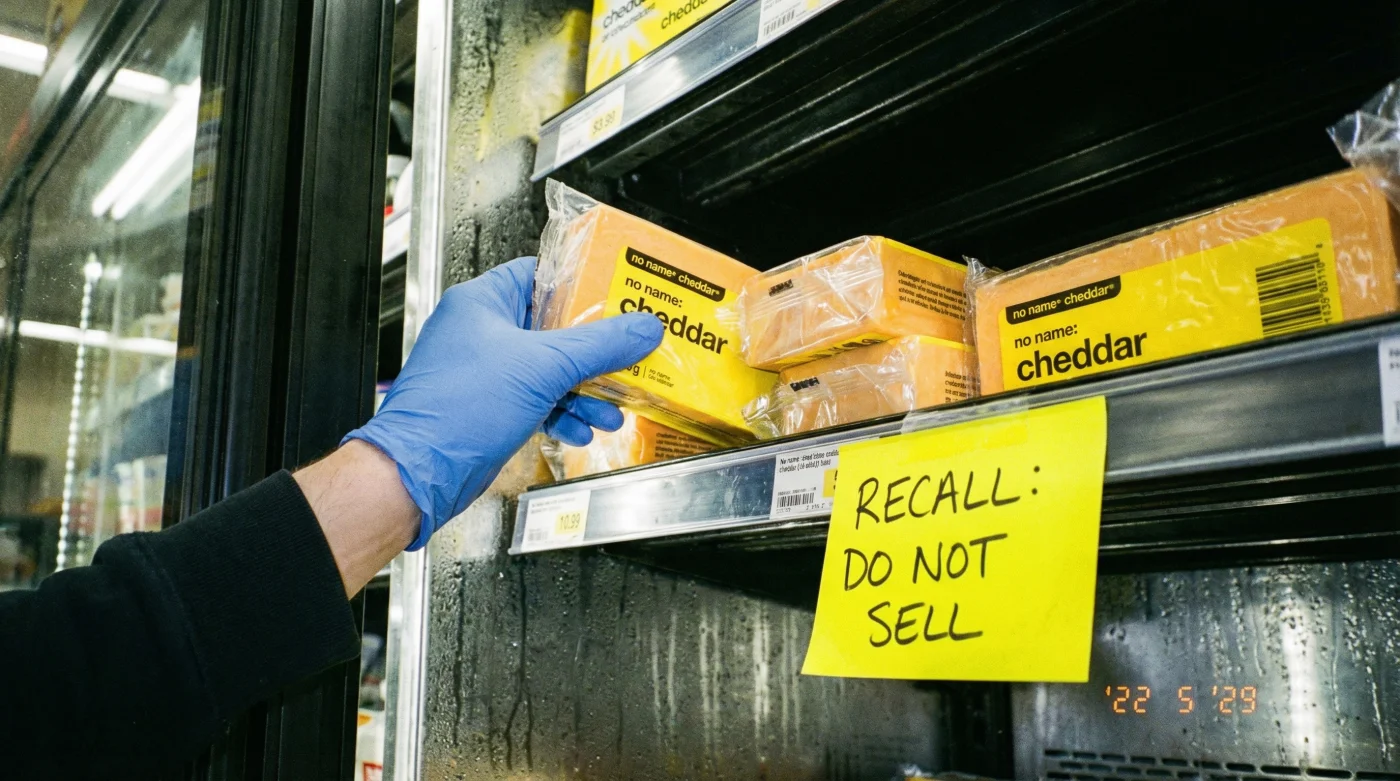
You open the refrigerator door, the cool air spilling over your feet as you reach for the familiar deli drawer. There is a quiet comfort in the heavy, vacuum-sealed plastic holding your weekly cheddar or mozzarella. It feels impenetrable, a sterile fortress shielding your food from the outside world. We have been conditioned over decades of grocery shopping to trust that tight, industrial wrapping equals absolute safety.
But safety is an illusion when the threat is sealed inside with it. The Sobeys cheese recalls sweeping across the country are not just an administrative blip; they represent a sudden crack in the foundation of our domestic routines. You likely heard the news while stirring your morning coffee or waiting in line at a local Tim Hortons. The immediate removal of these specific dairy products feels abrupt, contradicting our deepest assumptions about commercial packaging.
We instinctively assume the thick plastic protects the cheese from us, from the ambient air, and from the long haul in a transport truck down the Trans-Canada Highway. Instead, this urgent recall exposes a quiet, invisible reality. The very packaging designed to extend shelf life can act as an incubator for microscopic risks, allowing bacterial strains to multiply undetected in standard Canadian grocery supply chains.
What you thought was a barrier is actually a micro-environment. Recognizing this subtle difference shifts how you interact with everything in your crisper drawer. It turns a moment of consumer panic into an opportunity to understand the living nature of the food you bring into your home.
The Myth of the Plastic Fortress
To understand why an entire nationwide network had to pull products overnight, we have to dismantle the myth of the static ingredient. Cheese is not a dead, inert object like a block of wood. It is a living, breathing matrix of proteins, fats, and moisture. When an industrial facility wraps a block of Havarti in thick, vacuum-sealed plastic, they are creating a highly specific climate.
Helena Rostova, a 42-year-old independent food safety auditor based out of Calgary, spends her weeks tracking temperature fluctuations from Prairie dairy farms to urban retail aisles. “We treat a brick of sealed cheese like it is suspended in time,” she noted over a lukewarm tea last winter. “But it sweats. It respires. If a minor bacterial payload sneaks onto the surface during the slicing phase at the processing centre, that tight plastic does not suffocate it. It protects it from drying out, giving it a humid little sanctuary to thrive in.”
This is the perspective shift. The plastic isn’t failing; it is performing its job too well, indiscriminately protecting whatever was trapped inside at the moment of sealing. The mundane detail of condensation inside a cheese wrapper is no longer just a sign of temperature change; it is a visual cue of a thriving, enclosed ecosystem.
Identifying Your Exposure: Dairy Risk Profiles
Not all dairy products carry the exact same vulnerability. The way a product is processed and packaged dictates how it responds to these microscopic invaders. By segmenting the types of items affected by the Sobeys cheese recalls, you can better audit your own kitchen.
For the Pre-Shredded Convenience Buyer
Pre-shredded cheese is a staple in busy households, perfect for quick quesadillas or topping a weeknight casserole. However, the mechanical shredding process creates a massive amount of surface area. Every single strand is a new canvas for potential contamination. Furthermore, anti-caking agents dusted over the shreds can sometimes alter the moisture dynamics in the bag. If a recall hits shredded varieties, the risk of rapid bacterial growth is significantly higher due to this expanded surface exposure.
For the Hard Block Purist
Buying a solid block of old cheddar or Parmesan feels like the safer route, and structurally, it is. Bacteria struggle to penetrate the dense, low-moisture interior of a hard cheese. The vulnerability here lies entirely on the surface. If the cutting blade at the packaging centre was compromised, the exterior of your block carries the risk. The solid block may limit the spread, but the tightly sealed plastic still gives the surface bacteria a humid environment to multiply.
For the Deli Counter Regular
Getting your provolone sliced to order feels artisanal, but it introduces a different variable: the human element and the local slicing machine. While these products are wrapped in thinner, breathable plastic or paper, the cross-contamination risk is localized to the specific grocery store’s equipment. The recall protocols for in-store items are often highly targeted to specific geographic regions rather than a nationwide blanket removal.
The Mindful Reset: Securing Your Fridge
When a recall of this magnitude is announced, panic-throwing everything into the garbage bin is a common reaction. Instead, approach your kitchen with a calm, methodical mindset. Securing your environment is about deliberate, minimalist actions that restore your peace of mind.
You need to treat your refrigerator not as a storage cabinet, but as a clinical cold-chain environment. A casual wipe with a damp cloth is insufficient when dealing with potential Listeria, which is notoriously resilient in cold temperatures. Follow these specific actions to reset your space safely.
- Remove all dairy products from the affected drawer and place them on a clean, washable tray on your counter.
- Cross-reference the exact UPC codes and best-before dates provided in the official Sobeys recall notice. If the numbers match, double-bag the cheese before placing it in your outdoor waste bin.
- Remove the entire plastic deli drawer from the refrigerator structure. Wash it in your sink using hot water and a generous amount of dish soap.
- Rinse the drawer with a sanitizing solution of one tablespoon of household bleach per four litres of water.
- Dry the drawer completely with a clean paper towel, as leaving moisture behind defeats the purpose of the sanitization.
- Return the unaffected items, ensuring there is breathing room between the packages for proper cold air circulation.
The Tactical Toolkit
To maintain a resilient kitchen, you only need a few variables perfectly dialed in. Your refrigerator temperature must sit strictly below 4 degrees Celsius. Use an independent appliance thermometer to verify this, as built-in dials are notoriously inaccurate. When washing contaminated zones, ensure your sink water temperature is at least 60 degrees Celsius to effectively break down the milk fats where stubborn bacteria hide.
A Quiet Revolution in the Kitchen
Managing a food recall does not have to be an exercise in anxiety. Instead, it is an opportunity to reclaim authority over your household’s health. We are deeply removed from the origins of our food, relying on the visual shorthand of heavy packaging and vibrant labels to assure us of quality. The Sobeys cheese recalls strip away that visual shorthand, forcing us to look at our provisions with a sharper, more educated eye.
Understanding that your food remains a biological, evolving entity even when wrapped in industrial plastic shifts your role from passive consumer to active curator. You are no longer just unloading groceries; you are managing a delicate cold chain.
This awareness brings a profound sense of clarity. The next time you reach into the refrigerator, you will not rely on the illusion of the plastic fortress. You will trust your own protocols, your temperature management, and your renewed understanding of how the supply chain actually works. That is the true advantage born from a mundane kitchen crisis, resulting in unshakeable confidence in your own culinary domain.
“A sealed package is not a pause button on biology; it is merely a change in the weather system surrounding your food.” — Helena Rostova, Food Safety Auditor
| Key Point | Detail | Added Value for the Reader |
|---|---|---|
| Temperature Control | Maintain fridge below 4 degrees Celsius. | Halts the rapid multiplication of resilient bacteria like Listeria. |
| Surface Area Risk | Pre-shredded cheese carries higher exposure than solid blocks. | Allows you to prioritize which items to audit first during a recall. |
| Sanitization Method | Use hot water (60C) and soap, followed by a bleach solution. | Guarantees the breakdown of protective milk fats hiding pathogens. |
Frequently Asked Questions
Can cooking the recalled cheese make it safe to eat?
While high heat kills live bacteria, some pathogens produce heat-stable toxins that remain in the food. It is never worth the risk; safely dispose of recalled items immediately.
Why do these recalls seem to happen suddenly nationwide?
Centralized processing means a single compromised cutting blade or packaging line can ship products across the country before routine testing flags the bacterial presence.
Should I throw out everything in my deli drawer?
No. Methodically check UPC codes and best-before dates against the official recall notice. Keep unaffected items, but thoroughly sanitize the drawer itself to prevent cross-contamination.
Can I compost the recalled dairy products?
Avoid composting recalled animal products, as residential compost bins rarely reach the sustained temperatures required to destroy dangerous bacterial pathogens.
What is the safest way to store replacement cheese?
Once opened, wrap solid cheese tightly in parchment or specialized cheese paper, then place it in a loosely sealed plastic bag to allow it to breathe while retaining appropriate moisture.