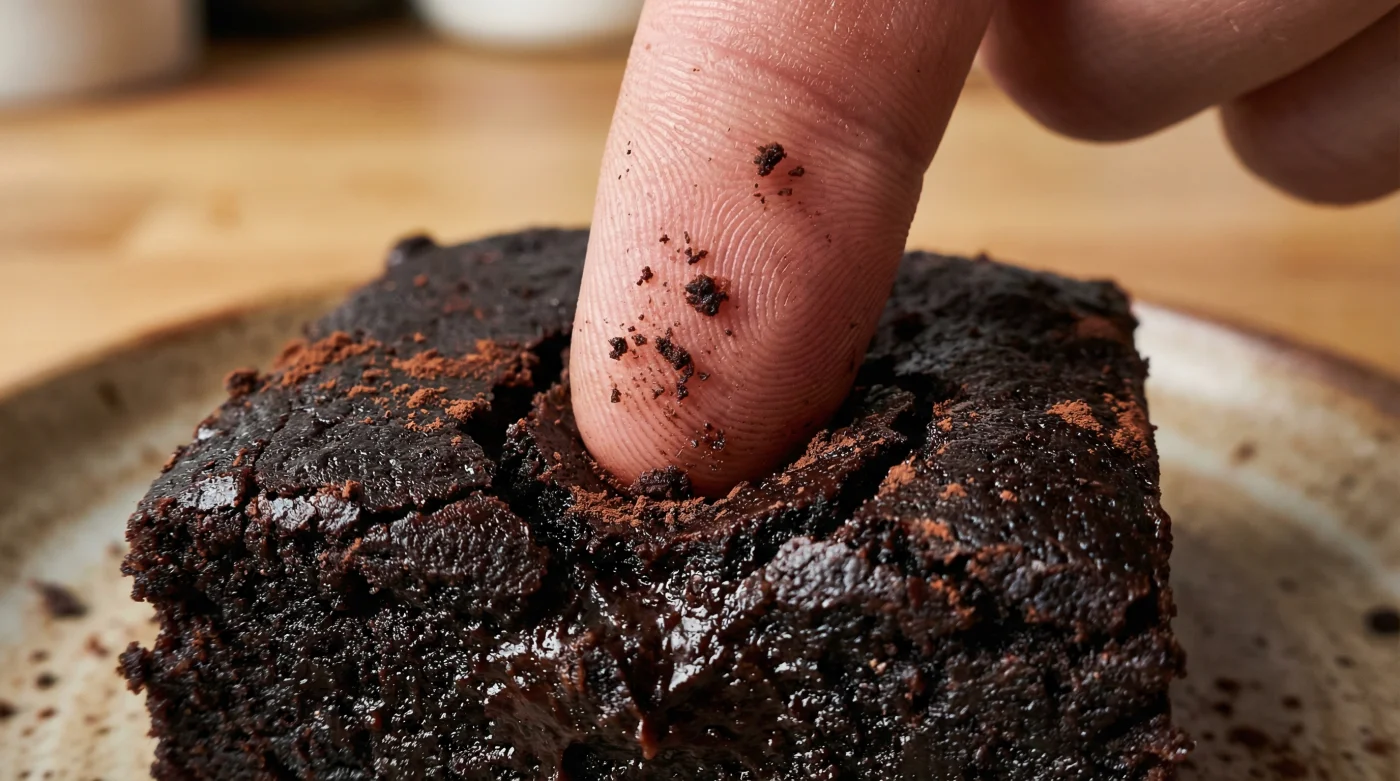
The scent of melting cocoa hovering in a cold kitchen offers a specific kind of comfort, especially as frost creeps up the windowpanes. You expect the standard results when pulling a heavy metal tray from the oven: a papery, crinkled crust giving way to a predictably cakey interior, perhaps slightly dry and crumbly around the edges where the heat hit hardest. It is familiar, safe, and often a little underwhelming.
But then your fork presses into a dark square that flatly refuses to crumble. It yields slowly, heavy like chilled ganache, carrying an intense, lingering dark profile that completely coats the palate. There is no airy sponge here, only a dense, velvety resistance that feels distinctly expensive.
You might assume this sudden density requires melting down costly blocks of imported artisanal chocolate, meticulously tempering them, and folding heavy cream into a fragile, temperamental emulsion. Most home bakers accept that true, restaurant-quality richness demands an exorbitant grocery bill and an hour of hovering nervously over a double boiler. Yet the professional reality relies on a remarkably grounded pantry staple to force the batter into total submission.
By introducing a smooth puree of black beans, you create a permanent, luxurious batter density that completely bypasses the traditional reliance on excess fat. This two-ingredient modification—combining the legumes with your standard cocoa mix—quietly revolutionizes the crumb.
Rethinking the Architecture of Density
To understand why this professional pivot works so seamlessly, think of baking like pouring a foundation for a house. If you only add water to dry cement powder, it eventually fractures; it needs gravel and aggregate to hold its shape under immense pressure. In a traditional recipe, extra fat and melted chocolate act as that aggregate, but they are heavy, expensive, and prone to splitting if the oven runs too hot.
You have likely been taught that achieving a deeply fudgy interior means frantically underbaking the pan until the centre remains dangerously raw. This frantic timing creates wildly unpredictable results, often leaving you with a collapsed, gooey middle and sharply burnt corners that end up in the compost bin.
When you shift from blindly following boxed instructions to mastering the internal system of your ingredients, the magic of the starchy legume becomes brilliantly obvious. The pureed beans physically mimic the dense, melting qualities of cocoa butter. They quietly absorb the wet ingredients, holding the moisture captive within their cellular structure even under the intense, dry heat of your oven.
Clara, a 34-year-old pastry chef in Montreal, faced this exact frustration while trying to maintain her dessert margins without sacrificing that mouth-coating richness her exacting clients demanded. Late one rainy evening, staring at skyrocketing invoices for specialty couverture chocolate, she rinsed a cheap tin of black beans, blended the legumes into a silken paste, and folded them into her standard cocoa base. The starch locked onto the dark flavours instantly, creating a resilient, glossy crumb that trembled perfectly on the plate—a professional pivot that forever changed how she wrote her menu.
Adjustment Layers for Your Palate
Not every batch requires the exact same approach. The beauty of this technique lies in its adaptability. How you treat the base depends heavily on the specific cravings of whoever is waiting at the kitchen island with an empty plate.
For the purist, the focus must remain entirely on sourcing a bold Dutch-process cocoa. Because the pureed beans act as a neutral, starchy amplifier, your cocoa powder must carry enough bitter, earthy weight to stand up to the density and carry the flavour profile.
For the busy parent, this method relies entirely on the violent efficiency of the blender. By dropping the aggressively rinsed legumes directly into your wet ingredients—the eggs, neutral oil, and a heavy pour of vanilla extract—you create a perfectly smooth, dark liquid base in mere seconds, hiding the secret completely from picky eaters.
For the texture seeker, this heavy, undisturbed batter begs for toasted walnuts or nibs. Folding in a generous handful of bitter, crunchy elements physically breaks up the velvet-like interior, offering a sharp, satisfying contrast to the rich, slow chew.
The Mindful Assembly
Executing this technique requires a minimalist, deliberate hand. Rushing the puree stage or clumsily combining the wet and dry elements will leave you with an uneven texture, breaking the luxurious illusion entirely.
First, rinse the canned beans aggressively under cold water until the water runs completely clear. This critical step removes the metallic canning liquid, excess sodium, and any earthy aroma, leaving behind a perfectly blank, starchy canvas.
Next, blend those beans with your liquid fats and eggs until absolutely no skin fragments or flecks remain. If you rub a drop of the mixture between your fingers, it should feel perfectly smooth. The liquid should look exactly like a glossy, dark pudding before it ever meets the dry flour and sugar.
Finally, fold the wet puree into your dry ingredients using slow, sweeping spatula motions. Overmixing will aggressively develop the gluten in the flour, turning your beautifully dense dessert into a tough, rubbery square that fights back when bitten.
- Temperature Calibration: Preheat your oven to exactly 175 Celsius (350 Fahrenheit). A stable temperature prevents the edges from drying out before the middle sets.
- Timing the Bake: Leave the pan in for precisely 22 to 24 minutes. The surface should look matte, but a skewer inserted will still carry thick, wet crumbs.
- The Resting Phase: Allow the metal tin to cool completely on a wire rack before attempting to slice. The bean starches require at least an hour to fully crystallize and set into that signature fudgy state.
Beyond the Baking Tin
Mastering this simple pantry addition fundamentally changes how you approach indulgent, late-night baking. It instantly removes the low-level anxiety of perfectly timing an underbaked centre, and it entirely eliminates the need to hoard expensive baking bars in the back of your freezer.
You begin to view humble, everyday ingredients not as forced compromises, but as powerful structural building blocks. A simple tin from the back of the cupboard transforms into the exact mechanical advantage required to create something genuinely spectacular.
In the end, it is about finding profound satisfaction in sheer resourcefulness. You realize that the richest, most intensely satisfying rewards often emerge from the most unassuming, utilitarian origins, proving that technique will always triumph over a high grocery bill.
The secret to an unforgettable dessert isn’t always found in luxury imports, but in understanding how mundane ingredients can manipulate moisture and fat.
| Key Point | Detail | Added Value for the Reader |
|---|---|---|
| Starch Substitution | Replaces half the standard flour and butter with pureed legumes. | Drastically lowers costs while dramatically increasing moisture retention. |
| Flavour Amplification | The neutral base binds heavily to raw cocoa powder. | Delivers a darker, more intense taste without adding extra refined sugar. |
| Structural Integrity | Mimics expensive cocoa butter at room temperature. | Creates a fail-proof fudgy texture that will not crumble when sliced. |
Common Mysteries Solved
Will my dessert taste like a bowl of beans?
Not at all. Thoroughly rinsing the legumes completely removes their natural flavour, allowing the cocoa powder to entirely mask their presence.Can I use a food processor instead of a blender?
A high-speed blender is highly recommended. A standard food processor often leaves microscopic skins that interrupt the smooth, velvety finish.Does this alter the expected baking time?
Yes, slightly. The high moisture content means you will need to trust the clock rather than the traditional toothpick test, which will always emerge wet.Should I store these squares in the refrigerator?
Chilling them overnight actually improves the texture, forcing the starches to firm up into an incredibly rich, truffle-like consistency.Can I use dried beans instead of a can?
You certainly can, provided you soak and boil them until they are completely soft and yielding. Using canned is simply a matter of immediate, weeknight convenience.