The morning light barely clears the frost on the kitchen window before the anxiety sets in. You have the English muffins split, the peameal bacon warming in the skillet, and the poaching water held at a gentle, trembling simmer. Everything is perfectly staged for a weekend breakfast, yet a familiar knot forms in your stomach as you look at the egg yolks resting in their glass bowl.
For generations, culinary instructors have taught us to fear this exact moment. The classic method demands you stand over a steaming double boiler, whisking frantically until your forearm burns, while carefully drizzling in liquid fat so hot it threatens to scramble the eggs on contact. One momentary lapse in concentration, one overly generous pour, and your sauce instantly splits into a remarkably fragile culinary disaster.
But what if the pressure you feel isn’t due to a lack of skill, but a flaw in the inherited instructions? The tradition of using hot clarified fat assumes that heat is required to bind the sauce. In reality, the excessive temperature is exactly what causes the proteins to seize and separate from the water content.
By ignoring the old manuals and reaching for butter that has been melted and then left to cool to room temperature, you completely change the dynamic. Cold lipids temper the egg yolks slowly, allowing the emulsion to form gently. This simple temperature shift removes the looming physical risk and prevents the sudden, aggressive shock that ruins so many Sunday mornings.
Rethinking the Golden Emulsion
Think of emulsification not as a frantic chemical wrestling match, but rather a slow, deliberate mingling in a crowded room. The egg yolks provide the lecithin—the diplomatic mediator—that holds the water and the fat together. If you rush the tempo with scorching heat, the delicate proteins panic, clumping together and entirely dropping the fat they were supposed to hold.
When you introduce cooler butter to the bowl, you alter the entire environment. You are no longer fighting the ticking clock of a hyper-heated bowl. Instead, you are coaxing the ingredients into a stable, luxurious state of suspension, and the sauce thickens with grace.
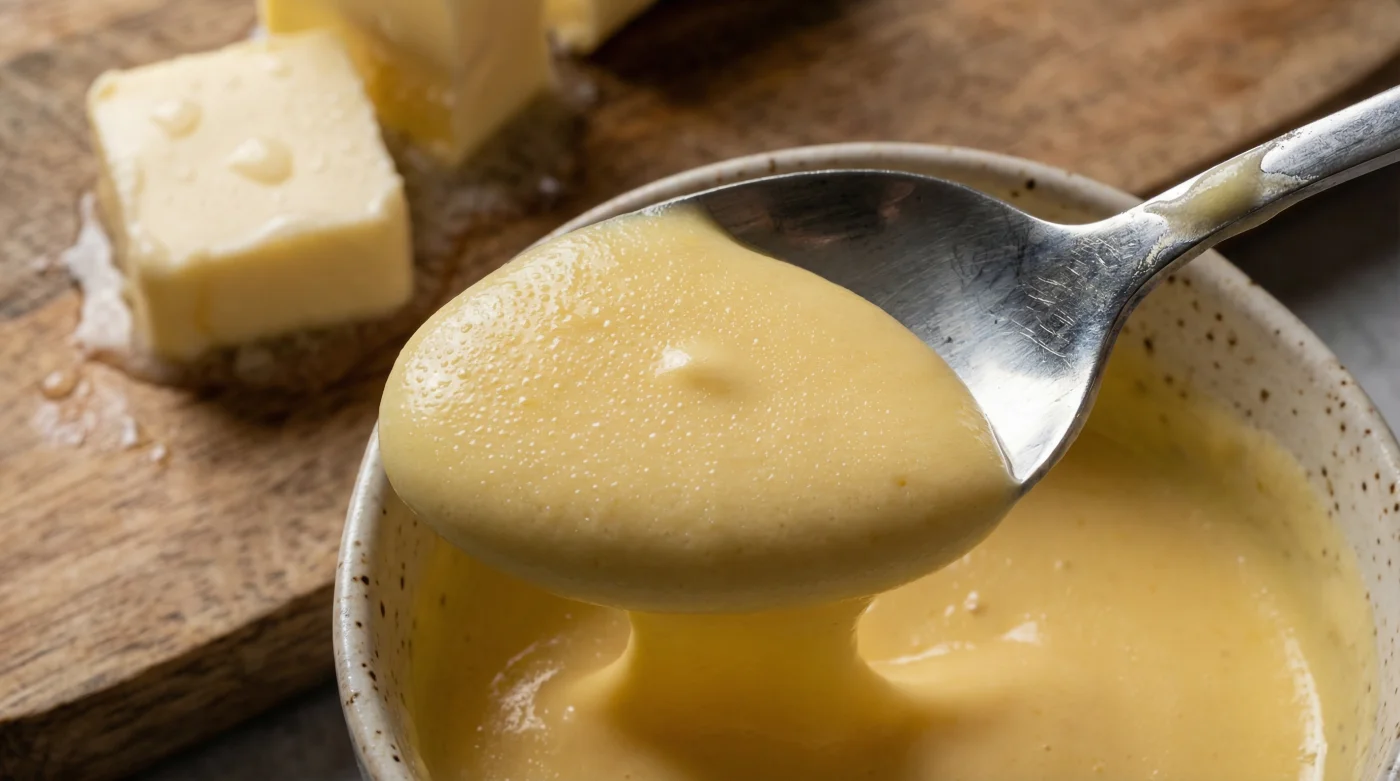
This subtle pivot transforms a notoriously difficult culinary test into a reliable, almost mundane morning routine. The butter, opaque and thick but still pourable, offers a natural physical resistance that aids the whisking process, creating a denser, creamier texture than the traditional hot-pour method ever could.
Consider Marcel Dubois, a 58-year-old breakfast chef running the line at a perpetually packed Montreal bistro. Marcel simply cannot afford to have a sauce break when he has three hundred covers waiting for their morning plates. Years ago, he stopped listening to his classically trained mentors. Instead of keeping a pan of hot clarified butter on the stove, he melts his day’s supply before dawn and lets it sit near the chilly draft of the prep station. By the time service begins, his butter is around 20 degrees Celsius. He whisks it into the yolks with a calm rhythm, producing gallons of flawlessly stable, velvety sauce that survives the hectic morning rush without a hint of panic.
Adapting the Chill for Every Kitchen
Understanding this thermal trick allows you to adapt the preparation to fit your specific style and equipment. Not every cook wants to stand over a stove, and not every kitchen is equipped with the same tools. The rule of cool butter applies universally, but the execution shifts.
For the Weekend Traditionalist, if you find meditation in the manual work, keep your double boiler. You will still warm your yolks gently over the simmering water until they pale and thicken. But the moment you remove the bowl from the heat, you begin incorporating your cooled, room-temperature butter. The residual warmth of the bowl and the yolks is more than enough to melt the cooler fat into the emulsion, ensuring the sauce holds its temper beautifully without breaking.
For the Blender Evangelist, the immersion blender has revolutionized home sauces, but it generates its own mechanical heat through friction. If you use hot butter here, the sheer force combined with the temperature will break the sauce instantly. Pouring in cold, thick melted butter ensures the blades create a perfectly tight matrix without overheating the delicate egg proteins.
For the Meal-Prep Planner, perhaps you are hosting a brunch and need the sauce finished before your guests even arrive. A cool-butter hollandaise maintains an incredible structural integrity because the emulsion was never stressed by high heat during its creation. You can hold it in a thermal carafe rinsed with warm tap water for over an hour, and it will not separate as it rests.
The Cold Butter Protocol
Implementing this method requires a shift in your morning timeline, but the physical actions are far less demanding than the traditional struggle. You are trading intense, frantic labour for a few moments of mindful preparation.
Begin by melting your fat well before you intend to start cooking. Move the pan off the stove entirely and let the ambient kitchen air bring the temperature down naturally while you focus on poaching your eggs or toasting your bread.
- Melt your unsalted butter completely in a small saucepan over low heat.
- Transfer the liquid gold to a cool pouring jug and step away.
- Allow the butter to sit until it reaches roughly 20 to 22 degrees Celsius; it should look cloudy and thick, yet remain entirely fluid.
- Whisk your yolks with a splash of water and lemon juice over a gentle double boiler until they leave ribbons trailing from the whisk.
- Remove the bowl from the heat source entirely before adding your first drop of cooled butter.
- Whisk steadily, adding the cooled butter in a thin, continuous stream until the sauce resembles liquid velvet.
The Tactical Toolkit requires precise thermal boundaries rather than fast hands. Keep your butter cool to the touch, slightly opaque, and target two large yolks for every 120 grams of fat. Add 15 millilitres of fresh lemon juice at the beginning to stretch the protein bonds. If the sauce seems too thick during whisking, add 5 millilitres of warm tap water; do not add more butter.
Beyond the Brunch Plate
Mastering this simple reversal of tradition offers more than just a flawless topping for your eggs. It changes the way you navigate the kitchen on a lazy weekend. You begin to trust the ingredients rather than fearing them, which removes the quiet morning dread that so often accompanies cooking for others.
When you realize that the rigid rules passed down through generations are sometimes flawed, your entire perspective on cooking shifts. The kitchen stops being a place of strict obedience and becomes a space of observation. You learn to watch how the sauce behaves, feeling the resistance against the whisk, rather than just staring blindly at a ticking clock.
Serving a brilliant, stable hollandaise that you prepared without a single drop of sweat changes the atmosphere of your morning. You get to sit down with your family or friends, pour the coffee, and actually enjoy the meal you have crafted. The sauce becomes a joy to eat, and it reflects a truly peaceful morning rather than a monument to culinary stress.
True kitchen authority isn’t about surviving the heat; it is knowing exactly when to step away from it and let the ingredients find their own balance.
| Key Point | Detail | Added Value for the Reader |
|---|---|---|
| Thermal Control | Butter cooled to 20°C – 22°C before pouring. | Prevents the egg yolks from scrambling, ensuring zero wasted ingredients. |
| Gentle Integration | Cold lipids merge slowly without shocking the base. | Creates a thicker, creamier texture that clings beautifully to poached eggs. |
| Holding Stability | The low-heat emulsion maintains its structure longer. | Allows you to prepare the sauce ahead of time, freeing you to focus on guests. |
Kitchen Queries Resolved
Why does hot butter cause the sauce to break? Extreme heat causes the proteins in the egg yolk to tighten and squeeze out the moisture they are holding, separating the fat from the liquid in an instant.
Can I cool the melted butter in the refrigerator to save time? It is better to avoid the fridge, as the edges will solidify unevenly. Let it sit at room temperature for about twenty minutes while you prep your other ingredients.
What if my sauce gets too thick while whisking in the cold butter? Simply pause your pouring and vigorously whisk in a few drops of lukewarm water to loosen the emulsion, then resume adding your butter.
Do I still need to use clarified butter for this method? No. Whole melted butter works perfectly here; the milk solids actually help stabilize the cooler emulsion and add a sweeter, rounder flavour.
How long can I hold this cool-emulsion sauce before serving? Because the proteins haven’t been heat-stressed, you can safely hold it in a warm (not hot) thermos for up to an hour without it separating.