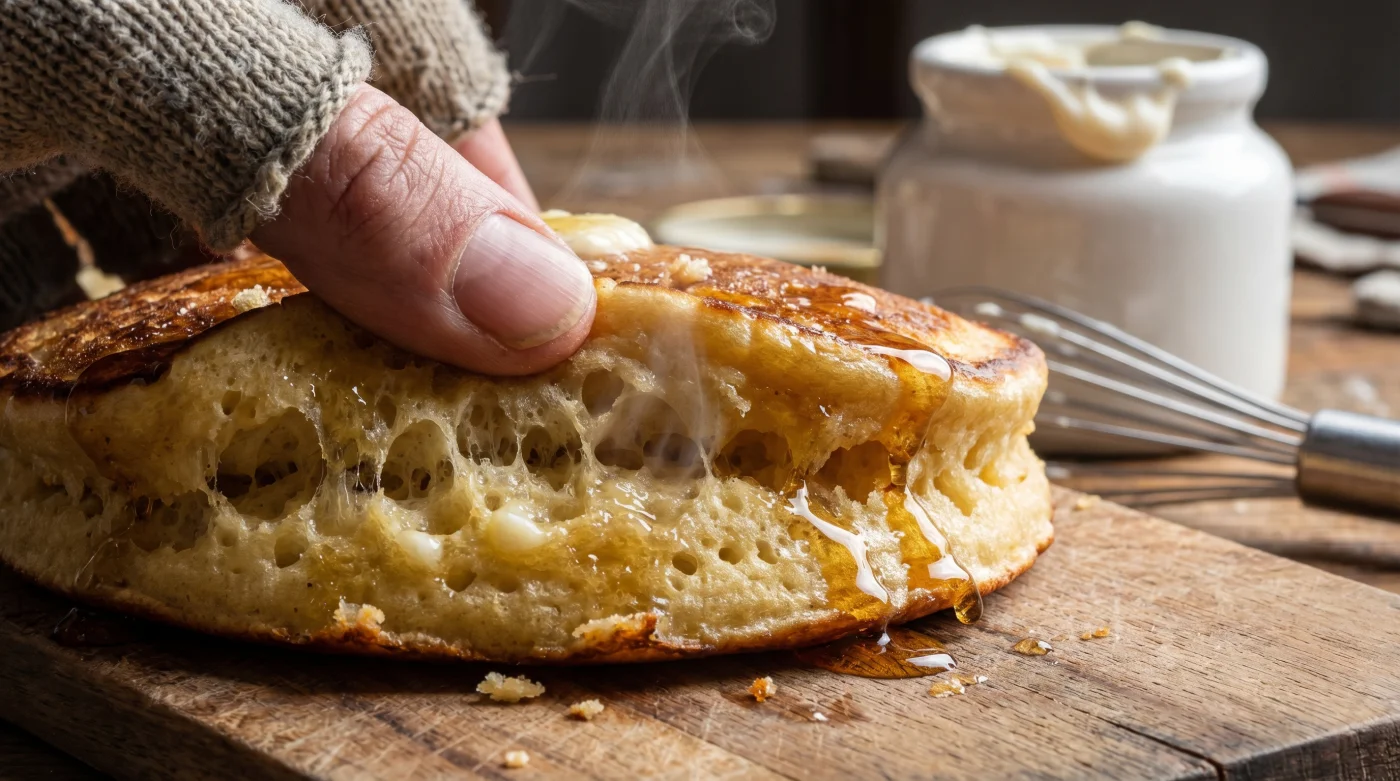
You know the sound before you even open your eyes. A heavy cast-iron skillet hitting the burner, followed by the gentle hiss of butter melting into a foamy, golden puddle. You pour your carefully measured batter, stepping back and hoping for that miraculous rise. Yet, too often, the result settles into a dense, rubbery disk that sits heavy on the plate.
We tend to accept this as the inevitable fate of home cooking. We assume the local greasy spoon possesses a commercial flat-top and secret chemical leavening agents we cannot access. We resign ourselves to mediocre breakfasts, drowning our structural failures in warm maple syrup.
But the secret to that impossible diner height is actually sitting in your fridge door right now, nestled quietly between the mustard and the pickles. It requires no special equipment, no extra prep time, and no frantic trips to a specialty grocer. It demands only a slight shift in how you view a staple condiment.
The Emulsion Advantage
Think of mayonnaise not as a sandwich spread, but as a perfectly stabilized emulsion. It is composed of oil, egg yolk, and an acidic element, whipped into a state of permanent suspension. Adding a savoury condiment to a sweet batter sounds like culinary treason, yet it alters the entire structural integrity of your breakfast.
This simple addition acts as a pre-mixed baking mortar. The oil provides tenderizing fat that coats the flour proteins, the yolk binds the mixture without toughening the gluten, and the vinegar reacts instantly with your baking powder. This chemical reaction creates violent, beautiful lift the moment the batter hits the heat.
Clara, a 62-year-old line cook who spent three decades running the breakfast rush at a diner outside Halifax, never measured her morning ingredients with a digital scale. Instead, she kept a massive tub of commercial mayonnaise directly beside her mixing bowls. When asked how she achieved hotcakes that could absorb half a bottle of syrup without collapsing, she simply said, ‘You have to trick the flour.’ By folding a dollop of mayo into her wet ingredients, she completely bypassed the risk of over-mixing melted butter, delivering an airy sponge to every single customer.
Adjusting the Batter Profile
Different mornings require different approaches. Adapting your technique locally ensures you get the exact texture you crave, regardless of what else is sitting in the pantry.
For the Breakfast Purist
If you swear by a traditional buttermilk recipe, keep your base intact but replace the melted butter entirely. Swap it for two tablespoons of full-fat, plain mayonnaise. The added acidity will make the buttermilk work twice as hard, creating a crumb that rivals an expensive sponge cake.
For the Weekend Batch-Cooker
The emulsion in mayonnaise actually stabilizes the raw batter. You can rest it overnight in the fridge without fear. The vinegar keeps the leavening agents primed, meaning Sunday morning requires nothing more than turning on the stove and greasing the pan.
For the Dairy-Free Baker
If milk is off the table, a combination of water, flour, baking powder, and a generous scoop of mayonnaise creates surprisingly rich results. The yolk and oil provide the necessary fat content that water lacks, faking the presence of whole milk beautifully.
The Five-Minute Morning Protocol
Incorporating this trick requires a gentle hand. You are not vigorously beating a cake batter to submit it to your will. You are coaxing ingredients together, allowing the chemistry to do the heavy lifting.
- Place the mayonnaise in your wet mixing bowl first, whisking it vigorously with your milk and eggs until no lumps remain.
- Pour the wet emulsion over your dry ingredients.
- Fold the mixture with a rubber spatula using a sweeping, bottom-to-top motion.
- Stop while you still see streaks of raw flour. The batter should look ragged and barely hold its shape.
Your Tactical Toolkit:
- The Ratio: One level tablespoon of plain mayonnaise per cup of flour.
- The Heat: Medium-low. The pan needs to be warm enough to sizzle a drop of water, not vaporize it instantly.
- The Timing: Wait for the bubbles on the surface to pop and stay open (roughly two to three minutes) before attempting to flip.
Beyond the Breakfast Plate
Mastering this small, seemingly counterintuitive detail does more than just fix a flat pancake. It fundamentally rewires how you interact with your pantry. When you stop seeing ingredients strictly for their marketed purpose, cooking becomes a fluid, adaptable skill.
A weekend breakfast shifts from a stressful attempt to replicate a restaurant meal into a quiet, confident ritual. You trust the science resting in the bowl, leaving you free to simply listen to the bacon crackle and enjoy the smell of warm vanilla filling the kitchen.
‘A recipe is only a suggestion; understanding how fat and acid behave in the bowl is what actually makes you a cook.’
| Key Point | Detail | Added Value for the Reader |
|---|---|---|
| The Mayonnaise Swap | Replaces melted butter or standard oil with a stable emulsion. | Eliminates dense textures and creates an impossibly tall, fluffy interior. |
| The Acid Reaction | Vinegar in the mayo reacts with baking powder. | Provides instant lift in the pan without requiring prolonged resting periods. |
| The Ragged Mix | Leaving streaks of flour in the batter. | Prevents gluten development, keeping the final product tender rather than chewy. |
Frequently Asked Questions
Will my pancakes taste like a sandwich?
Not at all. The small amount of mayonnaise completely disappears into the background, leaving behind only richness and an incredibly soft texture.Can I use flavoured or light mayonnaise?
Avoid anything flavoured like garlic or sriracha. Light mayonnaise contains higher water content and stabilizers, which will not provide the same tenderizing fat as the full-fat, plain version.Do I still need to use eggs in the batter?
Yes. While mayonnaise contains egg yolk, it acts as an enhancer rather than a complete replacement for the binding power of a whole fresh egg.Can I use this trick for waffles?
Absolutely. The same emulsion principles apply, resulting in waffles that are crispy on the outside and airy on the inside.How long can I keep the batter?
Thanks to the stabilizing nature of the mayonnaise, you can cover and keep the unmixed dry and wet components separate for days, or keep the mixed batter in the fridge overnight.