The sharp, heady scent of warm grapes fills the kitchen on a cold November evening. You are standing near the stove, watching a dark liquid bubble aggressively in a saucepan. Most of us have attempted this slow, anxious ritual—waiting for a watery condiment to thicken into a luxurious glaze.
Yet, as the minutes tick by, the margin for error shrinks drastically. Walk away to check the roast, and the sugar scorches instantly, leaving a bitter, sticky residue permanently adhered to your cookware. You wanted fine-dining aesthetics, but you ended up with a burnt reduction that refuses to hold its shape on a white porcelain plate.
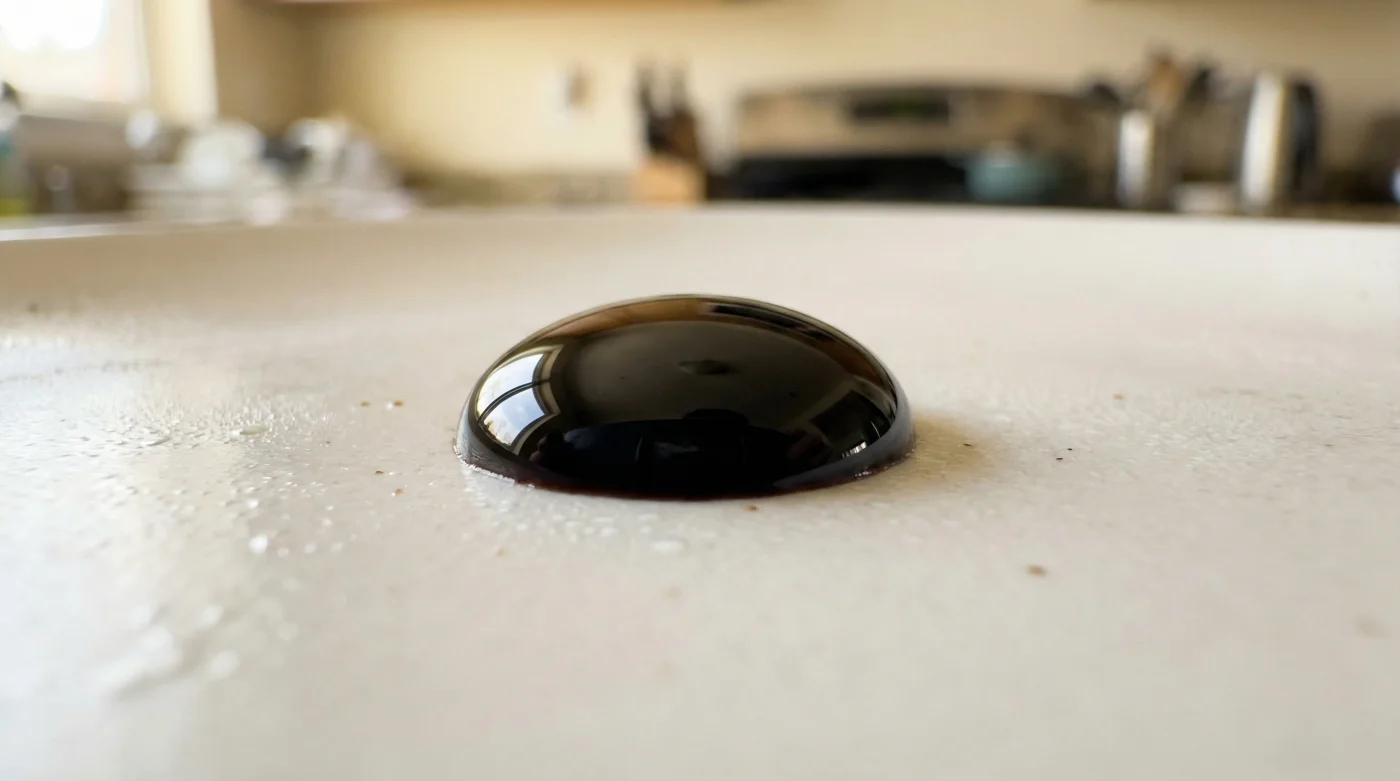
The truth about restaurant plating is often less about endless patience and more about precise chemistry. The perfectly domed droplets of dark syrup that hold their shape alongside a warm goat cheese tart aren’t born from an hour of simmering. They rely on a quiet, invisible structural support.
The Architecture of Liquid
When you boil down a liquid, you are simply removing water to concentrate the natural sugars. But relying strictly on evaporation is like trying to build a tall brick wall using only wet mud as mortar. It might hold briefly, but eventually, it collapses outward, bleeding across your plate and ruining the visual crispness of your dish.
Here is where the philosophy changes. Instead of forcing the liquid to thicken through sheer thermal reduction, you introduce a stabilizing web. Fruit pectin, a natural carbohydrate found in apples and citrus, acts as microscopic rebar.
By introducing just a drop of liquid pectin to briefly simmered balsamic vinegar, the syrup instantly binds. You are no longer reducing; you are structurally engineering a liquid.
Consider Chef Marc-Antoine Roy, a 42-year-old culinary instructor who spent a decade plating high-volume, precision desserts in Old Quebec. He watched young cooks waste litres of expensive balsamic vinegar, constantly chasing the perfect viscosity for strawberry basil tarts. One evening, frustrated by a batch of syrup that kept running into the mascarpone cream, he reached for a bottle of liquid pectin meant for a rapid-set raspberry jam. He whisked a few drops into the warm vinegar off the heat. Within seconds, the liquid relaxed into a glossy, obedient gel. It was a complete revelation that turned an unpredictable chore into an exact, repeatable science.
Designing Your Canvas
Not every drop serves the same visual purpose. How you deploy this stabilized syrup depends entirely on the atmosphere of the meal you are serving. Understanding the plate’s temperature ensures your carefully constructed drops maintain their striking profile.
For the Purist
You want minimalism. A stark white plate, a single seared scallop, and three descending sizes of balsamic droplets curving along the rim. Keep the pectin ratio low—just enough to hold a soft dome without looking like a stiff jelly.
For the Savoury Host
When plating roasted root vegetables or charcuterie, the syrup needs to interact with surrounding fats. A slightly firmer set allows the sharp, acidic beads to sit proudly atop a slick of olive oil or beside a wedge of warm brie without muddying the colours.
For the Dessert Specialist
If you are contrasting the dark vinegar with a bright vanilla panna cotta, the glaze must hold firm under the heat of a dining room. A higher pectin dose creates a bead that can be dragged with a toothpick into perfect, sharp-tailed commas.
The Five-Minute Plate
Executing this technique requires very little effort, but the timing is highly specific. You are working with a fast-acting binder, meaning preparation prevents frantic mistakes at the stove. Gather your tools before you apply heat.
Your tactical toolkit should include:
- 120 millilitres of standard balsamic vinegar (reserve the expensive aged bottles for finishing raw).
- 1/2 teaspoon of liquid fruit pectin.
- A small, heavy-bottomed saucepan to distribute heat evenly.
- A medical syringe or a very fine-tipped squeeze bottle for precision application.
Bring the vinegar to a gentle simmer over medium-low heat, aiming for roughly 90 Celsius. Do not let it reach a furious boil, keeping the delicate fruit notes intact. Let it simmer lightly for barely three minutes, just until the sharpest fumes dissipate into the air.
Remove the pan entirely from the heat source. Whisk in the pectin quickly and aggressively. The liquid will immediately transform, shifting from a thin, watery consistency to a heavy, glossy ribbon that lightly coats the metal of your whisk. Transfer it immediately to your squeeze bottle before it sets fully in the pan.
Beyond the Droplet
There is a distinct quietness that comes with trusting your ingredients to perform. When you stop fighting the physical limitations of a thin liquid, the kitchen becomes a space for genuine creativity rather than anxious damage control.
Plating a meal for friends should not feel like an unpredictable race against gravity. By understanding the invisible mechanics of pectin, you reclaim your time and your focus. The food stops acting as a stressful opponent.
Instead, the plate becomes a deliberate expression of care. You can finally set the table, pour the wine, and present a dish that holds its beautiful, glossy shape long after the first bite is taken.
True elegance on a plate is never forced; it is simply the result of understanding the invisible architecture of your ingredients.
| Method | Viscosity Control | Added Value for the Reader |
|---|---|---|
| Traditional Reduction | Unpredictable | High risk of scorching; requires constant stove supervision. |
| Cornstarch Slurry | Cloudy and muted | Dulls the sharp flavour and leaves an unpleasant starchy mouthfeel. |
| Pectin Stabilization | Precise and glossy | Sets instantly off the heat; maintains brilliant clarity and sharp structural borders. |
Frequently Asked Questions
Can I use powdered pectin instead of liquid? Liquid pectin is highly recommended because it activates instantly without needing prolonged boiling, preserving the fresh acidity of the vinegar.
Will this make my balsamic vinegar taste like jam? Not at all. Pectin is entirely flavourless. It only alters the physical structure, leaving the sharp, grape-driven notes completely intact.
How long will the stabilized syrup last? Stored in an airtight squeeze bottle in the refrigerator, it will maintain its structure and flavour for up to three weeks.
What if the syrup gets too thick in the bottle? Simply run the plastic bottle under hot tap water for thirty seconds. The gentle warmth will relax the pectin web just enough to flow smoothly again.
Can I use this technique with other liquids? Yes. This same logic applies to creating perfect droplets from soy sauce, fruit juices, or even thin broths.