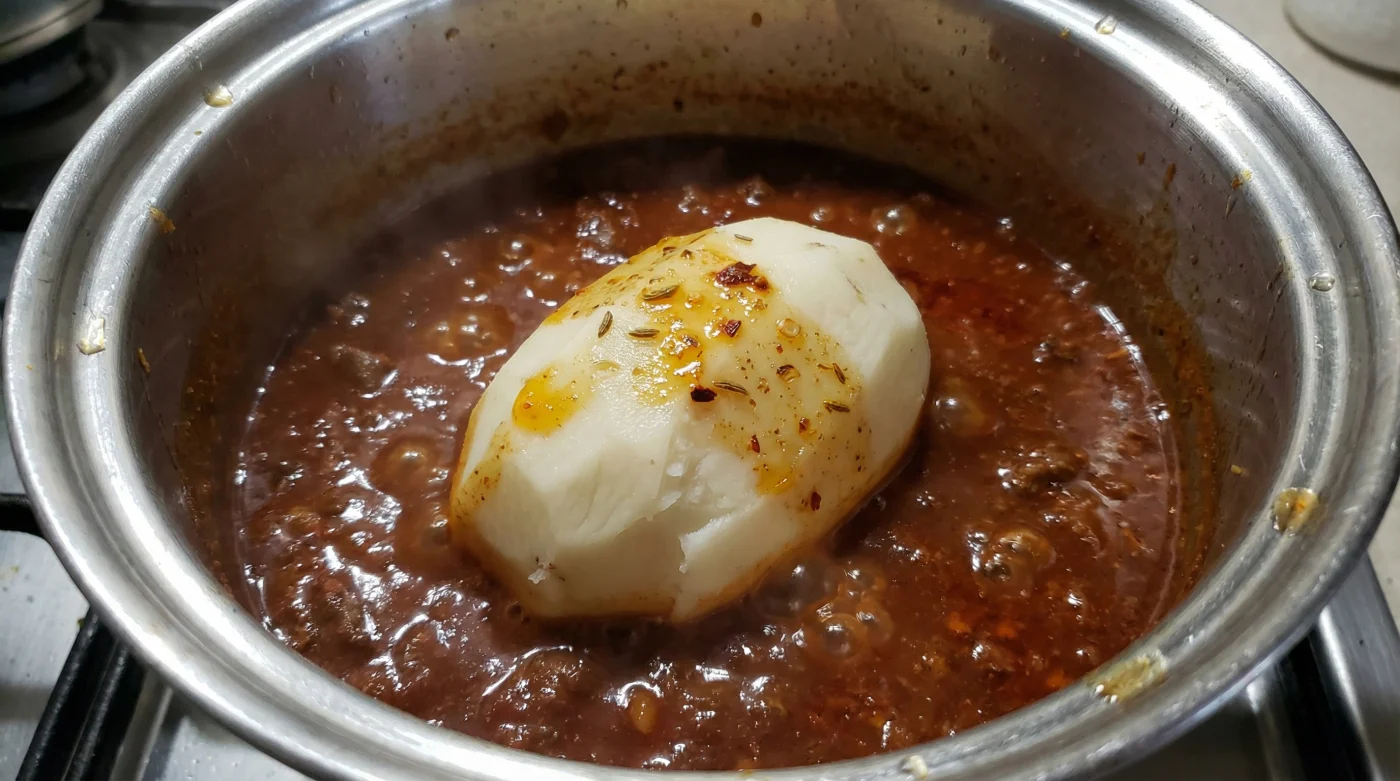
Frost creeping up the windowpanes of your kitchen, the rhythmic burbling of a heavy cast-iron Dutch oven breaking the quiet of a late afternoon. The smell of toasted cumin, smoked paprika, and slow-simmered tomatoes wraps around you like a heavy wool blanket. You have spent three hours coaxing depth out of tough cuts of beef and dried beans, watching the liquid reduce into a dark, complex red sauce.
Then comes the tasting spoon. You blow on the dark sauce, take a sip, and your stomach drops. A sharp, stinging wave of pure sodium aggressively coats your palate. The chili is heavily oversalted. Panic sets in as you stare down at a weekend’s worth of dinners, seemingly ruined by a careless, heavy-handed pinch of kosher salt.
The instinctual panic response is almost always the same: reach for the tap. You pour in cups of water or unseasoned broth, hoping to drown out the mistake. But all you do is wash away the rich, velvety texture you worked so hard to build, leaving behind a sad, watery soup that lacks body and soul. The flavour profile becomes muddied, and the thick, comforting stew you envisioned is gone.
You do not need to dilute the pot to save your supper. The true kitchen fix relies on strategic subtraction, not thoughtless addition. The answer lies quietly in the dark corner of your pantry, waiting in a humble burlap sack. A raw, starchy root vegetable is about to perform a quiet miracle right on your stovetop, pulling the excess seasoning out of your dinner without altering the volume of the liquid.
The Starch Magnet
We are taught that cooking is a straight line from raw ingredients to a finished plate, and that mistakes are permanent marks on the record. But a simmering pot of chili is a living system. When you add too much salt, the sodium ions frantically search for something to bind to. They flood the liquid, overwhelming the softer notes of garlic, onion, and roasted pepper.
If you add water, you merely spread the salt out, forcing the liquid to carry the burden over a larger area. Think of the starch inside a potato as a microscopic sponge. Dropped raw into the simmering liquid, the heat gently opens the cellular structure of the tuber. This creates a porous vacuum that aggressively pulls in excess sodium as it cooks, leaving the original liquid volume and rich mouthfeel completely undisturbed.
Consider Elias Thorne, a 52-year-old prep cook working the line at a busy Calgary pub famous for serving hundreds of bowls of brisket chili during the depths of winter. Last February, a loose lid on a salt shaker sent an entire cup of coarse sea salt cascading into a 20-litre batch. With only forty minutes until the doors opened, Elias didn’t panic. He grabbed a bag of large Russets, peeled them swiftly, halved them, and submerged them in the bubbling red sauce. After twenty minutes of gentle simmering, he fished out the now-soft, heavily salted halves. The chili was saved, retaining its thick, hearty character, while the kitchen staff enjoyed the fiercely seasoned potatoes as a pre-shift snack.
Calibrating the Fix to Your Recipe
Not every batch of chili requires the exact same approach. How you deploy your starchy saviours depends entirely on the texture and makeup of what is currently simmering on your stove. You must carefully tailor the vegetable to the environment it is entering.
For the Texas Purist: If your chili is strictly meat and red chile paste, you want maximum starch without risking potato breakdown. Use a high-starch Russet potato, peeled and cut into very large chunks. These will hold their shape just long enough to absorb the salt before you carefully extract them. The sheer size of the cuts ensures they will not dissolve into the smooth sauce.
For the Bean-Heavy Batch: Chili laden with kidney and black beans already has a high starch content in the liquid. Here, you want a waxy variety like a red potato or a Yukon Gold. Cut them into wedges. They stay incredibly firm, allowing you to easily find and remove them amidst a crowded pot of legumes and vegetables.
For the Ground Meat Quick-Simmer: If you are making a fast weeknight version and need an immediate fix, slice the raw potatoes into thin rounds. The increased surface area works dramatically faster, though you will need to watch the pot closely. You must fish them out with a slotted spoon before the heat completely breaks them down into mush.
Executing the Extraction
The process of fixing your dinner requires calm, deliberate action. Do not rush the stove. You must gently coax the potato into doing the heavy lifting without sacrificing the integrity of the dish you spent hours building.
Start by assessing the damage. Taste the chili one more time, noting just how aggressive the salt is on the back of your tongue. This dictates the volume of potatoes you need to peel and prepare for the rescue operation.
Follow these quiet, precise steps to reset the delicate balance of your pot:
- Peel two large, raw potatoes, ensuring absolutely no skin remains to block absorption.
- Slice them into halves or thick quarters, maximizing surface area while keeping the pieces large enough to retrieve.
- Submerge the pieces deep into the hot liquid, ensuring they are entirely covered by the chili.
- Maintain a gentle, rolling simmer. Avoid an aggressive boil, which will shatter the potatoes and cloud your sauce.
- After fifteen to twenty minutes, pierce a piece with a fork. It should yield easily but not fall apart.
- Use tongs or a spider skimmer to carefully lift every single piece out of the pot.
The Tactical Toolkit: Keep the stove precisely at 90 degrees Celsius, maintaining a low, rhythmic simmer. Use exactly one large potato per three litres of chili. Never let the extraction process exceed twenty-five minutes, or the starch will begin to leach back into the broth.
Reclaiming Your Confidence at the Stove
The moment you taste the corrected chili—rich, balanced, deeply savoury but no longer harsh—a quiet shift happens in your mind. The stove is no longer a place of rigid rules and potential ruin. The anxiety of feeding your family fades into a quiet sense of accomplishment.
Knowing how to manipulate the chemistry of your food gives you a profound sense of culinary resilience. You begin to cook with a looser grip on the spoon, breathing easier as you taste and adjust, knowing that even the most aggressive missteps can be gently coaxed back into harmony. Cooking becomes less about avoiding mistakes and more about understanding how to elegantly navigate them.
A mistake in the pot is just a question waiting for a clever answer; the raw potato is the quietest solution in the kitchen. – Elias Thorne, Line Cook
| Key Point | Detail | Added Value for the Reader |
|---|---|---|
| The Sponge Method | Raw potatoes absorb excess sodium ions from hot liquids. | Saves ruined meals without diluting the rich flavour profile. |
| Starch Selection | Russets for pure liquid, Yukon Golds for crowded, bean-heavy pots. | Prevents potatoes from dissolving and ruining the dish’s texture. |
| Temperature Control | Maintain a 90-degree Celsius simmer, avoiding a rolling boil. | Keeps the broth clear and prevents the starchy tubers from breaking apart. |
Frequently Asked Questions
Will the chili taste like potatoes after I remove them?
No. The potatoes act strictly as an absorption mechanism. As long as you remove them before they break down, your chili will retain its original flavour profile.Can I use sweet potatoes if I do not have white potatoes?
Avoid sweet potatoes. They introduce unwanted sugars into the sauce, altering the taste of your savoury stew. Stick to neutral, starchy white or yellow varieties.How long should the potatoes stay in the pot?
Aim for fifteen to twenty minutes at a low simmer. Leaving them in longer than twenty-five minutes risks the potatoes falling apart and clouding your sauce.Do I need to chop the potatoes into small pieces?
No. Keep the pieces large, such as halves or thick wedges. Small pieces are difficult to fish out of a crowded pot and dissolve much faster under heat.Can I eat the salted potatoes afterward?
Absolutely. They will be heavily seasoned and quite soft, making them an excellent side snack or a savoury base for a quick breakfast hash the next morning.