The extractor fan groans above the stove, fighting a losing battle against the heavy, fragrant smoke of toasted sesame and smoking peanut oil. You stand there with a pair of tongs, watching raw strips of flank steak hit the blistering carbon steel of the wok. The sound is a violent, aggressive sizzle that immediately fills the kitchen with the promise of a warm, comforting meal on a bitterly cold Canadian evening.
Usually, this is where the anxiety creeps in. Cheap cuts of beef, particularly those found heavily discounted in local grocers on a Tuesday afternoon, have a nasty habit of seizing up under extreme heat. They knot themselves into grey, rubbery bands that fight back against your jaw, turning what should be a satisfying dinner into a tiresome chewing exercise.
The traditional reflex is to reach for a crutch. You might drown the meat in thick, sweet sauces, or attempt a complicated overnight dry rub of baking soda and cornstarch, hoping to force some artificial tenderness into the stubborn muscle. These starchy pastes often stick to the pan, burning before the meat is properly cooked and leaving a powdery, metallic residue on your palate.
But the truth is much simpler, hiding quietly in a large plastic jug under your sink or sitting forgotten on the bottom shelf of your pantry. Plain, stark white vinegar—the cheapest acidic liquid you own—is the precise chemical tool you actually need to force a tough cut of beef into total submission.
The Acidic Scalpel
Think of a raw steak strip as a tightly wound bundle of thick cables. When subjected to the intense, sudden heat of a hot wok, those cables contract violently, like a clenched fist. They squeeze out their natural moisture and harden in a matter of seconds, leaving behind a dry, unforgiving texture.
Standard dry rubs sit lazily on the surface. They rely on heavy salts to draw out moisture and flavor the exterior, but they do remarkably little to alter the actual structural integrity of the protein before it hits the pan. They are blankets, not tools.
White vinegar operates entirely differently. The acetic acid acts like thousands of microscopic scissors, snipping those tight protein cables apart before the heat ever touches them. It physically breaks down the tough muscle fibres at a rapid pace, dissolving the connective tissue far faster than complex fruit enzymes or thick, gloopy marinades.
It feels profoundly counterintuitive to splash something so harsh onto raw red meat. You expect the resulting dinner to taste like a jar of pickles, but the acetic acid simply performs its structural work and then evaporates entirely under the intense 230-degree Celsius heat of the wok, leaving behind pure, unadulterated beef flavour.
Consider Wei, a 54-year-old wok chef operating out of a cramped, high-volume kitchen in Richmond, British Columbia. He processes dozens of kilos of cheap, tough inside round steak every single day, turning out flawlessly tender ginger beef without a single gram of expensive tenderizer powder.
He skips the overnight soaking entirely. Wei merely tosses his sliced beef in a splash of plain white vinegar—barely a tablespoon per pound—and lets it rest on the stainless steel counter for exactly the amount of time it takes him to chop a head of broccoli. That brief ten-minute window is all the acid requires to completely dismantle the toughness of the meat.
Tailoring the Acid to the Cut
Not all cheap beef behaves identically. Understanding the physical density of your chosen meat allows you to apply this pantry secret with deliberate precision, rather than blind guesswork.
For the Weeknight Sprinter dealing with flank or skirt steak, the grain is your primary obstacle. These cuts are loose but incredibly stringy. Slice them aggressively against the grain, about half a centimetre thick. A light, gentle toss in the vinegar is all you need, as the thin liquid easily permeates the open texture of the loose muscle fibres.
Then there is the Budget Purist, staring down a dense, unforgiving block of bottom round, sirloin tip, or chuck roast. These cuts are physically dense and tightly packed, lacking the open gaps found in a loose flank steak.
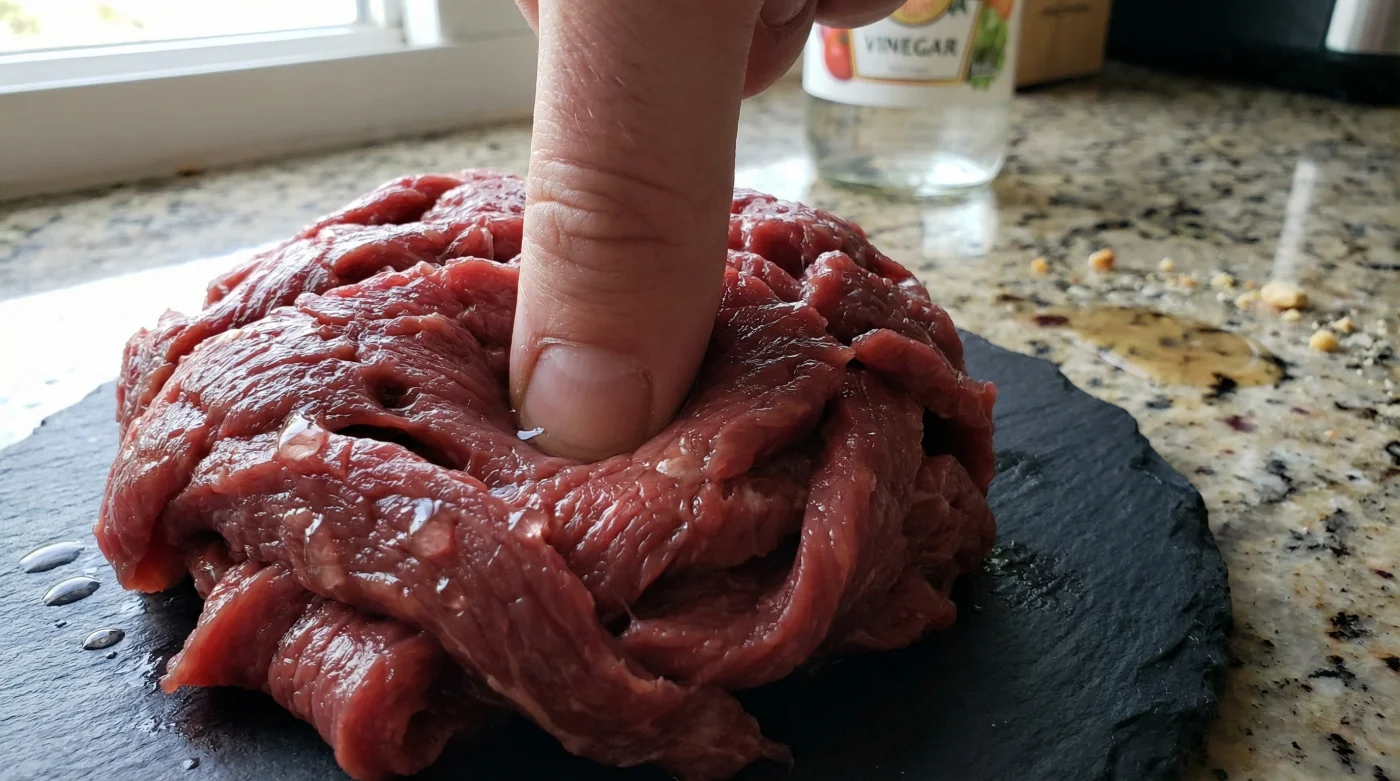
Here, you need friction. Pour the vinegar over the slices and physically massage the liquid into the meat with your bare hands. You want the surface of the beef to feel slightly tacky as the acid begins to immediately denature the outer layer of protein, forcing the liquid into the rigid structure.
The Ten-Minute Tenderization Protocol
The beauty of this technique lies in its brutal efficiency. It is not an afternoon project; it is a rapid, active process that happens right at the cutting board while your pan heats up.
Keep your workspace minimal. You need only a mixing bowl, your sliced meat, the jug of vinegar, and a clean paper towel. The acid works incredibly fast, and leaving the meat in the liquid for too long will turn the exterior mushy and grey.
- Slice the raw steak into uniform strips, aiming for roughly a half-centimetre thickness to ensure the wok cooks them in seconds.
- Measure exactly one tablespoon of standard 5% white vinegar for every 450 grams of meat.
- Massage the vinegar vigorously into the raw beef until no liquid pools at the bottom of the bowl.
- Allow the meat to sit undisturbed at room temperature for exactly ten minutes.
- Pat the surface completely dry with a paper towel before adding to the hot pan to prevent steaming.
Your tactical toolkit is incredibly focused. Target a wok surface temperature of roughly 230 degrees Celsius. Use a neutral oil with a high smoke point, like canola or grapeseed, and ensure your meat is absolutely bone-dry before it drops into the searing oil.
Moisture is the enemy of a good, hard sear. If you skip the drying step, the residual vinegar water will rapidly boil the meat rather than fry it, completely defeating the purpose of your careful prep work and leaving you with grey, steamed beef.
Mastering the Mundane
Cooking is rarely about acquiring rare, expensive ingredients or memorizing complicated chemical formulas. True competence in the kitchen is about looking at the most ordinary items in your cupboards and recognizing their hidden utility.
A bottle of white vinegar costs mere pennies per splash. Yet, it holds the power to transform the most stubborn, inexpensive cuts of grocery store beef into something that mimics the tender, yielding bite of a premium restaurant dish.
When you grasp this underlying logic, the kitchen ceases to be a place of rigid instructions and stressful guesswork. It becomes an environment of quiet, predictable control where you dictate the terms to the ingredients.
You are no longer hoping the meat turns out well; you have fundamentally altered its physical structure to guarantee it does. You have turned a harsh household cleaner into a culinary scalpel, bringing peace of mind back to your weeknight cooking.
The sharpest tool in a working kitchen isn’t forged from high-carbon steel; it is distilled from grain and sits quietly in a plastic jug, waiting to restructure your dinner.
| Key Point | Detail | Added Value for the Reader |
|---|---|---|
| Acidic Breakdown | Acetic acid targets tough muscle fibres instantly. | Saves hours of waiting for traditional thick marinades to penetrate dense meat. |
| Cost Efficiency | Uses standard household 5% white vinegar. | Eliminates the ongoing need to purchase expensive fruit enzymes or specialized tenderizing powders. |
| Flavour Neutrality | The harsh vinegar evaporates completely under high wok heat. | Allows the natural, savory beef flavour and the coveted wok hei to dominate the final dish. |
FAQ
Will my beef taste like sour pickles? Not at all. The acetic acid evaporates rapidly under the extreme heat of the hot wok, leaving behind only the rich, savory flavour of the cooked beef.
Can I use apple cider or balsamic vinegar instead? You can, but they contain heavy sugars and distinct flavour compounds that will linger on the palate and potentially burn in the pan. Stick to stark white vinegar for a clean, structural breakdown.
How long is too long for the vinegar soak? Do not exceed fifteen minutes. Beyond that point, the harsh acid will begin to chemically cook the exterior of the meat, turning it grey and mushy, effectively ruining the texture.
Does this work for chicken breast or pork? It is highly effective for dense pork shoulder or tough cuts of wild game, but chicken breast is far too delicate and will quickly become stringy if exposed to raw acid.
Do I still need to slice against the grain? Absolutely. The vinegar is a powerful chemical tool, but mechanical tenderization—slicing across the long, stringy muscle fibres—is always your mandatory first step.