You pull the metal tab back on a Tuesday afternoon, and the scent hits the air before the lid is even fully separated from the tin. It is that heavy, metallic, unmistakable smell of canned tuna. You drain the excess liquid over the sink, press the meat against the aluminum with a fork, and brace yourself for the aggressive fishiness that always manages to push through your seasonings.
For years, you have likely accepted this unavoidable tax on cheap, accessible protein. You assume that because the fish has been sitting on a supermarket shelf for months, the tinny aftertaste is simply a permanent characteristic of the meat. You build your lunches around masking it, adding heavy scoops of mayonnaise, sharp raw onions, or aggressive dashes of hot sauce just to make the meal palatable.
But what if the sharp, lingering flavour is not actually the fish itself? The viral prep method currently circulating through quiet culinary networks does not rely on heavier spices or drowning the meat in acid to fix the problem. It challenges the assumption that canned fish must inherently taste overly fishy by treating the protein differently from the moment the tin is opened.
It simply requires fifteen seconds of heat to wash away the actual culprit. By changing how you handle the meat straight out of the pantry, you can completely alter the baseline profile of your lunch. The solution is not about covering up a flaw, but rather cleaning the canvas before you even begin to cook.
The Oxidized Oil Illusion
Think of canned fish not as a finished meal ready to be eaten, but as an ingredient packed in a protective, albeit flawed, shipping fluid. The overpowering tang you taste on the back of your tongue is rarely the tuna itself. The meat has simply been resting in a confined environment where fats and liquids interact with the canning materials over long periods.
You are actually tasting oxidized surface oils reacting with the canning process. Even when you press the liquid out of the tin, a microscopic film of this oxidized fat remains tightly wrapped around the flakes of the fish. This invisible layer carries the bulk of the metallic, pantry-locker smell that ruins delicate salads and pastas.
Rinsing the meat with hot water instantly strips away this film. It melts the clinging fats and washes the stale preserving liquid down the drain, revealing a remarkably mild, flaky protein underneath. The hot water acts as a rapid reset button for the ingredient, decoupling the fish from the environment it was stored in.
Like washing dust from a long-stored heavy winter coat, the brief application of heat returns the ingredient to its neutral state. You are left with a clean, structural protein that behaves more like freshly poached fish than a desperation meal pulled from the back of the cupboard.
The Professional Pivot: Clara’s Discovery
Clara, a 34-year-old recipe developer living in Halifax, spent months trying to build a cost-effective, café-quality Niçoise salad using local pantry staples. She constantly fought the tinny aftertaste of canned albacore, testing dozens of combinations of lemon juice, heavy vinegars, and aggressive herb blends. Nothing could fully erase the metallic shadow hanging over the dish.
It was not until she treated the fish as a raw ingredient requiring prep that the entire flavour profile shifted. While watching a line cook prep bulk ingredients, she realized that preserving liquids leave a clinging residue that manual draining can never fully remove. She decided to treat the tuna the way she would treat starchy rice, giving it a thorough, heated wash.
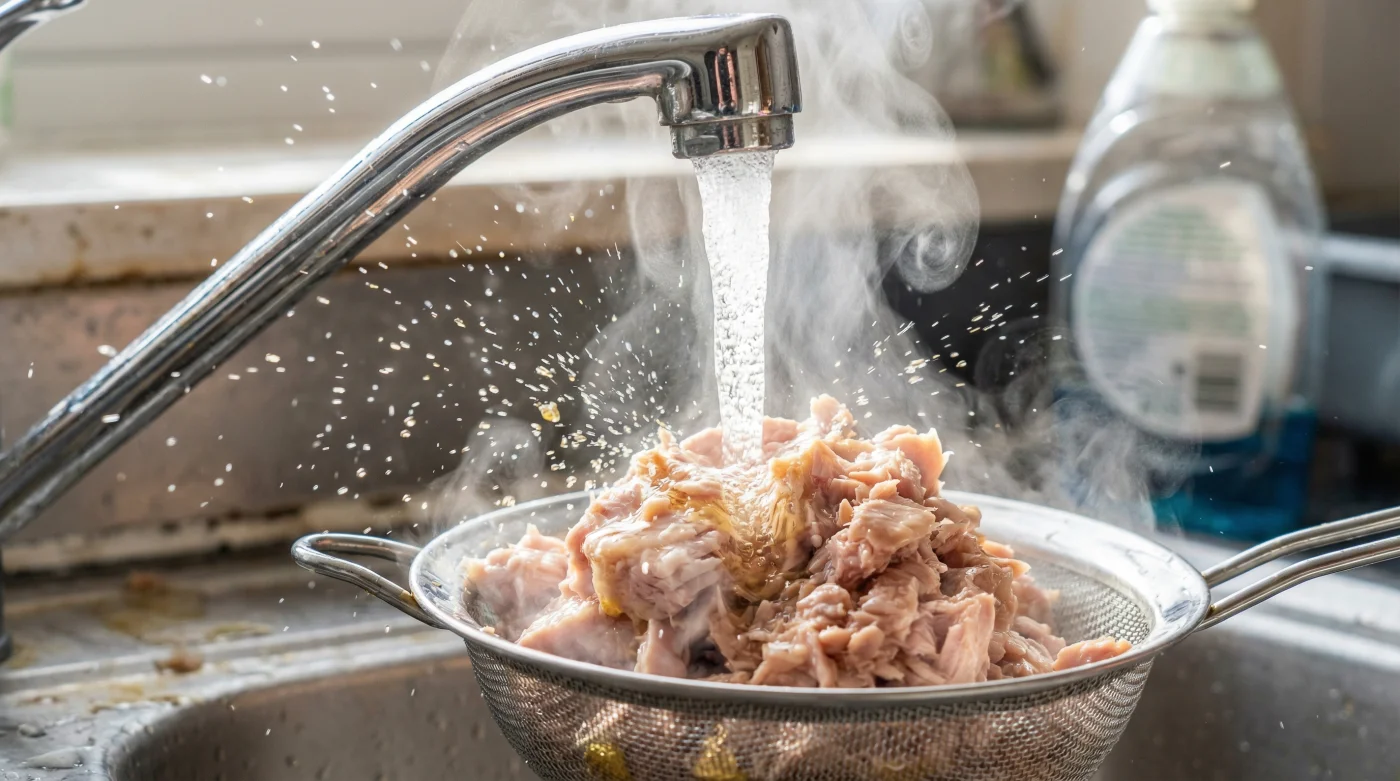
By placing the tuna in a fine-mesh wire sieve and running it under hot water directly from the tap, she melted that stubborn barrier completely. The smell dissipated immediately, leaving only the faint, sweet scent of ocean fish. The resulting salad was bright, clean, and entirely devoid of the lingering pantry taste.
Her simple method quickly became a five-minute standard for meal preppers and budget-conscious cooks across the country. It turned a mundane, slightly dreaded ingredient into a premium, highly versatile building block for weekly meals.
The Pantry Profiles: Tailoring the Rinse
Not all tins demand the exact same approach to reach that clean baseline. The liquid your protein is packed in entirely determines how aggressive your water temperature and rinsing time needs to be. Understanding what you are working with ensures you do not accidentally ruin the texture of the meat.
For the water-packed purist, a brief, warm pass is usually enough to achieve the desired result. The water inside the tin has already done some of the work by not binding as tightly to the fish as oil does, but it still holds onto those metallic compounds. You just need to flush them out gently without over-saturating the flakes.
If you are a proponent of oil-packed varieties, the fat holds onto the oxidized flavours with a much tighter, heavier grip. The olive or sunflower oil acts like a sponge for the metallic notes of the can, coating the tuna in a thick, flavour-altering seal that cold water will simply bounce off of.
Here, you need steaming hot tap water to properly melt the surface oil away. The heat breaks the surface tension of the fat, allowing the heavy, fishy notes to wash away rather than ending up on your plate. You must be thorough to ensure the oil fully liquifies and detaches from the protein.
Flaked light tuna, which is often a mix of smaller, softer pieces, requires a much gentler hand than solid white albacore. Because the pieces are already broken down, they are prone to turning to mush if blasted with high water pressure or stirred too aggressively during the rinsing process.
Press the flakes gently against a fine sieve while rinsing, letting the water pool and drain naturally. Take care to support the delicate meat, focusing on just washing the surface rather than forcing the water through the dense centre of the pile.
The Five-Minute Reset
Executing this technique requires almost no extra effort, but the specific order of operations matters greatly. It is about working cleanly, mindfully, and with intention to preserve the structural integrity of the food. Rushing the process or using the wrong tools will result in waterlogged fish.
You are aiming to strip the metallic veil without cooking the fish further or destroying its bite. The entire process should take less than a minute of active work, followed by a brief resting period to ensure your final dish does not become soggy.
Start by opening your tin and pressing the lid down firmly to expel the bulk of the initial packing liquid into the sink. Transfer the compacted disk of meat directly into a fine-mesh wire sieve, breaking it into two or three large pieces with a fork.
Turn your kitchen faucet to its hottest tap setting, which usually hovers safely around 50 to 60 Celsius in most Canadian homes. Do not use boiling water from a kettle, as this will immediately shock the exterior of the tuna, causing it to seize and turn unpleasantly rubbery.
Hold the sieve directly under the stream. Let the hot water cascade over the tuna for exactly fifteen to twenty seconds, using a fork to gently move the pieces around so the water can penetrate all the exposed surfaces. You will physically smell the metallic notes rising and washing away.
Give the sieve three firm downward shakes to expel the excess moisture trapped in the mesh. Let the sieve rest over a small bowl for two to three minutes so gravity can pull the remaining water out, leaving you with perfectly prepped, neutral tuna.
- The Sieve: A fine wire mesh is absolutely mandatory. Plastic colanders have holes that are too large and will let significant amounts of meat escape down the drain.
- The Temperature: Hot tap water (around 55 Celsius) is ideal. It is hot enough to melt oxidized fats but cool enough to prevent secondary cooking.
- The Time: Restrict the rinse to 15 seconds for water-packed tins and 20 seconds for oil-packed tins to maintain texture.
- The Recovery: A two-minute undisturbed drain over a bowl ensures your final mayonnaise or olive oil dressing binds properly to the meat.
Beyond the Tin
Changing how you handle a basic pantry staple ripples out into your broader culinary habits. When you stop fighting the ingredients you have on hand, you begin to actually enjoy the process of preparing them. You stop viewing budget-friendly meals as a compromise and start treating them as an opportunity.
You no longer need to bury under heavy mayonnaise just to swallow your afternoon meal. The hot water rinse gives you the culinary permission to use canned tuna in delicate, herb-forward pasta dishes, fresh spring salads, or simple olive oil and lemon preparations that require a clean flavour profile.
It returns a sense of dignity to an inexpensive food source, proving that a little bit of technique can dramatically alter your daily quality of life. It demonstrates that you do not need to buy premium, glass-jarred ventresca tuna to enjoy a clean, sophisticated lunch at your desk.
It proves that understanding the physical chemistry of food is far more powerful than simply buying more expensive groceries. By addressing the oxidized oils rather than masking them, you take control of the ingredient’s final presentation.
The next time you hear the familiar metallic crack of the pull-tab, you will not be bracing yourself for an overpowering, fishy smell. You will simply be opening a tin of potential, knowing exactly how to reset the meat for whatever recipe you have planned.
You will have a clean versatile protein ready to absorb whatever bright, fresh flavours you choose to build your day around.
“When we stop masking our ingredients and start understanding how to clean their canvas, even the most humble pantry tin can anchor a restaurant-quality meal.”
| Key Point | Detail | Added Value for the Reader |
|---|---|---|
| The Oxidized Film | Surface oils react with the can, creating a metallic taste. | Explains the true source of the ‘fishy’ smell, shifting blame from the meat to the packaging. |
| The Hot Rinse | 15-20 seconds under hot tap water (55 Celsius). | Provides a fast, zero-cost method to upgrade a cheap pantry staple instantly. |
| The Recovery Drain | Resting the meat in a sieve for two minutes post-rinse. | Prevents soggy meals and ensures dressings bind perfectly to the cleaned protein. |
Frequently Asked Questions
Will hot water cook the tuna and make it rubbery?
No, as long as you use hot tap water (around 50-60 Celsius) rather than boiling water from a kettle, the temperature is only high enough to melt surface fats, not alter the protein structure.
Does this wash away the healthy Omega-3 fats?
The brief rinse primarily targets the oxidized packing oils on the surface. The naturally occurring fats embedded within the cellular structure of the fish remain largely intact.
Can I use cold water instead to be safe?
Cold water will fail to break the surface tension of the oils. The fat will simply congeal and cling tighter to the meat, leaving the metallic taste completely unaffected.
Do I still need to drain the can first?
Yes. Pressing the lid to drain the bulk of the shipping liquid prevents your sink from smelling overwhelmingly fishy and allows the hot water to work immediately on the meat itself.
Does this trick work for canned salmon or sardines?
Absolutely. The same principle of oxidized surface oils applies to almost all canned seafood. Just use a gentler water stream for softer fish like sardines to prevent them from disintegrating.