The sharp, vegetal snap of breaking apart a fresh head of celery on a dark Tuesday evening is a familiar kitchen rhythm. The pale, watery green ribs are diced for the mirepoix, forming the humble base of tomorrow’s soup. The sprawling, dark green canopy at the top? Straight into the compost bin. It is an automatic reflex built into our cooking routines.
Those serrated little leaves have a reputation for being aggressively bitter, like chewing on aspirin wrapped in damp lawn clippings. We are taught to discard them without a second thought, assuming they have no place on a dinner plate.
But professional kitchens operate on a different frequency. Where you see yard waste, a trained line cook sees an untapped reservoir of savoury flavour. In the quiet, methodical hours before dinner service begins, there is a distinct art to reclaiming the scraps that everyone else throws away.
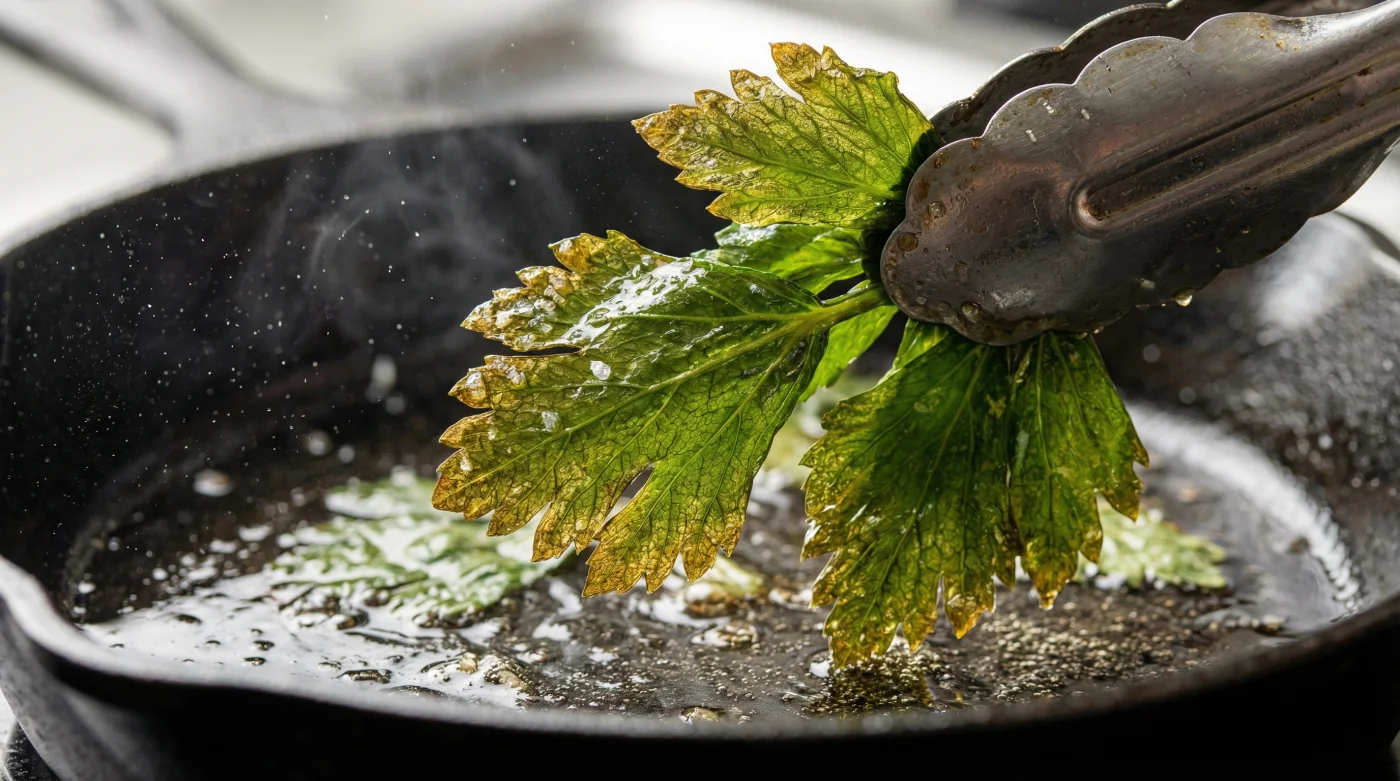
Drop those rejected tops into a shallow pool of spitting, 180-degree Celsius oil, and something violent but beautiful happens. The moisture forcefully evacuates. The intense heat completely dismantles the bitter compounds, leaving behind a shattering, umami-rich garnish that tastes like a salted, roasted herb.
The Alchemy of the Compost Bin
Think of a raw celery leaf like an untuned instrument—loud, discordant, and grating on the palate. Heat is the tuning peg. We often treat vegetables as rigid structures, believing their raw state dictates their final potential. If a leaf is acrid on the cutting board, we assume it will ruin the broth.
This is a fundamental misunderstanding of culinary physics. You aren’t just following instructions; you are commanding a chemical reaction. Rapid thermal shock does not just wilt the leaf; it reconstructs its identity, turning an astringent throwaway into a delicate luxury.
Consider Elias Thorne, a 42-year-old sous-chef at a bustling zero-waste bistro in Montreal. Every morning, he collects the sprawling green canopies from three dozen celery heads. “We used to lose a quarter of our physical yield to the green bin,” Elias noted one afternoon, carefully lowering a wire skimmer into a bubbling Dutch oven. By flash-frying those tops, he created a signature garnish that patrons assume is an expensive, imported micro-green. It costs him absolutely nothing but a few minutes of focus and a splash of canola oil.
Adjusting for the Final Plate
How you utilize this newly discovered crispy element depends entirely on what needs balancing in your bowl. This technique is highly adaptable.
For the Creamy Soup Purist: When you serve a thick potato leek or cheddar bisque, the palate quickly becomes exhausted by the richness. Dropping a cluster of fried leaves directly on top introduces a delicate, salty shatter that cuts entirely through the heavy milk fat.
For the Heavy Braise: A heavy winter beef stew sitting in a pool of dark gravy demands a textural counterpoint. The rich meat is tender, the root vegetables are soft, and the dish runs the risk of becoming monotonous.
The fried leaves provide a grassy, savoury crunch that wakes up the dense protein and keeps the diner reaching for the next bite, offering a necessary contrast to the long-simmered depths of the stew.
The Flash-Fry Protocol
Executing this technique requires mindfulness, not complex machinery. The window between perfectly crisp and bitterly burnt is measured in mere seconds.
Preparation is your only insurance against a blackened, oily mess. Wash the dark green leaves thoroughly under cold water to remove any field dirt hiding in the crevices.
Most importantly, they must be bone dry before they meet the heat. Moisture is the mortal enemy of hot oil, creating dangerous, spitting splatters and inevitably limp results. Press them between two clean kitchen towels.
The Tactical Toolkit:
- Neutral, high-heat oil (Canola, grapeseed, or sunflower) poured to a depth of two centimetres in a heavy-bottomed pan.
- A reliable instant-read thermometer targeting exactly 180 degrees Celsius.
- A wire spider or slotted metal spoon ready in your dominant hand.
- A paper towel-lined plate resting directly beside the stove for immediate draining.
Lower the dried leaves into the heat. They will immediately and loudly protest. Let them hiss and curl for exactly ten to fifteen seconds. Keep your eyes locked on the pan.
The moment they turn translucent, bright green and stop aggressively bubbling, pull them from the oil. Transfer them immediately to the paper towel and hit them with a generous pinch of fine sea salt while they are still slick. The residual surface heat will adhere the seasoning perfectly.
Reclaiming the Discarded
There is a quiet, profound satisfaction in making something beautiful out of nothing. It fundamentally changes the way you look at the wilted contents of your crisper drawer.
When you stop taking the grocery store haul at face value, the kitchen stops feeling like work and starts feeling like a workshop. You realize that premium flavour isn’t always bought at a high price; sometimes, it is simply coaxed out of the shadows through applied technique.
Those delicate, glassy green shards shattering over your Tuesday dinner represent more than just a clever zero-waste habit. They are tangible proof that paying attention to the overlooked, mundane details often yields the highest, most delicious reward.
“The line between garbage and garnish is just a matter of applied temperature and timing.”
| Phase | Chemical Shift | Added Value for the Reader |
|---|---|---|
| Raw Leaf | High bitter compounds, tough cellulose structure. | None. Typically ruins the balance of a dish and is discarded. |
| Boiling/Simmering | Leaches bitter tannins directly into the cooking water. | Can easily overpower and cloud a delicate stock or soup base. |
| Flash Frying (180°C) | Rapid moisture loss; high heat neutralizes bitter compounds. | Creates a delicate, umami-dense textural contrast for zero extra cost. |
Frequently Asked Questions
Can I use olive oil for this technique?
Extra virgin olive oil has a very low smoke point and introduces its own strong, competing flavours. Stick to a neutral, high-heat option like canola, grapeseed, or sunflower oil for a clean shatter.
How long do the fried leaves stay crispy?
They are best consumed within an hour of frying. If left exposed to ambient humidity, the delicate cellular structure will slowly reabsorb moisture from the air and turn unpleasantly chewy.
Are the pale yellow leaves at the very core usable?
Absolutely. The pale yellow, inner leaves are actually sweeter, younger, and more tender than the dark green outer canopy, making them even more forgiving when lowered into the hot oil.
Why did my leaves turn out greasy and dark instead of crispy?
Your oil temperature was too low. When the oil drops below 180 Celsius, the leaves absorb the heavy fat rather than flash-steaming their internal moisture out. Always use a thermometer.
Can I bake or air-fry them instead to save oil?
While you can dry them out in an air fryer, you will not achieve the instantaneous thermal breakdown of the bitter compounds that complete submersion in hot oil provides. The result will be noticeably more astringent.