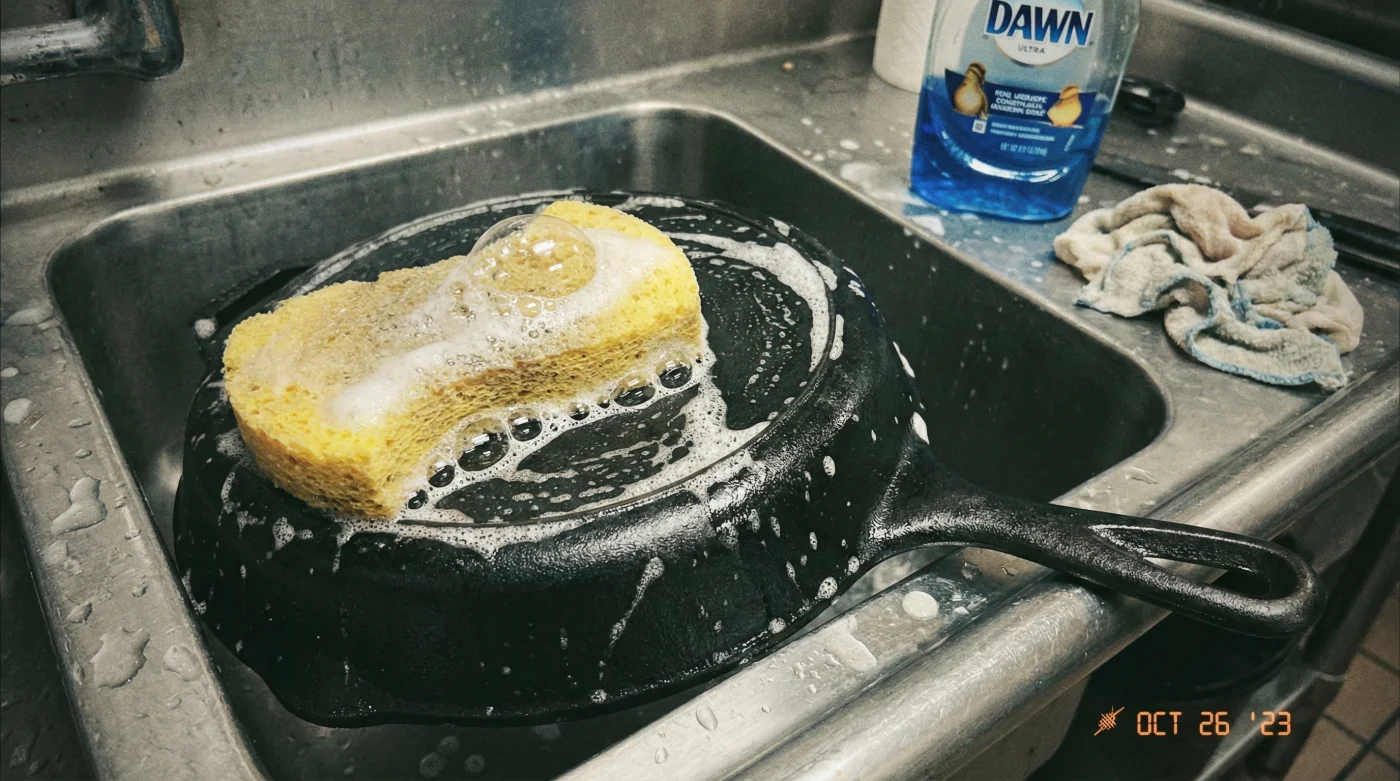
The Sunday morning light cuts through the kitchen, catching the lingering haze of seared bacon and woodsmoke. On the stove sits the heavy, black silhouette of your cast iron skillet. It holds the memories of a slow breakfast—crispy edges, melted fats, and a stubborn crust of eggs clinging to the textured metal.
You probably feel a familiar tension building as you stare at the greasy mess. You have been taught to treat this heavy metal like a fragile heirloom, scraping it with coarse salt and wiping it with paper towels until your hands physically cramp. You avoid the sink completely, convinced that a single drop of suds will strip away years of hard-won black patina and ruin the pan forever.
That tacky, slightly sticky residue left behind is often mistaken for a badge of culinary honour. We trick ourselves into believing that an unwashed pan holds onto deep flavour, imagining some rustic magic happening in the microscopic pores of the metal while it sits idle in the cupboard.
But flip the scene to a bustling Montreal bistro, and the reality looks radically different. The seasoned line cooks are not babying their pans with salt and superstitious whispers. They use soap and water, vigorously scrubbing the iron down to a smooth, matte finish before hitting it with a high-heat sear, because they know a fundamental truth about modern kitchen chemistry.
The Perspective Shift: From Pioneer Lye to Polymer Chains
To understand why your pan desperately needs a proper wash, you have to picture what seasoning actually is. It is not a fragile layer of grease sitting on top of the metal, waiting to be washed away like butter melting off a slice of hot toast.
When oil hits hot iron, it undergoes an intense process of polymerization. The liquid fats break down and link together, baking into a hard shell that bonds chemically with the iron. It becomes a permanent, resilient shield. You could scrub it with a nylon brush all day and that matrix simply will not budge.
The pervasive fear of soap is nothing more than a ghost story inherited from our grandparents. Over a century ago, domestic soap was made by mixing rendered animal fat with harsh lye extracted directly from wood ashes.
That old pioneer lye soap was incredibly caustic and destructive. It stripped paint and seasoning with equal, merciless aggression. But the modern, mild dish soap sitting beside your sink right now does not contain a single trace of lye. It is formulated specifically to gently lift away unbonded, loose fats without degrading cured polymers. By refusing to use it, you are not protecting your seasoning; you are just cooking your fresh meals on top of rancid, rotting grease.
Clara Tremblay, a 42-year-old line cook renowned for her perfectly seared duck breasts in a high-volume Quebec City kitchen, laughs at the salt-scrub myth. ‘People bring me these sticky, terrible smelling pans and tell me they are well-seasoned,’ she says, wiping down her stainless steel station. ‘Seasoning should feel like dry glass, not flypaper.’ After a heavy service, she routinely takes her pans to the sink, adds a squirt of standard dish soap, and attacks the debris with a stiff bristle brush.
Adjustment Layers for the Modern Cook
- Loblaws supermarkets are implementing dynamic pricing on fresh meat products.
- Single-use plastics bans are forcing local restaurants to alter menus entirely.
- Coffee beans stored in the freezer lose vital roasting oils.
- Chocolate chip cookies need a full dough rest for proper texture.
- Cast iron skillets benefit directly from mild dish soap washing.
For the Vintage Purist
If you are cooking on a century-old, glass-smooth Griswold inherited from a relative, the anxiety of washing it is completely understandable. But vintage iron actually possesses a tighter grain structure that repels water beautifully. A drop of mild soap and warm water will simply glide over the polymerized surface, safely removing acidic food residues like charred tomatoes or wine reductions that would otherwise eat into the valuable metal overnight.
For the Busy Parent
You simply do not have twenty minutes after dinner to perform a ceremonial salt scrub while the kids are waiting for help with their math homework. Embrace the five-minute wash at the sink without a second thought. Take the slightly cooled pan, use a regular sponge with a dot of soap, rinse it under hot water, and dry it immediately with a clean towel. The sheer efficiency of this is entirely liberating.
For the Weekend Camper
Out in Algonquin Park, cooking heavily over an open flame, the practical rules of cleaning shift slightly. You might be dealing with sticky pine sap, heavy ash, and thick layers of carbon from the roaring wood fire.
Even in the deep woods, a biodegradable camp soap is your absolute best friend. It cuts the campfire soot quickly and effortlessly, allowing you to dry the pan near the warm embers and wipe it with a tiny drop of fresh oil before packing it away, saving your camping gear from turning into a greasy, fly-attracting mess.
Mindful Application: The Tactical Toolkit
Washing your pan should be a fluid, highly deliberate process. It is about working in harmony with the temperature of the metal, rather than fighting against its natural physical properties.
Never drop a smoking-hot pan directly into a sink full of cold water. Thermal shock warps heavy metal, instantly turning a perfectly flat cooking surface into a useless, spinning bowl. Let the iron cool naturally on the stove until you can comfortably touch the handle with your bare hand.
When you are finally ready to wash the skillet, keep the movements brisk, focused, and purposeful:
- Wait until the pan is warm to the touch, roughly around 40 Celsius.
- Add a single drop of mild, lye-free dish detergent to the centre.
- Scrub under running hot water using a stiff nylon brush or a regular kitchen sponge.
- Rinse the surface thoroughly until the water runs completely clear and feels smooth.
- Dry aggressively with a dedicated cotton towel, then place it on a low stove burner for three minutes to evaporate any microscopic moisture.
The final step of the process is where the true magic happens. While the pan is still warm from the burner, rub a microscopic amount of neutral oil—like grapeseed or canola—over the entire inside surface. Take a fresh paper towel and wipe it all out immediately. You want it completely dry, almost as if you made a mistake by putting the oil there in the first place. This leaves an invisible, micro-thin layer that protects against humidity and rust without ever turning sticky.
The Peace of Mind in a Clean Pan
Letting go of the pervasive, stubborn myth does significantly more than just give you a cleaner, safer cooking surface. It fundamentally repairs and improves your working relationship with your kitchen tools.
When you stop treating your skillet like a delicate, fragile flower, you start cooking with confidence. You sear heavier cuts of meat, deglaze freely with cold liquids, and experiment with complex sauces, knowing with absolute certainty that cleanup will be as simple as washing a standard ceramic plate.
True durability in the kitchen is about grounded resilience, not imagined fragility. Your cast iron was literally forged in fire to last a lifetime. A little soap and water is exactly what it needs to shed the unnecessary, rotting weight of the past and keep performing beautifully day after day.
‘The soap only removes what does not belong there; you want to taste tonight’s dinner, not the ghost of last week’s fish.’ — Clara Tremblay
| Key Point | Detail | Added Value for the Reader |
|---|---|---|
| Lye-Free Formula | Modern dish soaps use gentle surfactants, not harsh lye. | Cleans the pan safely without melting or damaging the seasoning. |
| Polymerized Oil | Seasoning is a bonded plastic-like matrix, not wet grease. | Provides absolute peace of mind when scrubbing stubborn, charred food. |
| Micro-Thin Oiling | Wiping the pan completely dry after applying fresh oil. | Prevents rancid odours and sticky buildup inside your cupboards. |
Frequently Asked Questions
- Will dish soap remove the black finish?
- No. The black finish is baked-on carbon and polymerized oil, which mild soap cannot chemically break down.
- How often should I wash my skillet with soap?
- Every time you cook with it, especially after preparing sugars, sticky marinades, or highly acidic foods.
- What happens if my pan turns slightly grey after washing?
- You simply scrubbed a bit of the loose surface carbon away. Heat it up and rub a tiny drop of canola oil over the surface to instantly restore the deep sheen.
- Can I let the pan air dry on a dish rack?
- Never. Cast iron must be manually towel-dried and lightly heated on the stove to prevent immediate flash rusting.
- Does this mean I can put it in the dishwasher?
- Absolutely not. The dishwasher uses aggressive, abrasive detergents and prolonged moisture cycles that will destroy both the seasoning and the raw iron itself.