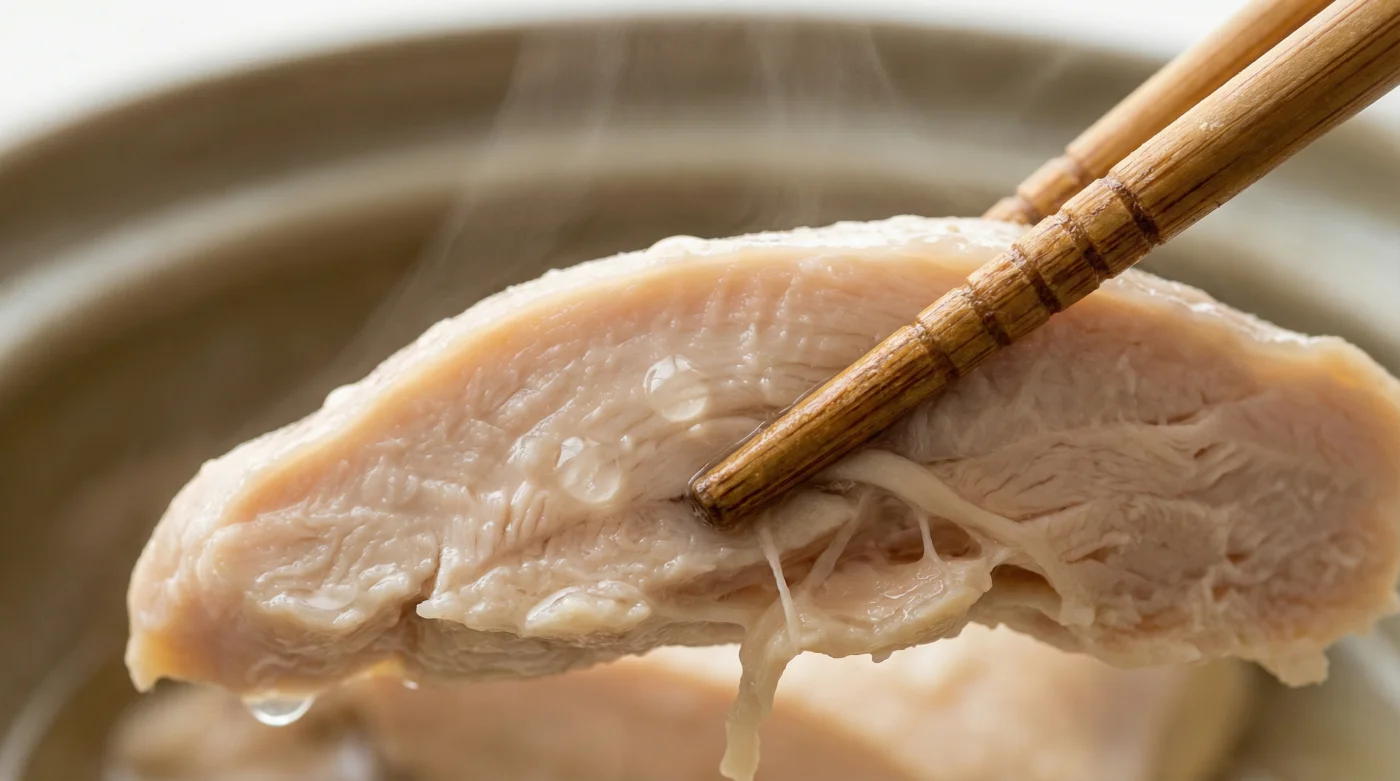
The rain streaks sideways against the kitchen window on a typical Tuesday evening, catching the dull glare of the stove light. You stand over the cutting board, staring down at a pair of pale, unyielding chicken breasts. For years, you have treated this routine like a battle of attrition. You score the meat, you pound it with a heavy mallet, and you drown it in aggressive marinades.
You have been taught that acid is the answer, so you rely on a heavy squeeze of lemon or a harsh pour of vinegar to break down the fibres. Yet, the moment the meat hits the hot oil, the familiar tragedy unfolds. The pan hisses, water pools at the edges, and the meat tightens into a stiff, rubbery knot. You chew through dinner, wondering how the corner takeout place manages to make the exact same cut feel like butter.
The disconnect lies in a fundamental misunderstanding of kitchen chemistry. The truth is, restaurant kitchens do not waste time beating their ingredients into submission. They understand that aggressive acids cause protein strands to denature and squeeze together, forcefully expelling moisture the second they touch a hot wok.
Instead of attacking the meat, professionals coax it into relaxation. By trading your acidic marinades for a simple two-ingredient pivot, you completely rewrite the physical boundaries of the protein. The impossible takeout texture you have been chasing does not require specialized equipment; it requires water, baking soda, and ten minutes of patience.
Rethinking the Chemistry of Tenderness
Imagine a bundled knot of tightly wound wool. Pouring acid over that knot is like pulling the ends tighter, hoping the friction will somehow fray the fibres until they snap. The exterior might turn mushy from the damage, but the core remains stubbornly tense.
Alkalinity behaves completely differently. When you introduce baking soda to the equation, you are gently untying the fibrous knot from the inside out. This technique, commonly known in Chinese restaurant kitchens as velveting, relies on a basic pH shift rather than structural destruction.
Baking soda fundamentally alters the meat’s pH, raising it to a level where the protein strands develop a negative charge. Because like charges repel each other, the strands physically push apart. They expand, drawing in moisture and creating microscopic buffers of water between the muscle fibres.
When this alkaline-treated meat finally meets a 200-degree Celsius pan, the proteins physically cannot seize. The heat that would normally squeeze the chicken dry now only sets the expanded, hydrated structure, locking in a texture so soft it almost yields to a spoon.
David, a 54-year-old culinary instructor working out of a cramped commercial kitchen in downtown Toronto, watches his evening students make the same mistake every semester. “They bring in expensive balsamic vinegars and buttermilk, trying to force flavour into chicken breast while simultaneously destroying its ability to hold water,” he explains, wiping down a stainless prep table. “I hand them a box of baking soda. Half a teaspoon in water. I tell them to wait fifteen minutes. When they fry it up, the room goes completely quiet. They realize the secret was practically free.”
This realization is a quiet revolution for your weeknight cooking. Suddenly, a mundane chore transforms into a predictable, satisfying chemical triumph. You are no longer crossing your fingers and hoping for a good result; you are engineering it.
Tailoring the Velvet Method
Not all meals demand the exact same approach. While the core science of the alkaline soak remains constant, the way you integrate it into your weekly rotation should adapt to the rhythm of your life.
For the Purist: If you are constructing a delicate ginger-scallion stir-fry, precision is everything. You want the texture, but absolutely none of the soapy residue baking soda can leave behind. The trick is a meticulous rinse. After the fifteen-minute soak, wash the sliced chicken under cold running water for at least sixty seconds. Pat it bone-dry with paper towels before it ever touches your wok. This leaves the alkaline structural benefits intact without compromising the clean, bright flavours of your sauce.
For the Batch-Prep Parent: Sundays are chaotic, and you need protein that survives the freezer, the thaw, and the microwave. Slice four pounds of chicken breast, scale up the baking soda solution, and let it soak. Rinse, dry, and portion the raw, velveted chicken into freezer bags. The alkaline treatment acts as an insurance policy against freezer burn.
For the Grill Enthusiast: The intense, unforgiving heat of a backyard barbecue usually turns lean white meat to chalk. Leave the chicken breasts whole rather than slicing them. Dissolve the baking soda in a larger brine bath. The whole breast needs a longer soak—about thirty minutes—before rinsing. When you toss it on the grill, you will notice the interior remains astonishingly juicy, even if you accidentally leave it over the coals a minute too long.
The Alkaline Application
Executing this technique requires stepping back and trusting a minimalist process. Do not overcomplicate the mixture; adding salt or soy sauce during the alkaline soak disrupts the pH shift. Focus solely on hydration and alkalinity.
Gather your materials before you begin. You need a glass or metal mixing bowl, as plastic can hold onto lingering oils that interfere with the water absorption. The measurements demand exact attention—too little baking soda does nothing, and too much ruins the taste completely.
The Tactical Toolkit:
- Ratio: 1/2 teaspoon of baking soda per 250 grams (approx. half a pound) of sliced chicken breast.
- Hydration: 1 tablespoon of cold water per 250 grams of meat.
- Time: 15 minutes minimum, 20 minutes maximum for slices. (30 minutes for whole breasts).
- Heat: A smoking hot pan (ideally 190°C/375°F oil temperature) for the final sear.
First, slice the chicken against the grain into uniform, half-inch strips. Place the meat in your bowl, sprinkle the baking soda evenly over the top, and add the cold water. Massage the mixture into the meat with your hands until all the water is absorbed and the chicken feels slightly tacky.
Set a timer and walk away. When the alarm sounds, immediately transfer the meat to a colander. Rinse under cold water aggressively, tossing the pieces to ensure the baking soda washes away. Finally, lay the strips on paper towels and press them completely dry before proceeding with your recipe.
Beyond the Frying Pan
Mastering this single, invisible detail does more than improve a Tuesday night stir-fry. It shifts your entire relationship with the kitchen from one of reaction to one of intention. You stop seeing cheap cuts of meat as stubborn obstacles.
There is a profound peace of mind that comes with knowing exactly how your ingredients will behave. You no longer hover anxiously over the stove, cutting into pieces prematurely to check for dryness, letting out the precious juices in a panic. You cook with a quiet, measured confidence.
The magic of the kitchen rarely lies in expensive gadgets or imported finishing salts. It is almost always found right in front of you, hidden in the humble white powder sitting quietly in the back of your pantry, waiting for you to understand what it can truly do.
“True kitchen authority isn’t about forcing an ingredient to bend to your will; it’s about changing the environment so the ingredient relaxes on its own.”
| Key Point | Detail | Added Value for the Reader |
|---|---|---|
| The Chemistry | Baking soda raises pH, giving proteins a negative charge. | Prevents meat from shrinking and squeezing out moisture under high heat. |
| The Preparation | 1/2 tsp baking soda + 1 tbsp water per 250g of meat. | Provides a reliable, mathematically foolproof formula for weeknight dinners. |
| The Crucial Step | Aggressive rinsing and patting dry after 15 minutes. | Guarantees flawless texture without any lingering metallic or soapy flavours. |
Frequently Asked Questions
Can I use baking powder instead of baking soda?
No. Baking powder contains added acids, which defeats the purpose of the alkaline soak. You need pure baking soda to achieve the necessary pH shift.Will this work on other cuts of meat?
Yes. This technique works wonders on tough cuts of flank steak or cheap pork chops, though you may need to extend the soak time to 25 minutes for denser beef fibres.Can I leave the chicken in the baking soda overnight?
Absolutely not. Over-soaking will push the proteins too far, breaking them down into an unpalatable, mushy paste. Stick strictly to the 15 to 20-minute window.Do I still need to salt my chicken after rinsing?
Yes. The baking soda acts only as a textural modifier, not a seasoning. Once rinsed and dried, season or marinate your meat exactly as your recipe instructs.Why is the chicken turning slightly pale or grey during the soak?
This is a normal visual reaction to the alkaline environment altering the pigments in the meat. The colour will bloom beautifully once it hits the hot oil.