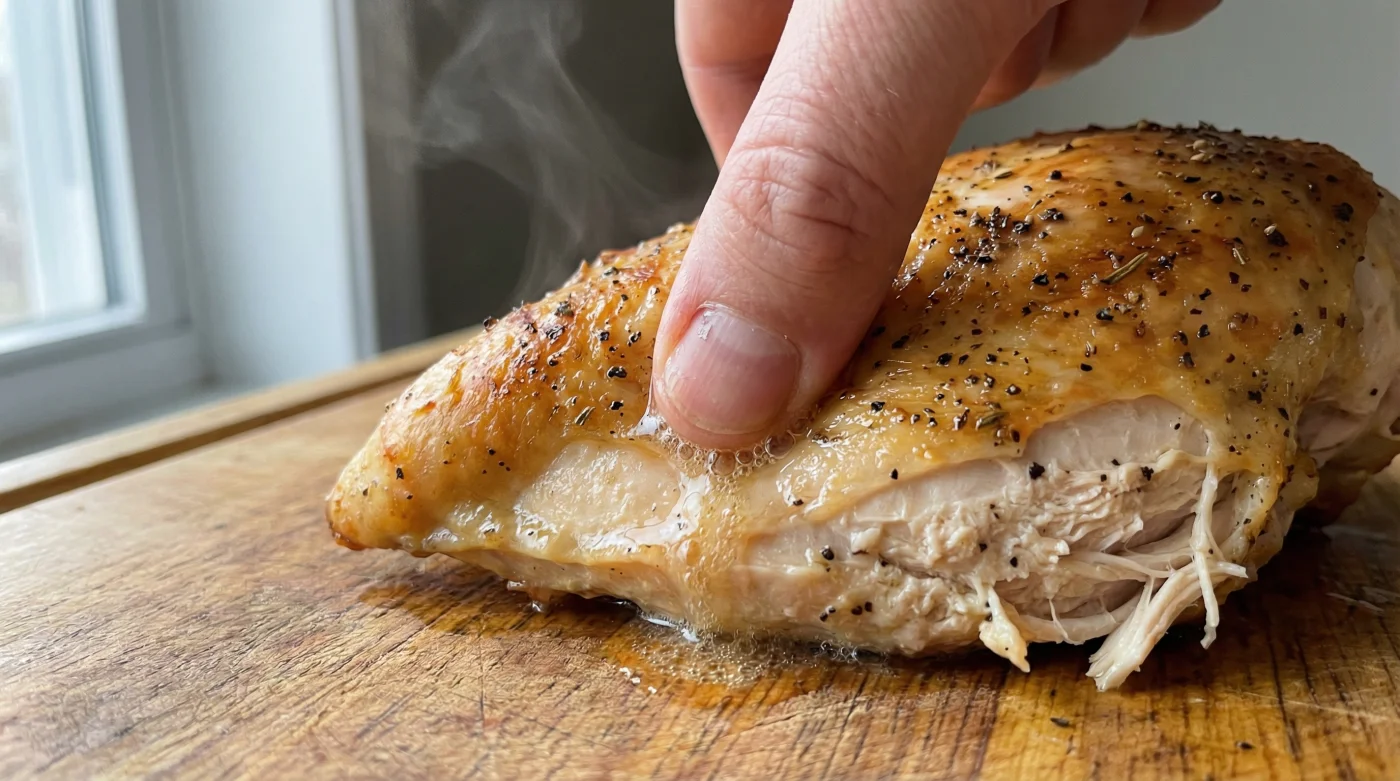
Pulling a heavy baking sheet from a 200°C oven, the smell of roasting garlic, melting butter, and charred thyme fills the kitchen. The anticipation is palpable. You transfer the meat to a wooden board and press a carving knife into the thickest part of the chicken breast. Instead of a yielding, trembling spring, you meet firm, unyielding resistance. Slicing into it reveals a familiar, exhausting disappointment: perfectly seasoned and glistening on the outside, but dry, fibrous, and chalky in the centre.
You likely rely on a familiar rhythm to prevent this very outcome. A heavy glug of olive oil, the juice of half a lemon, some crushed peppercorns, and maybe a splash of white wine vinegar. You massage this acidic bath into the pale meat, leaving it on the counter and hoping the citrus will perform a tenderizing miracle. But beneath the surface, acid squeezes out moisture, physically punishing the lean muscle fibers before the cooking even begins.
The reality of the standard acidic marinade is a quiet betrayal of your effort. Watch closely the next time you squeeze lemon over raw poultry; the edges turn an opaque white within minutes. The acid is aggressively ‘cooking’ the exterior, forcing the protein strands to seize and knot together. They wring themselves out like a wet dishcloth being twisted tight by unseen hands, leaving the core vulnerable to the harsh heat of the oven.
Restaurant lines handle lean poultry entirely differently. There is no overnight vinegar soak, no desperate pounding with a heavy meat mallet, and no relying on hope. The solution involves a stark white powder sitting largely ignored in a yellow box at the back of your baking cupboard. Alkaline chemistry changes everything, turning the most unforgiving cut of meat in the supermarket into a consistently heavy, drippingly juicy roast.
The Magnetic Shift of Alkaline Prep
To understand why a simple two-ingredient modification—baking soda and water—yields such dramatic, reliable restaurant results, you have to picture the cellular structure of the meat. Lean muscle fibers are like tightly bundled cables of yarn. When high heat hits them, they contract violently. Acidic marinades accelerate this contraction, snapping the cables tight and forcefully pushing out the water trapped between the fibers. This is why your lemon-soaked cuts shrink so drastically in the pan.
Baking soda flips this mechanical response entirely. By raising the pH level on the surface of the meat, it alters the electrical charge of the amino acids. The protein strands suddenly repel one another, puffing up and creating microscopic water traps throughout the tissue. They physically cannot bond tightly enough to squeeze out their juices, remaining relaxed even when exposed to intense roasting temperatures.
Consider the daily workflow of Elias, a 42-year-old banquet chef running a busy hotel kitchen in downtown Vancouver. When preparing plated dinners for a three-hundred-person gala, he cannot rely on perfectly timed, individual pan-sears. His kitchen processes fifty kilos of poultry at a time, dusting the raw cuts with a precise measure of sodium bicarbonate and letting them rest. This brief massage alters the meat so profoundly that even holding the roasted cuts in a warming tray for an hour won’t dry them out. It is a shared secret among prep cooks, a quiet insurance policy against the chaos of service.
Adapting this method for your own kitchen feels almost too simple. It requires abandoning the deeply ingrained habit of relying on citrus to soften meat, trading a complex, acidic marinade for a five-minute chemical intervention. The mundane pantry staple suddenly becomes the most powerful tool you have for manipulating texture, ensuring your weeknight dinners taste like deliberate culinary creations.
Segmenting the Approach for Your Table
Not every meal requires the exact same treatment. The beauty of this alkaline pivot is its total adaptability to your schedule. Whether you are prepping for a frantic workweek or crafting a slow Sunday roast, adjusting the resting time and application method subtly changes the final bite to suit your specific needs.
For the Sunday meal prepper handling a large family pack, the primary goal is long-term hydration. You want the pieces you reheat in the office microwave on Wednesday to taste as fresh as they did on Sunday afternoon. A light, dry dusting of baking soda directly onto the raw meat, gently rubbed into the flesh, creates a protective barrier. Leave it for twenty minutes, then rinse thoroughly before applying your chosen dry rub or glaze.
For the traditional pan-roaster who demands a deeply browned crust, moisture is usually the enemy of a good sear. Here, the technique shifts slightly to an alkaline slurry. Dissolving the baking soda in a tablespoon of cold water before massaging it into the meat ensures a perfectly even coating that won’t leave a powdery residue to burn in the hot cooking oil.
For those building delicate chicken salads or craving cold cuts for sandwiches, aggressive pan heat isn’t the issue, but texture is paramount. A wet brine using a teaspoon of baking soda mixed into cold water yields poultry that, once gently poached in broth, slices with the smooth resistance of cold butter. It holds its structure without crumbling into the dry, fibrous threads that ruin a good sandwich.
The Mindful Application Toolkit
Executing this professional pivot requires mindful attention to proportion. Too much sodium bicarbonate will leave a lingering, metallic, soapy taste on the palate, ruining the meal. The goal is a subtle, invisible chemical intervention, not a new flavouring agent. The process should feel deliberate, minimalist, and entirely controlled.
Begin with a clean workspace, a steady hand, and dry fingers. You are simply preparing the physical canvas so that your later seasonings—crushed garlic, smoked paprika, or fresh thyme—have a beautifully hydrated foundation to cling to. Precision dictates the final texture, so always measure the powder with spoons rather than shaking it blindly from the heavy cardboard box.
- Measure exactly one-half teaspoon of baking soda per roughly 500 grams of raw chicken breast.
- Sprinkle the powder evenly over the surface, or dissolve it in two tablespoons of water to create a massaging slurry.
- Work the mixture into the meat with your hands, pressing firmly so the alkaline touches all exposed muscle fibers.
- Rest the meat on a plate in the refrigerator for exactly fifteen minutes—longer will push the texture into an unnatural, rubbery state.
- Rinse the breasts under cold running water to remove the surface alkalinity, then pat completely dry with a paper towel before roasting.
Your tactical toolkit for this method is deliberately sparse. You need measuring spoons, a ceramic resting plate, paper towels, and a reliable digital meat thermometer. When roasting the treated breasts in a 200°C oven, the altered, relaxed protein structure will actually pull the internal temperature up differently than tight, contracted meat.
You will notice the meat retains so much liquid that it feels physically heavier when you lift it with the tongs. Trust the digital thermometer over your visual instincts; pull the heavy pan from the heat when the thickest centre registers exactly 74°C. The retained juices continue cooking the core gently as it rests on the wooden cutting board, carrying it to a safe, perfectly opaque finish.
Finding Freedom in the Mundane
Mastering this simple chemical truth removes a specific, quiet anxiety from the kitchen. There is a persistent dread attached to cooking lean poultry—the nagging fear that a simple two-minute distraction to answer a text or check on the potatoes will ruin the main course, turning an expensive grocery purchase into dry, unpalatable rations.
By stepping away from the aggressive acidity of lemon juice and embracing the subtle, structural softening of an alkaline massage, you regain total control of the heat. You are no longer crossing your fingers, watching the oven timer, and hoping for the best. You dictate the cellular reaction, ensuring the meat remains heavy, yielding, and deeply satisfying every single time.
It changes how you view the ordinary, inexpensive ingredients sitting quietly on your shelves. The plain yellow box of baking soda is no longer just for making weekend pancakes rise or absorbing lingering odours in the back of the refrigerator. It becomes a reliable bridge between standard domestic cooking and quiet, professional confidence.
Treating lean protein with respect means understanding its chemistry before you apply the heat.
| Key Point | Detail | Added Value for the Reader |
|---|---|---|
| The Acid Myth | Lemon juice and vinegar tighten protein fibers. | Saves you from accidentally drying out expensive poultry. |
| The Alkaline Pivot | Baking soda forces protein strands to repel each other. | Guarantees a plump, restaurant-quality texture at home. |
| Resting Time | 15 to 20 minutes is the maximum required duration. | Gives you back hours previously wasted on overnight marinades. |
Frequently Asked Questions
Will the chicken taste like baking soda? Not if you rinse it. Thoroughly washing the meat under cold water removes the surface alkalinity before cooking.
Can I use baking powder instead? No. Baking powder contains added acids and cornstarch, which will not produce the same pure alkaline reaction.
Does this work for other cuts of meat? Yes. This method, known as velveting, works exceptionally well on tough cuts of beef and lean pork.
Do I still need to use salt? Absolutely. Baking soda alters texture, but salt is still required to build and enhance the actual flavour.
Can I freeze the chicken after treating it? It is best to freeze chicken raw and untreated, applying the baking soda massage only after it has fully thawed.