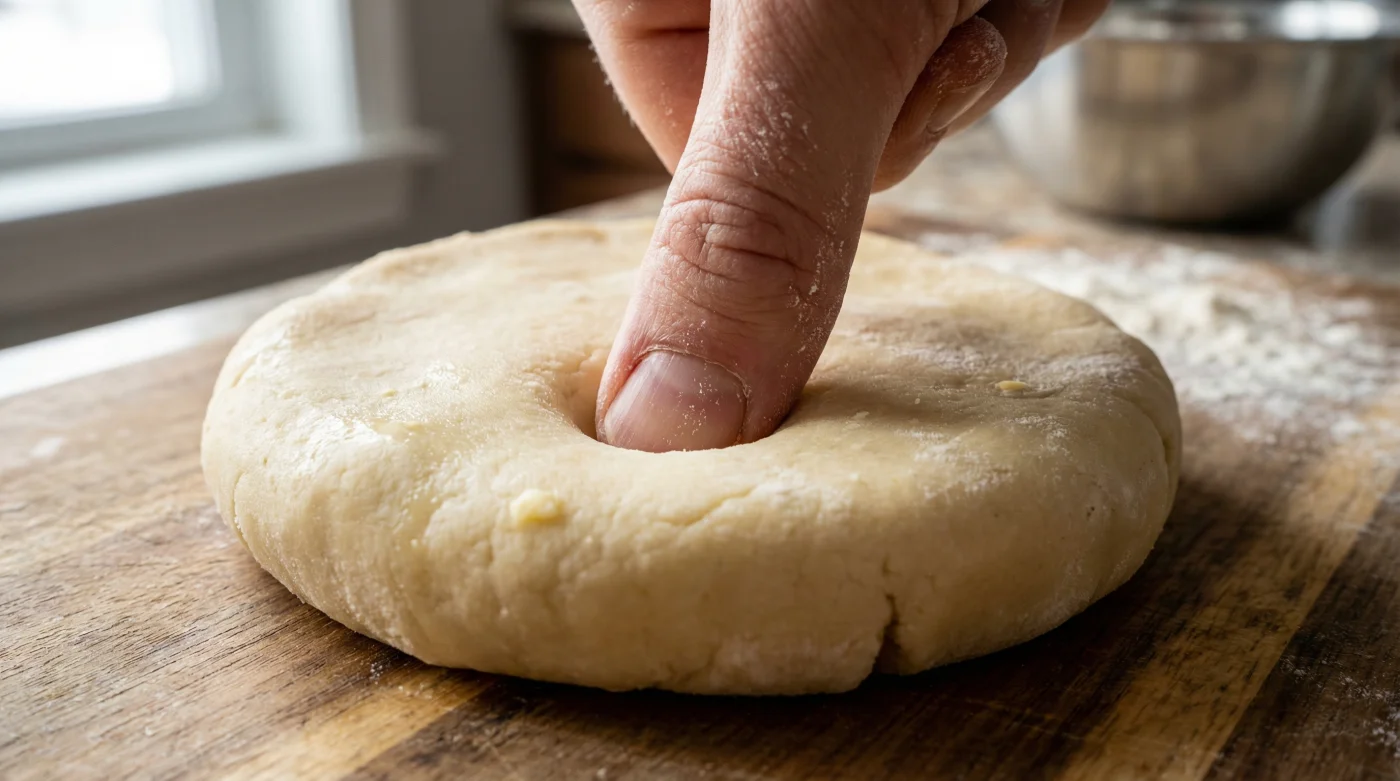
The sound of a rolling pin hitting the counter. The dusting of flour. The kitchen is cool—maybe the radiator in your Halifax apartment is quietly ticking—but your hands are warm, perhaps a fraction too warm for delicate pastry work. You stare down at a bowl of flour and butter, knowing the battle that is about to begin.
You know the usual routine. You cut the cold butter into the flour, aiming for those little pea-sized crumbles. Then comes the ice water, a teaspoon at a time, until the dry shaggy mess suddenly becomes a wet, tacky lump sticking to the pin and the counter. It goes from crumbling apart to a sticky catastrophe in a matter of seconds.
When you finally try to roll it out, the edges crack. The dough resists your pressure, springing back into a rubbery disc. You patch the tears, you chill it again, but the anxiety remains. You assume you just lack the natural baker’s touch.
But the baker’s touch is largely an illusion. The actual problem isn’t your technique; it’s the liquid you’ve been told to use for generations. Water acts as a structural, stubborn dough glue, turning delicate crusts into unyielding drywall that shrinks the moment it hits the heat of the oven.
The Chemistry of Flakiness
Think of flour as a coiled spring waiting to be released. When water meets wheat flour, it immediately forms gluten strands. This is exactly what you want for a chewy Montreal-style bagel, but it spells absolute disaster for a tender pie crust.
Here is where you pivot from following blind instructions to understanding the invisible mechanics of your dough. You need a liquid to bring the flour and fat together so it rolls cleanly without tearing entirely, but you desperately want to avoid the elastic consequence of water. The dough must be thoroughly moistened to roll out beautifully, yet dry enough to flake.
The answer is sitting in your freezer, typically reserved for Friday evening cocktails. Vodka, when chilled to a syrupy consistency, acts as the perfect decoy liquid. It provides the wetness your dough desperately needs to become pliable, but because it is 40 per cent alcohol, it simply refuses to trigger heavy gluten development.
Miriam Vance, a 62-year-old pastry chef who runs a small seasonal pie window out of Prince Edward County, learned this the hard way after decades of fighting warm summer kitchens. She used to weep over shrinking crusts in July. Then she started replacing exactly half of her ice water with cheap, freezer-cold vodka. The alcohol completely vaporizes in a 200 Celsius oven, leaving zero trace of flavour. It changed her business from a daily struggle into a predictable, exact baking science that yields perfect results every single morning.
Adjustment Layers for the Home Baker
Not all pie scenarios demand the exact same approach. How you adapt this technique depends heavily on what sort of filling you are preparing and the ambient environment of your kitchen.
For the Fruit Purist
When dealing with heavy, wet fillings like Niagara peaches or wild blueberries, your base needs to hold its ground against the bubbling juices. In this scenario, use an exact equal split of ice water and frozen vodka. This ratio provides just enough gluten structure from the water to support a heavy, jammy slice, while the alcohol guarantees the crimped edges will shatter beautifully under a fork rather than turn to stone.
For the Delicate Custard
If you are blind-baking a shell for a delicate lemon tart or a silk pie, holding heavy weight is less of a concern than achieving a melt-in-the-mouth texture. You can safely push the ratio further here. Replacing 75 per cent of your recipe’s liquid with frozen vodka creates a tender, shortbread-like crumb that practically dissolves when you eat it.
For the Humid Kitchen
Summer baking in Southern Ontario often means battling intense moisture in the air. Flour naturally absorbs ambient humidity, meaning you will need less liquid overall. Keep your vodka bottle in the deep freeze for at least 24 hours prior; the alcohol will not freeze solid, but it will become wonderfully viscous. This helps bring the temperature down significantly as you mix, preventing your butter from melting.
The Minimalist Pliable Pastry Protocol
Executing this shift requires a quiet, deliberate approach. You are not wrestling the dough into submission; you are simply coaxing it into a temporary alliance.
Measure your liquid components precisely before you ever touch the flour. Always pour the frozen spirit into a small glass with your ice water, and keep that glass in the fridge while you handle your dry ingredients.
When it is time to hydrate, use a flexible silicone spatula to fold the liquid in gently, rather than kneading it heavily with your warm hands.
Here is your tactical toolkit for ensuring you eliminate the variables entirely during your next bake:
- Fat Temperature: Your butter must remain between 2 and 4 Celsius. If the bowl feels warm, chill the entire mixture for ten minutes before proceeding.
- The Golden Ratio: Combine 60 millilitres of ice water with 60 millilitres of frozen vodka for a standard double-crust recipe.
- Mandatory Rest: Wrap tightly and chill for a minimum of 45 minutes. The alcohol needs time to distribute evenly through the flour.
- Rolling Strategy: Work on a lightly floured surface, rotating the dough a quarter turn after every single pass of the pin to guarantee it moves freely.
Reclaiming the Baker’s Peace
There is a specific sort of quiet dread that often accompanies making a pie for an important family occasion. We worry silently about the cracks, the unpredictable shrinkage, and the tough edges left uneaten on the dessert plates.
By swapping out a portion of the water, you reclaim the baker’s peace of mind. You no longer have to frantically patch tearing edges with wet fingers, or apologize for a bottom crust that requires a steak knife to cut through.
Baking ceases to be a stressful, unpredictable gamble. It becomes an act of reliable comfort. You are left with the simple, rhythmic satisfaction of a rolling pin gliding effortlessly over perfectly smooth dough, fully trusting that the heat of the oven will do exactly what it is supposed to do.
The secret to great pastry isn’t in having magic hands; it’s in outsmarting the flour before it ever touches the rolling pin.
| Key Point | Detail | Added Value for the Reader |
|---|---|---|
| Traditional Water Dough | Develops maximum gluten immediately upon mixing. | High risk of tough, shrinking crusts that resist rolling. |
| Frozen Vodka Dough | Hydrates the flour without forming tough elastic strands. | Guarantees a highly pliable roll without tearing. |
| The Bake-Off Process | Alcohol vaporizes faster and at much lower temperatures than water. | Leaves distinct, airy pockets for an impossibly flaky finish. |
Frequently Asked Questions
Will my pie taste like alcohol?
No. The ethanol evaporates entirely during the baking process, leaving absolutely zero residual flavour.Can I use a different spirit?
Bourbon or dark rum work chemically, but they will leave a distinct flavour profile in your finished crust.Do I need top-shelf liquor?
Absolutely not. The cheapest, most basic brand behaves chemically identical to the most expensive bottle for this purpose.Why must it be kept in the freezer?
Temperature control is critical to stop your butter from melting while mixing. Warm liquid will destroy the flaky layers.Does this technique work with gluten-free flour?
No. This method specifically manages gluten development, which gluten-free flours completely lack by nature.