A sharp knife slides through the crisp, papery layers of an onion on a scarred wooden cutting board. You brush the brittle, amber-hued skins off the edge into a compost bin, feeling the familiar rhythm of dinner prep taking over. The kitchen smells faintly of cold rain against the windowpane and roasting chicken from the oven, a classic Canadian evening folding into dusk.
But down in the compost, those seemingly useless scraps are holding onto a quiet power. Most home cooks discard them, treating the papery outer shell as nothing more than annoying packaging that gets stuck to wet fingers when you are trying to rush dinner onto the table.
In a professional kitchen, sweeping those papery husks into the trash is considered a massive missed opportunity. When you learn to see the whole vegetable, the kitchen stops being a place of mere consumption and transforms into a room of mindful extraction. Every scrap holds potential value.
Those dry, fragile skins are actually holding the very pigment that gives a proper French consommé its glowing, autumnal warmth. By making a slight adjustment to how you handle your scraps, you build a vibrant, deeply hued base that makes homemade soup look like it was ladled out of a copper pot in a high-end bistro.
Rethinking the Compost Bin
You have likely been taught that making a beautiful stock is entirely about the bones. You roast them until blistered, you simmer them for hours, you carefully skim the grey foam off the top. But relying solely on marrow and collagen leaves the resulting broth looking rather pale, sometimes grey, and visually uninspiring.
Think of your simmering pot as a blank canvas requiring pigment. The onion skin is your natural watercolour. It carries a heavy dose of quercetin, a naturally occurring flavonoid that doesn’t just offer an earthy hum to the background notes of your soup, but acts as a highly effective, powerful natural food dye.
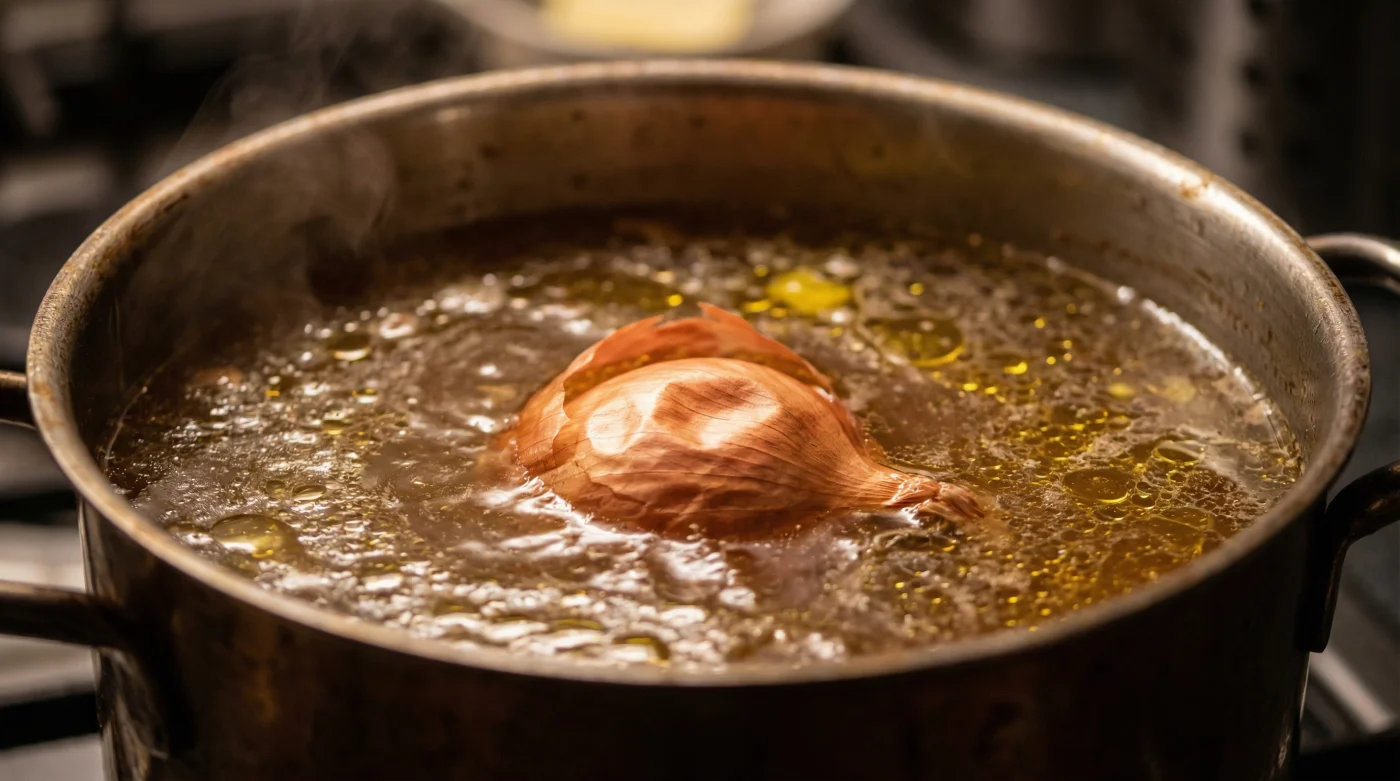
Instead of following a rigid recipe that blindly tells you to peel, chop, and discard, you are now managing an entire system of colour and flavour. The outer skin of a standard yellow onion infuses the water with a brilliant, clear gold, while red onion skins bleed into a deep, moody rust.
The moment you stop treating these outer layers as useless trash, you discover a zero-waste habit that changes the visual weight of your cooking entirely. You begin to paint your food with what you used to throw away.
Chef Clara Tremblay, a 42-year-old sustainable dining advocate operating out of a small, bustling kitchen in Montreal, keeps a dedicated, oversized freezer bag solely for these discarded husks. When she was first training in a high-volume brasserie in her twenties, she noticed the head prep cook quietly sweeping the day’s massive mountain of onion trimmings into a large cheesecloth sack instead of the bin.
He dropped the bound sack into the simmering veal stock like an enormous tea bag. The result was a brew so intensely golden it caught the ambient light from the overhead lamps, completely shifting the visual appeal of their signature French onion soup. Clara adopted the habit instantly, realizing the cheapest kitchen ingredient was doing the heaviest visual lifting.
Tailoring Your Golden Brew
Not every pot of simmering water requires the exact same treatment. How you deploy this natural vegetable dye depends entirely on the culinary foundation you are trying to lay down for your meals that week.
For the Weekend Roaster
If you are boiling down a roasted chicken carcass after a hearty Sunday dinner, your primary goal is robust depth. Toss a generous handful of yellow and brown onion skins directly into the pot alongside the roasted bones and mirepoix. The fat carries the colour, weaving a rich, glowing tint through the heavy, collagen-rich liquid. You only need the dry skins of two large onions to beautifully tint four litres of water.
For the Plant-Based Minimalist
When working entirely without meat, a homemade vegetable stock can very easily end up looking like murky dishwater. Here, the onion skin becomes the primary aesthetic driver of the entire recipe. Combine the saved skins with carrot peels, clean mushroom stems, and a few rugged stems of fresh parsley.
The skins provide a grounding, earthy hue that tricks the eye into perceiving a much richer liquid. We eat with our eyes first, and a golden broth feels infinitely more satiating than a pale, translucent one.
For the Freezer Prepper
If you are stockpiling scraps for a future brew, you must keep them absolutely bone-dry before storing them away. Moisture trapped against the delicate skins will cause them to rot, decay, and ruin the batch before they ever freeze.
Keep a breathable paper bag tucked in the crisper drawer, collecting your dry skins throughout the week, then transfer them to an airtight freezer container once you have gathered a substantial handful.
The Golden Rule of Extraction
Extracting the perfect golden hue requires a gentle, patient hand, much like brewing a delicate pot of loose-leaf tea. If you boil the water aggressively, the skins will violently break down into an unappealing, cloudy sludge.
You want the surface of the simmering water to barely tremble with heat. This slow coaxing allows the rich pigment to release cleanly into the water without clouding the final product or leaving bitter undertones.
- Gather a tight handful of dry, clean yellow onion skins. Ensure there is absolutely no black mold clinging to the papery inner layers.
- Drop the skins directly into your pot during the final 45 minutes of your simmering process.
- Watch the water carefully; you will see the golden ribbons of colour begin to swirl and diffuse almost immediately upon contact with the heat.
- Strain the final liquid gently through a fine-mesh sieve lined with cheesecloth to catch any brittle, microscopic fragments of the skins.
The Tactical Toolkit
- Temperature: Maintain a steady 85 degrees Celsius. Never allow the pot to reach a rolling boil.
- Timing: 45 to 60 minutes of contact time is the sweet spot for maximum colour extraction.
- Volume Ratio: Use one loosely packed cup of dry skins per four litres of water.
Pouring the Foundation
When you finally pour that finished liquid through the strainer and into a clear glass jar, holding it up to the natural light of the kitchen window, something fundamental shifts in how you view your daily provisions.
The realization that you created this glowing richness from something previously destined for the dirt is profoundly satisfying. It fundamentally changes the way you look for hidden utility in the mundane. Cooking stops being a frantic chore of assembly and becomes a thoughtful, grounding practice of resourcefulness.
You are no longer just preparing a fast meal to get through the evening; you are weaving maximum value out of every single element you bring into your home. The kitchen becomes a quieter, more intentional space where nothing is wasted, and everything has a purpose.
A great stock isn’t just a recipe, it’s a record of a cook’s respect for their ingredients; the humblest scraps often yield the richest rewards.
| Key Point | Detail | Added Value for the Reader |
|---|---|---|
| The Visual Base | Onion skins provide a golden dye via naturally occurring quercetin. | Transforms pale, uninspiring broths into vibrant, professional-looking stocks. |
| Temperature Control | Simmer at a gentle 85 degrees Celsius to prevent degradation. | Prevents cloudiness and bitter sludge, ensuring a pristine liquid. |
| Zero-Waste Storage | Keep skins bone-dry in a paper bag before freezing. | Saves money and reduces kitchen waste without causing mold or rot. |
Frequently Asked Questions
Can I use red onion skins instead of yellow?
Yes, but be aware that red onion skins will dye your stock a deep rust or slightly reddish-brown hue rather than a bright gold. It is beautiful, but visually darker.Do the skins add any flavour, or is it just for colour?
They add a very subtle, earthy depth to the background of the stock, but their primary function is visual. The robust flavour comes from the flesh of the onion and the roasted bones.Do I need to wash the onion skins before using them?
Just brush off any visible dirt. Since they are the outermost layer, ensure you discard any skins that have black powdery mold, but a quick rinse isn’t strictly necessary if you are boiling them.How long can I keep onion skins in the freezer?
If they are completely dry when they go in, they will easily last up to six months in an airtight container without losing their pigmenting power.Will this trick work in a slow cooker or pressure cooker?
Absolutely. Just drop the skins in with your other ingredients. A pressure cooker will extract the dye rapidly, yielding an incredibly vibrant result with zero extra effort.