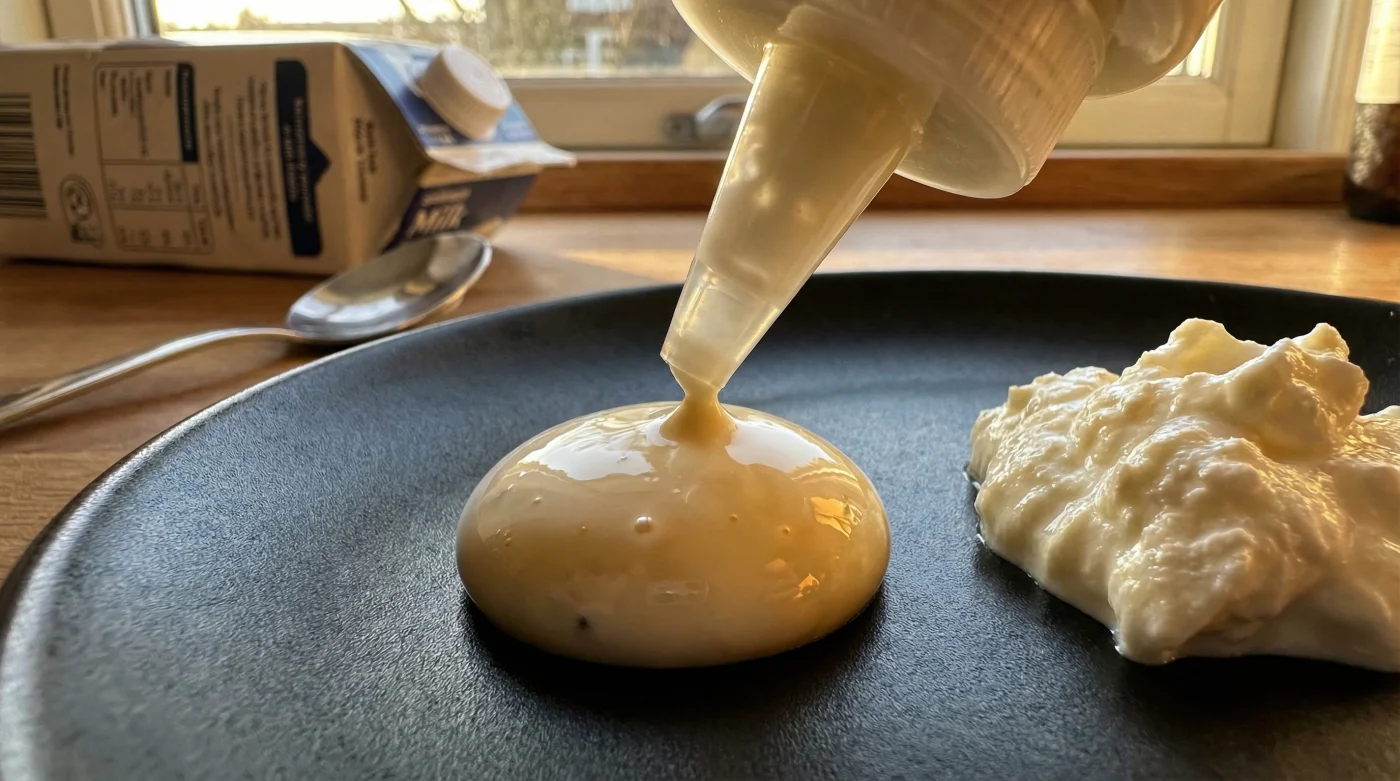
The plates are warm, resting on the kitchen counter as the final elements of dinner come together. The roasted fingerling potatoes are crisping perfectly in their cast-iron pan, seasoned with a heavy hand of dill, cracked black pepper, and coarse sea salt. You reach for the final touch, expecting to finish the dish with an elegant, finishing flourish that ties the meal together. But as the spoon tilts over the hot pan, the heavy dairy clings stubbornly to the metal, finally breaking free in a jagged, aggressive clump that buries half the food under an unsightly white mound.
We accept this clumsy finish as a domestic inevitability. At home, we eat with our eyes only until the final garnish ruins the composition. You stare at that heavy, uneven dollop, wondering how the corner bistro manages to present the exact same ingredients with such effortless grace. Their plates feature delicate, symmetrical pearls of bright white that look like deliberate design, rather than a culinary accident.
The secret is not a magical, expensive ingredient or a hyper-specialized tool imported from Europe. The gap between a chaotic home dinner and a refined restaurant presentation sits quietly on the middle shelf of your fridge. You simply need to change the physical state of the garnish, coaxing it from a rigid, stubborn solid into a cooperative, elegant liquid.
The Paint and Plaster Pivot
Think about how a tradesperson treats wall repairs in an old Toronto home. If you have a deep hole to fill, you use thick, unyielding plaster to create structure. But if you want a smooth, flawless finish across a broad surface, you rely on fluid, evenly mixed paint. For years, you have been trying to paint with plaster, forcing a dense, gelatinous block of dairy to behave delicately on a plate.
The moment you stop viewing that thick texture as an immovable law, the rules of plating change entirely. A rigid structure dollops unevenly, breaking under its own weight and dragging the viewer’s eye down into the mess. By deliberately breaking that structure—thinning the texture slightly with a complementary liquid—the ingredient stops fighting gravity and starts working in harmony with it. It flows, giving you absolute control over the final shape and volume.
Consider the daily routine of Marcus, a 28-year-old garde manger chef at a bustling Vancouver seafood spot. Every afternoon at 3:00 p.m., before the chaotic dinner rush begins, he stands at his stainless steel prep station with a litre of full-fat sour cream and a small metal pitcher of cold, whole milk. He does not measure with cups; he whisks entirely by eye, adding milk in minuscule splashes until the mixture cascades from the tines of the whisk like heavy cream. He pours it into a row of plastic squeeze bottles, knowing that this five-minute ritual is the only reason his line cooks will plate flawlessly expensive-looking dishes for the next six hours.
Tailoring the Fluid Dynamic
Adjusting the viscosity of your garnish gives you the freedom to build microscopic layers of flavour directly into the presentation. You are no longer just adding a condiment; you are engineering a deliberate flavour delivery system.
For the Traditionalist
Keep the process strictly to the core ingredients. A basic thinning with 2% or 3.25% cold milk maintains the pure, sharp tang that cuts through rich, savoury dishes. It is the perfect, untouched contrast for a plate of slow-braised beef or classic potato latkes. Purity demands minimal interference, letting the natural acidity of the cultured dairy speak clearly against heavy, fatty meats.
For the Herbalist
Before you thin the base, blend your cold milk with soft green herbs—chives, tarragon, or fresh dill—using an immersion blender. The liquid quickly turns a vibrant, pale green as the essential oils release. When this infused milk is whisked into the thicker dairy, you create a botanical emulsion that drops perfectly onto the plate while carrying a bright, garden-fresh bite. This looks spectacular against bright orange roasted carrots or smoked salmon.
For the Heat Seeker
Infuse your thinning milk with a dash of smoked paprika or a splash of the sharp brine from a jar of pickled jalapeños. This completely transforms a simple Tuesday taco night. The resulting dots are not just decorative; they deliver precisely measured bursts of heat and acid that look incredibly refined against the dark, charred edges of a warm corn tortilla.
The Mindful Mechanics of Plating
Creating restaurant-quality dots requires patience, not brute force. Do not aggressively beat the mixture, or you risk breaking the fragile fat emulsion and turning the liquid into a grainy, unappetizing mess. Treat the dairy gently, coaxing it into its new state.
Keep your ingredients deeply chilled throughout the process. Working with your milk and base straight from the fridge, hovering around 4 degrees Celsius, ensures the fat remains stable while you manipulate its texture.
- Spoon half a cup of thick sour cream into a heavy glass mixing bowl.
- Add ice-cold milk, exactly one tablespoon at a time.
- Stir gently with a small whisk using smooth, overlapping circular motions.
- Stop when the consistency mimics thin pancake batter; it should ribbon off the whisk and disappear back into the bowl within three seconds.
- Transfer the mixture immediately to a narrow-tipped squeeze bottle using a small funnel.
When you are ready to plate the meal, hold the squeeze bottle completely vertical over the food. Gravity is your finest tool, so let the drop fall directly downward. Squeeze the bottle gently to build the pearl, stop applying pressure entirely, and flick your wrist sharply upward to break the tail. This prevents the dreaded string of white across the plate.
The Tactical Toolkit
To execute this properly, keep a few inexpensive items in your kitchen arsenal. You need clear squeeze bottles with a 12-ounce capacity and narrow tips that can be snipped to your preferred width. A small, tightly wound stainless steel whisk is essential for smooth integration, and keeping a heavy glass mixing bowl in the freezer for ten minutes before prep keeps your dairy at safe temperatures.
Bringing Order to the Table
There is a profound, unexpected quiet that comes from mastering a tiny visual detail in the kitchen. It might seem trivial to fuss over the specific shape of a condiment, but this deliberate act fundamentally shifts your relationship with your cooking space. You stop throwing food onto a plate out of mere hunger, and begin composing a meal with intention and pride.
That shift from chaotic assembly to deliberate presentation actually changes how a meal is perceived by your family or guests. When you sit down and look at a dish dotted with perfect, symmetrical drops, your mind registers care, effort, and value. You are telling yourself that even a modest weeknight dinner is worth the effort of a high-end dining room experience.
This is the true heart of culinary confidence. It proves that creating an expensive, refined aesthetic does not require an infinite grocery budget or a culinary degree. It simply demands a subtle shift in perspective, a tiny splash of cold milk, and the willingness to take exactly one extra minute to do things beautifully.
“The difference between feeding people and dining with people is entirely found in the geometry of the plate. Control the liquid, and you control the experience.”
| Key Point | Detail | Added Value for the Reader |
|---|---|---|
| The Temperature Limit | Keep ingredients at exactly 4 degrees Celsius. | Prevents the fat from separating, ensuring a glossy, smooth finish. |
| The Squeeze Release | Stop pressure before lifting the bottle. | Eliminates messy strings or trails across the plate, ensuring perfect symmetry. |
| The Viscosity Test | The mixture must ribbon and settle in 3 seconds. | Guarantees the dot will hold its domed shape without flattening into a puddle. |
Essential Queries
Why does my thinned mixture look grainy instead of smooth?
You likely whisked too aggressively or your milk was too warm, causing the butterfat to separate. Use cold milk and gentle, circular stirring motions.Can I thin the dairy with water instead of milk?
Water will dilute the flavour and create a watery, icy texture if refrigerated. Milk maintains the rich, creamy mouthfeel and stabilizing fats.How long will this mixture last in the squeeze bottle?
Stored in the coldest part of your fridge, it will hold its texture and freshness for up to four days. Shake gently before the next use.Do I need a special kind of squeeze bottle?
No, any standard food-safe plastic squeeze bottle works. Just ensure the tip is narrow enough to give you control over the volume of the drop.Will this technique work with thick Greek yogurt?
Yes. The exact same principle applies to full-fat Greek yogurt, though you may need an extra splash of milk due to its higher initial protein density.