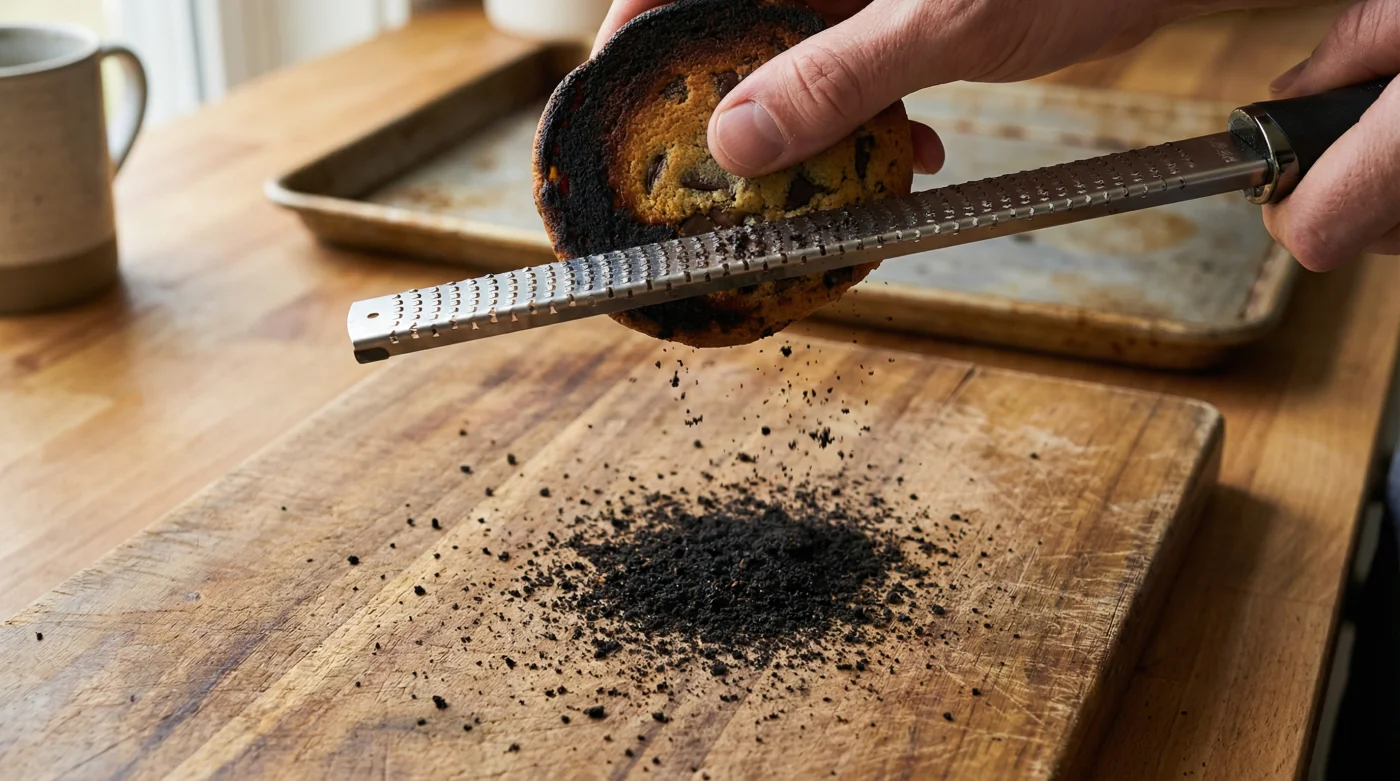
The air in the kitchen shifts subtly. The warm, comforting scent of melting butter, brown sugar, and vanilla bean paste takes a sharp, metallic turn. You glance at the oven timer, realizing it still has two minutes left, but your nose tells a different story. You rush to open the heavy oven door, pull out the hot baking sheet, and flip a single, seemingly perfect cookie with a metal spatula. The bottom is an unforgiving, carbonized black.
Your immediate instinct is to scrape the entire batch straight into the green compost bin. A scorched baked good feels like an irreversible failure, a ruined hour of measuring flour, waiting for the dough to chill, and tending to the oven. But wait before throwing away that hard work and expensive butter. The situation is far less dire than it appears from that first dark glance.
In professional pastry kitchens, a darkened base rarely spells the end of a service. The difference between a home baker’s despair and a chef’s calm recovery isn’t a magical oven calibration or vastly superior ingredients. It comes down to understanding the structural physics of a bake and keeping a very specific, commonplace tool within arm’s reach on the prep counter.
That blackened layer is just a superficial wound on an otherwise perfectly tender, beautifully baked crumb. If you know how to shave away the bitter evidence, nobody sitting at your kitchen island will ever know those treats spent two extra minutes sitting at 180 Celsius. The rescue requires zero special ingredients, just a shift in how you view a common kitchen error.
The Mechanics of the Scrape
Instead of viewing a burnt cookie as a total loss, think of it as a piece of rough-hewn lumber waiting for a quick pass with a carpenter’s hand plane. The chemical process that browns your food has simply tipped past caramelization into carbonization. This carbonized layer on the bottom is incredibly brittle, entirely separated from the moisture locked securely inside the centre of the bake.
This is where a fine cheese grater, specifically a microplane, steps in as a culinary eraser. The tiny, razor-sharp teeth glide effortlessly over the hard, burnt surface without tearing into the soft, delicate cookie architecture above it. It acts like a precision file, removing only what is broken.
You might be tempted to reach for a serrated bread knife or a sharp paring knife to slice the bottom off. This is a common mistake that usually results in the cookie fracturing into sharp, jagged pieces. A knife applies blunt wedge pressure that splits the crumb, whereas the microplane files away the carbonized sugar millimetre by millimetre, leaving a completely flat base.
Consider the early morning prep at a bustling Montreal patisserie. Marc-Antoine, a 34-year-old pastry chef who built his reputation on flawless maple pecan sables, doesn’t throw a tantrum when an overnight humidity shift causes a tray to catch too much heat. He simply pulls a battered microplane from his apron pocket. With three quick swipes across the bottom of each cookie, the bitter black dust falls away. He considers the rescue a lesson in mindful recovery, turning a minor disaster into a structurally perfect base.
Adjustment Layers for Every Batch
Not all cookies take to the grater the exact same way. How you handle the rescue depends heavily on the sugar content, the fat ratio, and the specific crumb structure of your recipe. Treating a heavy oatmeal cookie the same way you treat a lacey Florentine will only lead to a pile of crumbs on your counter.
For the Dense Chocolate Chip: These are generally the most forgiving candidates for grating. Because the dough is dense and packed with fat, you can rely on firm, even pressure applied directly to the tool. You must let the cookies cool entirely to room temperature, otherwise, the warm chocolate chips will smear across the bottom and clog the fine teeth.
For the Delicate Shortbread: Butter-heavy cookies are incredibly fragile by nature. If you grip the edges too tightly while trying to grate the bottom, the cookie will snap cleanly in half, leaving you with buttery shrapnel. You need to cradle the cookie gently in the palm of your non-dominant hand.
Instead of aggressively moving the tool back and forth, you should gently slide the cookie across the stationary metal grate. Keeping the microplane locked flat against a cutting board allows you to control the exact amount of pressure, keeping it localized and preventing the delicate edges from crumbling under the stress.
For the Chewy Molasses or Ginger Spice: High moisture combined with high sugar means these bottoms practically turn to glass when scorched. The burnt layer will be incredibly hard and rigid, while the inside remains soft and pillowy. Work slowly with these, applying short, deliberate strokes to prevent the hard sugar glass from catching and tearing the soft centre.
The Tactical Toolkit
Repairing your bake requires a steady hand and a conscious slowing of your pace. You cannot rush the grating process, or you risk breaking the cookie entirely at the last possible second. Waiting for the cookies to reach room temperature is non-negotiable; a warm cookie is a fragile, unpredictable cookie. Before you begin, you need to set up a dedicated workspace over the kitchen sink or lay down parchment paper.
The carbonized dust you are about to create is incredibly fine, much like charcoal powder. It will easily stain light-coloured countertops or porous cutting boards if wiped hastily with a wet dishcloth. Review these specific toolkit requirements before making your first swipe across the metal:
- The Core Tool: A standard, fine-toothed microplane, typically used for zesting citrus fruits.
- The Timing: Wait exactly twenty minutes after pulling the baking sheet from the oven.
- The Posture: Hold the handle securely, resting the tip on your board at a forty-five-degree angle.
Using the right technique is just as crucial as having the right physical setup. Pull the bottom of the cookie down the grate in a single, one-way motion, lifting it off the metal to return to the top rather than sawing backward. Sawing creates friction that shatters the delicate crumb.
Once the black layer is completely gone, stop grating immediately. If you become overzealous and dig too deeply into the blonde crumb, you expose the slightly under-baked, chewy interior to the open air, causing the cookie to dry out and become stale far more rapidly than normal.
Brush away any lingering dark dust with a dry pastry brush before serving. A light dusting of icing sugar or a quick dip in tempered chocolate can completely mask any remaining visual flaws, leaving your dinner guests entirely unaware of the rescue operation that took place just half an hour prior.
Rethinking the Kitchen Mistake
There is a specific, deeply satisfying kind of quiet relief that washes over you when you manage to salvage something you initially thought was ruined. Learning to expertly fix a burnt cookie isn’t just about saving a few dollars worth of premium flour and organic sugar. It subtly changes how you react to unexpected variables in your culinary life.
The persistent fear of failure often makes us hesitant and overly rigid when attempting to cook or bake for others. When you know you possess a reliable, mechanical method to erase a mistake, you start baking with a much looser, more confident energy. You stop hovering nervously by the oven glass, constantly second-guessing your timer.
The microplane trick serves as a gentle, practical reminder that very few things in home cooking are truly irreversible. A slightly dark bottom is just a temporary state of being, easily remedied by a slight shift in perspective and a simple piece of metal from the back of the utensil drawer. The next time the timer rings a minute too late, you won’t panic; you will just reach for the grater.
A blackened base is never the end of the recipe; it is simply an invitation to refine the texture.
| Key Point | Detail | Added Value for the Reader |
|---|---|---|
| The Core Tool | Fine-toothed microplane | Prevents the cookie from shattering while removing the bitter taste. |
| Wait Time | 20 minutes post-bake | Ensures the crumb structure is firm enough to withstand physical pressure. |
| Motion Technique | One-way downward strokes | Guarantees a perfectly flat base that sits beautifully on a plate. |
Frequently Asked Questions
Can I use a regular box grater? No, the holes on a standard box grater are too large and will tear the soft crumb of the cookie.
Does this work on burnt cakes? Yes, you can use a microplane to gently shave darkened edges off layer cakes before frosting.
Will the cookie taste burnt afterward? As long as you remove the entirely carbonized black layer, the remaining blonde cookie will taste perfectly normal.
Should I grate the cookie while it is still warm? Absolutely not; a warm cookie will fall apart in your hands the moment you apply lateral pressure.
How do I clean the microplane afterward? Rinse it under hot water immediately, brushing in the direction of the blades to dislodge sticky sugar.