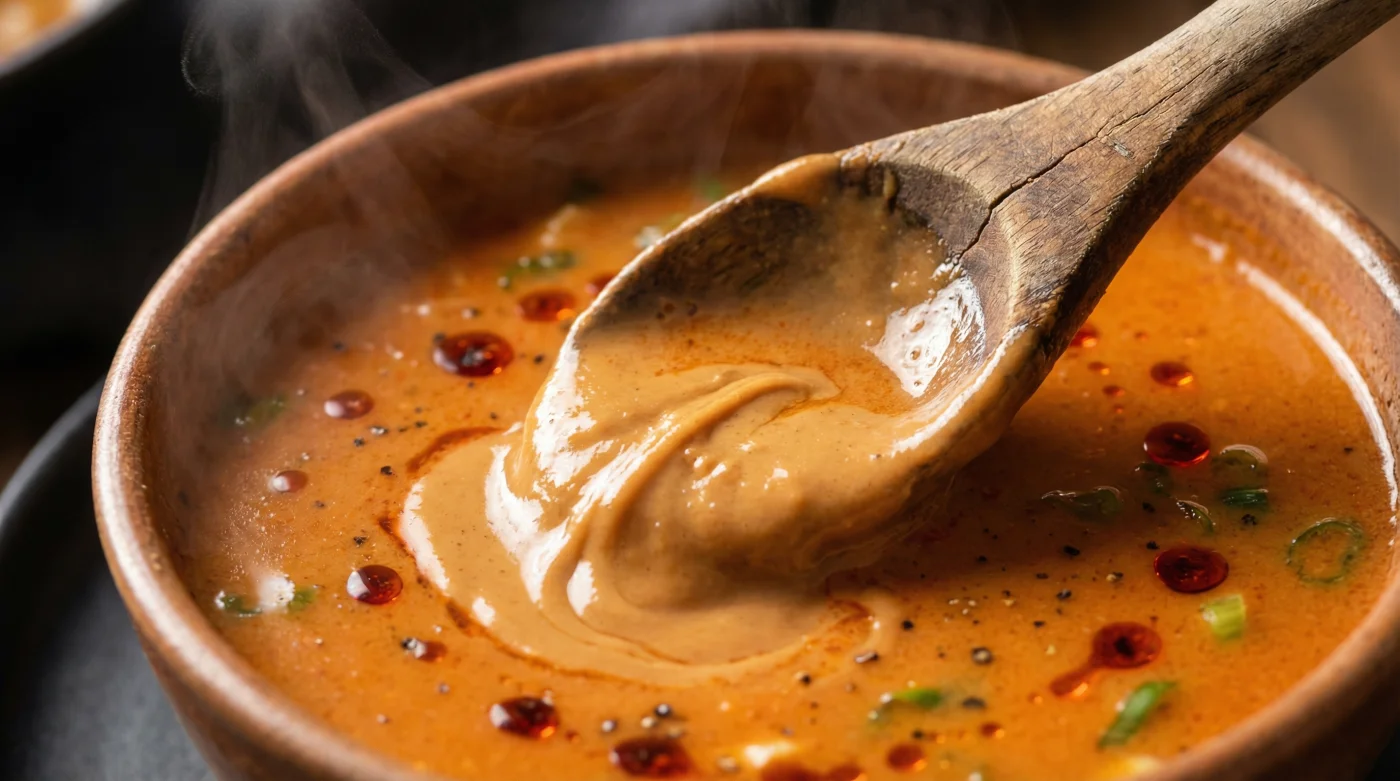
The wind off the lake is howling, dropping the temperature to a brittle minus-ten Celsius. You stand in your kitchen, shivering slightly, craving something heavy and restorative after walking two miles home from the transit station. The usual packet of instant noodles feels too thin, too fleeting to thaw the chill settling into your bones.
Most nights, you accept that a proper bowl of tonkotsu ramen requires a dozen hours of boiling pork bones into submission. You routinely settle for salty water laced with a foil packet of dehydrated seasoning, telling yourself that real culinary depth is reserved for busy, stainless-steel restaurant kitchens.
But sitting quietly in your pantry is a jar that holds an entirely different possibility. The standard creamy peanut butter you spread on morning toast is hiding a massive structural secret: when forced to mingle with hot, spicy chicken broth, it completely sheds its sweet, lunchbox reputation.
Whisking a spoonful of this dense paste into simmering liquid creates an immediate physical transformation. The broth turns pale and cloudy, carrying a velvety weight that perfectly mimics the complex thickness of slow-simmered animal collagen, resting in your bowl like a heavy, comforting sigh.
The Architecture of a Savoury Base
You are conditioned to view peanut butter as a one-dimensional spread. It belongs pressed between slices of bread or folded into cookies, firmly trapped in a sweet, nostalgic, and purely casual box.
To build a proper soup, you have to stop looking at the label and start looking at the mechanics. Emulsifying it into soup creates a remarkably rich savoury base, behaving exactly like a traditional thickener. The process is less like mixing a drink and more like coaxing cold butter into a delicate pan sauce—it demands a gentle, confident hand to bind the roasted legume fat with the water.
Elias Thorne, a 42-year-old prep cook working at a bustling noodle bar in Vancouver, understands this pantry magic intimately. Years ago, stuck in a cramped apartment during a relentless snowstorm, he wanted tonkotsu but only had cheap chicken bouillon and half a jar of smooth commercial peanut butter. By aggressively whisking the roasted paste with a spoonful of chili oil and hot broth, he forced the fats to suspend evenly. It became his quiet, off-menu trick for staff meals when the real pork bone stock had run dry.
Calibrating Your Bowl
The beauty of this technique lies in its incredible adaptability. Once you understand how to build the foundation, you can quickly tilt the flavour profile to match exactly what you have lingering in the fridge door.
For the Heat Seeker
If you crave aggressive warmth, lean heavily into fermented chili pastes or a robust chili crisp. The fiery red oil streaks beautifully across the opaque, nutty surface, cutting directly through the dense richness.
The suspended fat from the peanut butter actually acts like a protective blanket on your palate. Instead of stinging your tongue, the emulsion blankets the sharpest edges, carrying the deep, roasted chili heat warmly into your chest without overwhelming your senses.
For the Exhausted Traditionalist
Perhaps you just want the comfort of a classic ramen shop experience without leaving the house or chopping a mountain of vegetables. Simmer some crushed garlic and a heavy splash of dark soy sauce in the broth before you even think about adding your thickener.
The soy provides the necessary salt and umami, grounding the inherently sweet notes of the legume. It works quietly in the background, anchoring the roasted notes firmly into savoury territory so that nobody would ever guess the secret ingredient.
For the Plant-Based Pantry
This method works beautifully if you discard the chicken element entirely. Swap the poultry base for a steeped dried shiitake mushroom and kombu stock, bringing a deep, oceanic saltiness to the pot.
The earthy, dark tones of the mushroom marry seamlessly with the fat. The resulting vegan broth feels deceptively heavy and traditional, offering that coveted lip-smacking finish usually reserved entirely for animal-based preparations.
The Emulsion Technique
Dropping a cold, dense lump of peanut butter directly into a boiling pot of water is a recipe for instant disaster. It will seize immediately, breaking into unappetizing oily clumps that stubbornly refuse to integrate.
You must introduce the heat gradually. The secret is tempering the paste first, waking up the fats so they willingly accept the water, which requires only a few minutes of focused attention at the counter.
- Liquid Temperature: Keep your broth at roughly 85 Celsius—steaming hot, but avoiding an aggressive, rolling boil.
- Hardware: Use a small, heat-proof bowl and a fork or mini-whisk.
- Ratio: Measure out one generous tablespoon of smooth, commercial peanut butter for every two cups of liquid.
- The Slurry: Place the peanut butter in the bowl. Ladle in three tablespoons of the hot broth. Whisk vigorously until the mixture forms a smooth, entirely uniform liquid that resembles heavy cream.
- Integration: Pour the slurry back into the main pot, stirring continuously to lock the emulsion in place, then remove from heat immediately.
Rethinking the Routine
Mastering this simple emulsion does more than just fix a sudden craving on a freezing Tuesday night. The dense plant protein and healthy fats turn a light snack into a meal that physically sustains you, fundamentally shifting how you look at the humble, forgotten ingredients lining your cupboards.
There is a deep, quiet satisfaction in knowing how to manipulate basic pantry staples. Transforming a cheap box of broth into a bowl of complex warmth is about pulling luxury from nothing, proving that good cooking is simply about understanding how elements interact.
A truly great broth is not defined by the rarity of what you put in it, but by how you convince water and fat to hold hands.
| Key Component | Function | Added Value for You |
|---|---|---|
| Smooth Peanut Butter | Provides suspended fats and roasted protein. | Replaces 12 hours of boiling bones for an opaque, rich mouthfeel. |
| Chili Oil or Crisp | Cuts the richness with sharp acidity and heat. | Balances the heavy broth so you remain energized, not sluggish. |
| Tempering Slurry | Prevents the fats from separating or clumping. | Guarantees a perfectly smooth, professional texture every time. |
Frequently Asked Questions
Can I use crunchy peanut butter for this broth?
Crunchy peanut butter will disrupt the velvety texture, leaving distracting, soggy fragments in your bowl. Stick strictly to commercial smooth varieties for the best emulsion.Will natural peanut butter work the same way?
Natural peanut butter separates easily and lacks the stabilizers found in commercial brands. If you use it, you must whisk far more aggressively to prevent the oils from pooling at the surface.Does this make the soup taste like dessert?
Not at all. The salt from the soy sauce and the heat from the broth neutralize the sugar, pushing the roasted peanuts firmly into savoury territory.Can I store leftover peanut butter broth?
You can store it in the fridge for up to three days, but the emulsion will break as it cools. You will need to whisk it vigorously over gentle heat to bring it back together.What kind of noodles hold up best in this heavy broth?
Thick, wavy ramen noodles or sturdy udon are perfect. They offer enough surface area for the thick, opaque liquid to cling to, ensuring every bite is fully coated.