You walk through the front door, shaking the late February snow off your boots. The house is quiet, the radiators are gently hissing, and your stomach is demanding something warm, heavy, and immediate. You open the fridge. Staring back at you is a half-empty plastic tub of feta in brine and a pint of cherry tomatoes that have just begun to pucker.
The traditional rules of cooking dictate that comfort requires patience. You picture a heavy pot of crushed San Marzanos, bubbling sluggishly on the back burner for three hours, demanding constant stirring and a bay leaf. That illusion of time keeps most of us reaching for a mediocre jarred sauce on a Tuesday night.
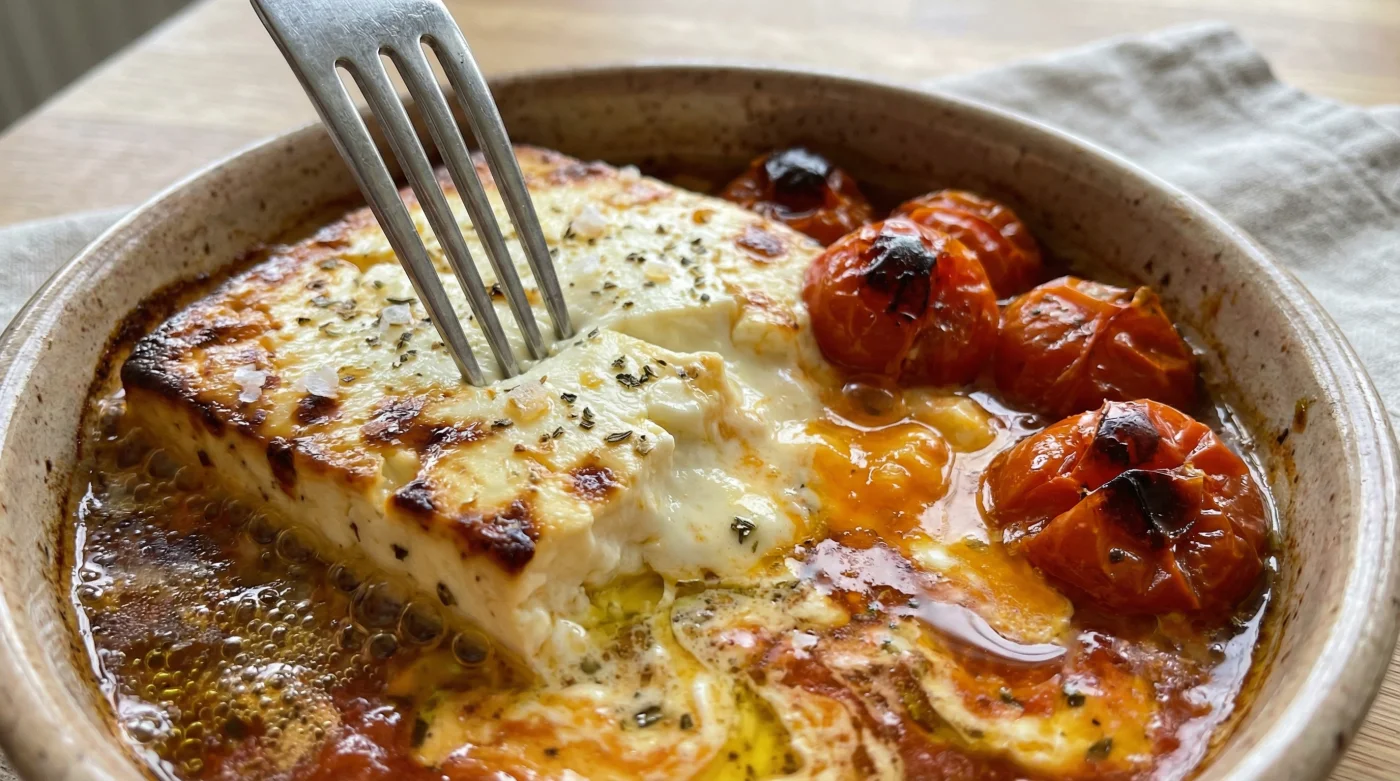
But the truth hiding in your crisper drawer is much more forgiving. When subjected to the aggressive heat of a roasting pan, feta stops being a crumbly salad garnish and undergoes a violent, beautiful transformation. The high heat melts feta into an instant creamy binder, fusing with bursting tomato juices to form a sauce that feels illegally rich.
This isn’t a compromise. It is a calculated reaction. By baking the cheese alongside the tomatoes, you are skipping the simmer entirely and building a flawless five-minute emulsion right in the pan.
Rethinking the Architecture of Sauce
We are taught that flavour is something you coax out slowly, like coaxing a fire from damp kindling. But an emulsion doesn’t care about time; it only cares about chemistry.
When you place a solid block of feta in the centre of an oven dish, you are creating an anchor point for the entire meal. The tomatoes blister and collapse in the oven, releasing acidic, watery juices. Normally, oil and tomato water fiercely repel each other. But feta acts as the mediator. Its proteins relax in the intense heat, turning the cheese into a warm paste that eagerly absorbs the surrounding olive oil and tomato liquid.
Instead of reducing a liquid over hours to thicken it, you are forcing three incompatible elements—fat, acid, and dairy—to bind together.
The result is a glossy, heavy cream that coats pasta like a velvet glove, created through sheer temperature and friction rather than hours of stirring.
Marie, a 34-year-old sous-chef at a bustling Halifax bistro, calls this her survival meal. After fourteen hours of managing delicate mother sauces on the line, the last thing she wants to do in her own kitchen is stand over a stove. She keeps a block of sheep’s milk feta in her fridge specifically for nights when she has less than twenty minutes to feed herself.
By throwing the pan into the oven while the pasta water comes to a rolling boil, she lets the heat do the heavy lifting, turning a handful of neglected pantry items into a dish that rivals her restaurant’s specials.
Tailoring the Melt
The beauty of this method lies in its adaptability. Once you understand the base emulsion, the roasting pan becomes a blank slate for whatever your kitchen holds.
For the Minimalist, keep the focus on the tension between the sharp dairy and sweet acid. Use a generous glug of peppery olive oil, whole garlic cloves smashed with the side of a knife, and a heavy pinch of coarse sea salt. The simplicity allows the feta’s brine to dictate the final profile.
For the Texturalist, remember that the sauce can handle heavy additions without breaking. Stir in toasted walnuts or pine nuts right as the pan comes out of the oven.
The sudden crunch against the cream provides a necessary friction that keeps the palate awake bite after bite, preventing the dish from becoming one-noted.
For the Heat Seeker, introduce dried chili flakes or a spoonful of Calabrian chili paste to the oil before baking. The fat carries the capsaicin through the feta as it melts.
This effectively mutes the aggressive burn into a slow, rolling warmth, like breathing through a pillow, allowing the heat to linger pleasantly without overpowering the tomatoes.
The Mechanics of the Bake
Execution requires very little of you, but the details matter. You are managing heat, not stirring a pot. Keep the tomatoes whole. If you cut them, they will dry out before the cheese has a chance to soften.
The goal is a sudden, bursting release of moisture right at the exact moment the dish is pulled from the oven heat.
- Temperature: 200°C (400°F). You need roasting heat, not baking heat, to blister the skins.
- The Vessel: A ceramic or glass baking dish. Metal heats too aggressively and may scorch the cheese before the tomatoes collapse.
- The Ratios: Two pints of cherry tomatoes to one standard 200-gram block of feta.
- The Finish: Reserve half a cup of starchy pasta water. You won’t need all of it, but it is your insurance policy.
Pull the dish from the oven when the tomatoes are split and the feta is deeply browned on the edges. Do not let it sit and cool.
Take a heavy wooden spoon and crush the tomatoes immediately, mashing them directly into the hot cheese. Stir vigorously. If the sauce feels too thick, splash in the hot pasta water a tablespoon at a time. Stop adding water the moment the cream should tremble, dropping off the spoon in a thick, unbroken ribbon.
Reclaiming the Evening
We often equate good food with sacrifice. We believe that if we didn’t spend hours prepping, chopping, and monitoring, the resulting meal is somehow less valid.
This baked feta technique dismantles that culinary guilt. It proves that a spectacular dinner doesn’t require surrendering your entire evening to the kitchen.
By understanding how ingredients react under pressure, you buy back your time. You get to eat a bowl of something hot and nourishing while sitting on the couch, rather than standing exhausted at the counter.
It is a quiet act of rebellion against the idea that home cooking has to be hard work. Sometimes, the most profound thing you can do at the end of a long day is let the oven do exactly what it was built to do.
“An emulsion is a truce between fat and water, negotiated by heat and enforced by protein.”
| Key Point | Detail | Added Value for the Reader |
|---|---|---|
| High-Heat Roasting | Baking at 200°C (400°F) rather than a slow simmer. | Reduces cooking time from three hours to twenty minutes while maximizing flavour. |
| Structural Anchor | Using a solid block of feta in the centre of the pan. | Prevents the dairy from splitting, guaranteeing a creamy sauce every time. |
| Starchy Binding | Splashing in reserved pasta water during the mash. | Provides manual control over the thickness and glossiness of the final emulsion. |
Frequently Asked Questions
Can I use crumbled feta instead of a block?
Crumbled feta is often coated in anti-caking agents that prevent it from melting smoothly. Stick to a solid block, preferably stored in brine, for the silkiest texture.Do I need to peel the cherry tomatoes?
Absolutely not. The skins blister in the oven heat, adding a delicate, smoky texture to the sauce that balances the heavy creaminess of the cheese.What if my sauce looks split or oily?
This happens if there isn’t enough moisture to bind with the fat. Simply add two tablespoons of hot, starchy pasta water and stir vigorously until the sauce comes back together.Can I make this ahead of time?
This emulsion is born from immediate heat. It is best enjoyed the moment it is mixed, though leftovers can be gently warmed in a pan with a splash of water the next day.Does this work with low-fat feta?
The binding process relies heavily on the fat content of the cheese to form the emulsion. Using a low-fat variant will result in a grainy, watery sauce rather than a thick cream.