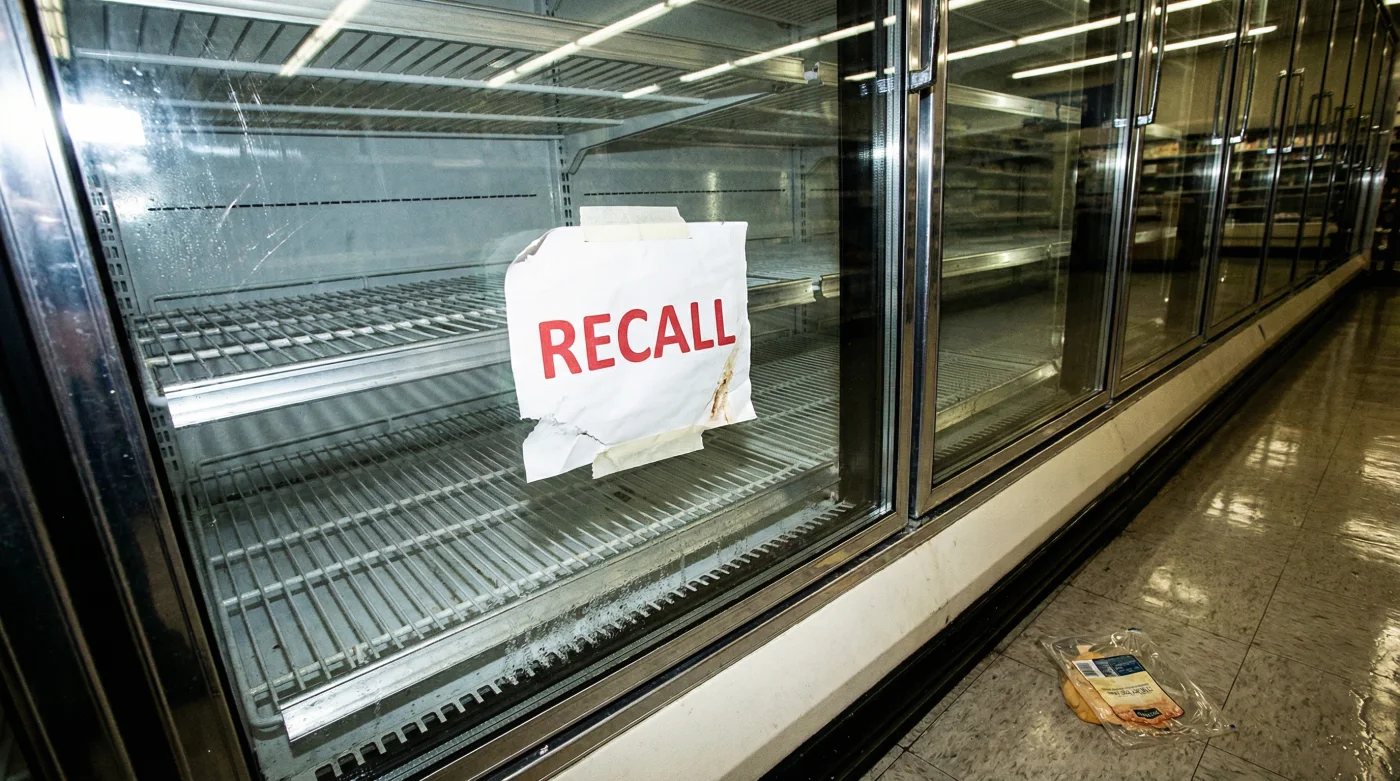
The hum of the dairy coolers. The soft yellow light reflecting off pristine, vacuum-sealed wedges. Sobeys cheese aisles usually offer a moment of quiet anticipation—a mental drafting of weekend charcuterie boards and melted evening comforts.
You walk past the deli section, expecting the familiar geometry of cheddars and bries. Instead, you find vast, echoing gaps. The refrigerated shelves, usually dense with dairy abundance, have been stripped bare overnight. It feels less like a grocery run and more like arriving after a storm has passed.
We instinctively trust the cold chain. When you pick up a block of sharp cheddar, you assume an invisible shield of safety has followed it from farm to grocer. But a sudden nationwide contamination alert shatters that quiet confidence, pulling popular staples from the shelves faster than a morning restock.
This isn’t just a minor administrative error. When a massive retailer sweeps their shelves clean before the doors even open, it signals a quiet crisis unfolding behind the swinging stockroom doors.
The Illusion of the Pristine Cooler
Think of the grocery store cooler not as a static vault, but as a living, breathing ecosystem. When a pathogen enters that environment, it doesn’t respectfully stay within its packaging. It behaves like ink dropped into a glass of water, threatening everything it touches.
Your assumption of safety is built on a flaw: believing that a printed label equals immunity. A severe recall flips that script. The sudden emptiness in the aisle is actually the system working exactly as it should—a massive, coordinated retraction to protect your dinner table. The mundane barcode suddenly becomes a forensic tracking tool.
The absence of your favourite brie or gouda isn’t an inconvenience; it is a profound act of preventative care. You are watching a real-time safety mechanism trigger, turning a potential disaster into a heavily managed pivot.
Consider the reality of Clara Thorne, a 42-year-old dairy safety auditor operating out of rural Ontario. Clara spends her mornings tracing the lineage of bacterial blooms through cold storage networks. She notes that when a single production vat in a central facility reads positive for Listeria or E. coli, the ripple effect hits national chains within hours. ‘People see empty shelves and panic,’ Clara often tells her team while reviewing the chilled manifests. ‘But an empty shelf is the safest thing in store. It means we caught the thread before it unravelled in someone’s home.’
How This Impacts Your Refrigerator Drawer
Not all recalls demand the same emotional response. You have to categorize the risk sitting in your own kitchen based on how you interact with the dairy products you buy.
For the Melt-Down Devotees
If you buy cheese strictly for grilled sandwiches or bubbling lasagnas, the heat of your oven provides a secondary barrier. Hard cheeses subjected to sustained temperatures above 74 Celsius generally neutralize surface threats. However, a severe contamination alert bypasses this comfort zone. You cannot cook away a systemic toxin or heavy bacterial load. Throwing away that half-used block of cheddar stings, but keeping it gambles with the unseen.
For the Raw Milk and Soft Rind Admirers
Soft, moisture-rich cheeses like camembert or fresh mozzarella act as highly hospitable environments for pathogens. If a soft cheese falls under the recall umbrella, it requires immediate disposal. There is no salvage operation here; you cannot trim the edges or rely on a hot skillet. The moisture allows contaminants to travel freely from the rind to the creamy centre.
For the Lunchbox Packers
Individual cheese strings and snack cubes often share processing equipment before being portioned. If the parent brand is flagged, those convenient little plastic wrappers offer zero protection. Your priority shifts from packing a quick snack to auditing the lot numbers stamped faintly on the plastic.
The Tactical Audit of Your Kitchen
Addressing a widespread contamination notice shouldn’t feel chaotic. You are simply performing a quiet, methodical purge of your cold storage.
Pull everything out of your cheese drawer and lay it on a clean counter. You need direct light to perform a quiet, methodical purge of your current stock, checking for microscopic batch codes.
Cross-reference the Sobeys recall list using the specific UPC and best-before dates. Discarding food based on brand name alone might lead to unnecessary waste, but matching the exact production run offers total certainty.
Sanitize the space left behind. A rogue bacteria doesn’t simply vanish when the cheese is tossed. Use friction and hot water.
- Identify the Code: Locate the 12-digit UPC and the stamped best-before date.
- The Double-Bag Protocol: Seal the affected cheese in a secondary plastic bag before placing it in the household bin, preventing cross-contamination with other organic waste.
- The Wipe Down: Use a solution of hot water and soap to scrub the refrigerator drawer, followed by a light spray of diluted bleach or household sanitizer. Dry completely.
- The Thermal Check: Verify your refrigerator is maintaining a temperature below 4 Celsius. While cold doesn’t kill pathogens, it severely limits their ability to multiply while you sort out the recall.
Finding Comfort in the Clearance
We often move through grocery aisles with our heads down, treating the supply chain as an infallible machine. It takes a jarring moment—a sudden void where the Sobeys cheese displays used to be—to remind us of the fragile, organic nature of our food.
Recognizing the speed of a nationwide recall shifts your perspective from frustration to quiet gratitude. It proves that behind the bright lights and printed flyers, there is a rigorous, hyper-vigilant network dedicated to your physical well-being.
The next time you see an empty cooler, do not see it as a failure of supply. Understand it as a physical manifestation of a promise being kept. You can return to your kitchen knowing that the empty space in your fridge is protecting the rhythm of your daily life.
Food safety is not measured by the abundance on the shelves, but by the speed at which compromised items vanish from them.
| Key Point | Detail | Added Value for the Reader |
|---|---|---|
| Identifying Recalls | Checking the 12-digit UPC code against national advisories. | Prevents unnecessary waste of safe food while guaranteeing hazards are removed. |
| Safe Disposal | Double-bagging recalled dairy before throwing it in the outdoor bin. | Protects local wildlife and household pets from accidental ingestion of pathogens. |
| Refrigerator Hygiene | Washing the dairy drawer with soapy, hot water. | Eliminates cross-contamination, ensuring your next grocery haul remains safe. |
Recall Clarifications
Should I return recalled cheese to Sobeys or just throw it away?
Most stores offer a full refund if you bring back the packaging or your receipt. If transporting it feels risky, taking a photo of the UPC code and safely disposing of the product at home is usually enough to claim your refund at the customer service desk.Can I cook the cheese to kill the bacteria?
While high heat does neutralize some surface bacteria, severe recalls often involve systemic toxins or heavy bacterial loads that survive the cooking process. It is never worth gambling your health for a grilled cheese sandwich.What if I already ate some of the recalled cheese?
Pause and take a breath. Monitor yourself for symptoms like fever, stomach cramps, or nausea over the next few days. If you feel unwell, contact a healthcare provider immediately and mention the specific recall notice.Are other dairy products in my fridge at risk?
Pathogens like Listeria can spread in cold, damp environments. If the recalled cheese was touching other unwrapped food, or resting openly in a drawer, it is safest to wash that drawer thoroughly and discard any loose items it contacted.Why do these recalls seem to happen so suddenly?
The suddenness is actually a sign of a highly responsive safety net. Testing at production facilities is constant, and the moment a red flag appears, national retailers pull the stock immediately to prevent the product from reaching your home.