You peel back the plastic film on a tub of supermarket hummus. It sits there, a dense, cold disk of beige paste straight from the fridge. You dip a pita chip into it, and the chip snaps. This is the standard weekday experience—functional, hurried, and faintly disappointing.
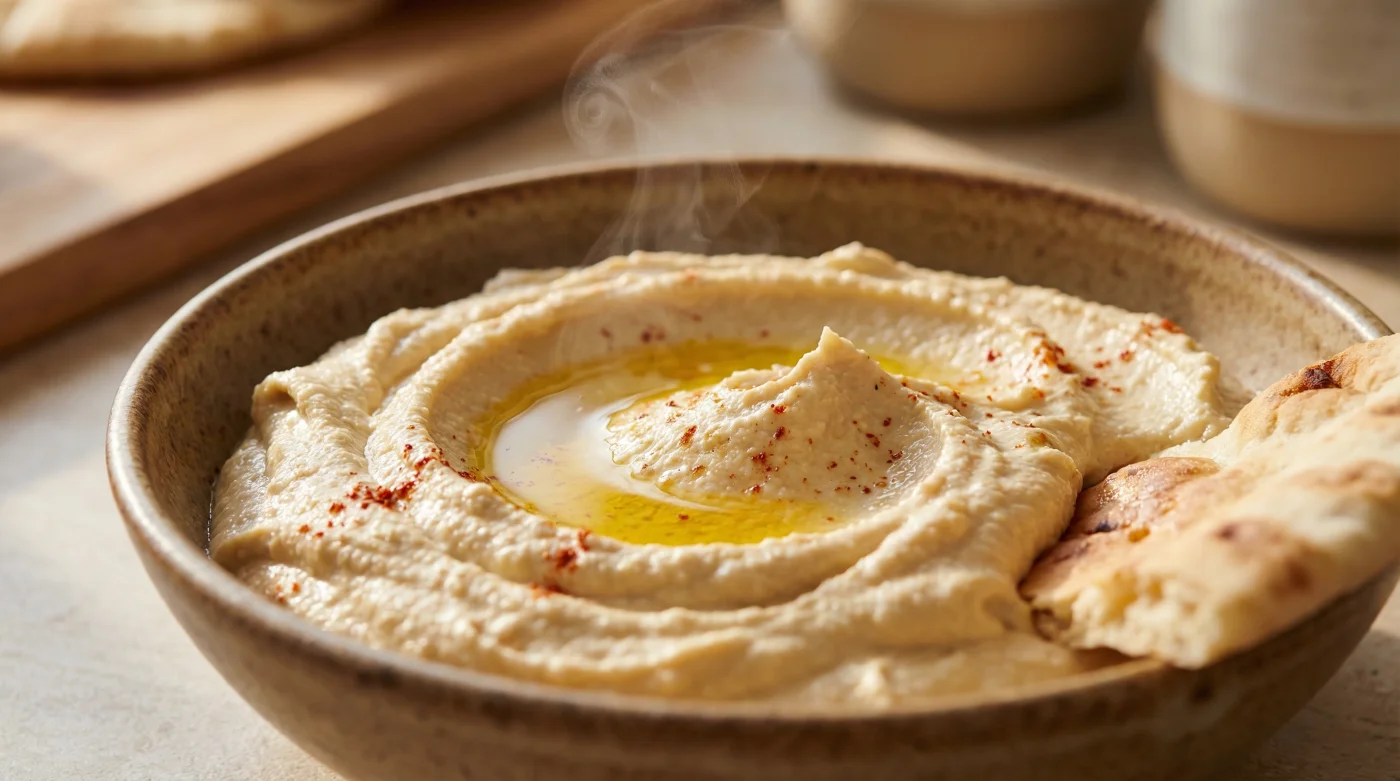
But imagine the bowls served in a bustling Mediterranean neighbourhood spot on Danforth Avenue or in Montreal’s Mile End. The plates arrive radiating a gentle heat, the dip swirling like soft-serve ice cream, pooling with green olive oil. The cream should tremble when the plate hits the table.
The gap between that stiff plastic tub and the trembling restaurant plate feels impossibly wide. You might assume the secret lies in soaking dried chickpeas for three days or sourcing an obscure, imported sesame paste.
The reality is far less complicated. The difference isn’t always the ingredient list; it’s the temperature and the hydration. You already have exactly what you need to force a professional pivot right on your stovetop.
Waking Up the Emulsion
To understand why this works, you have to look at what happens to tahini and olive oil when they sit at 4 degrees Celsius in the dairy aisle. The fats seize. The starches in the chickpeas lock up. The entire mixture goes into a state of hibernation, turning a delicate emulsion into a block of cement.
Serving pre-packaged dips cold is the biggest culinary disservice we accept without question. When you introduce hot water to that seized paste, you aren’t just thinning it out. You are actively re-emulsifying the fat and the liquid. The heat melts the coagulated sesame oils, while the fresh water gives those relaxed fats something to bind with, trapping air in the process.
Suddenly, a mundane flaw—that stiff, dry texture—becomes your greatest advantage. Because the manufacturer already did the hard work of puréeing the legumes to a microscopic grit, you only have to play the role of the conductor. You are simply waking the ingredients up.
Consider Elias, a 52-year-old chef running a quiet Levantine kitchen in Ottawa. Years ago, while catering a summer wedding where his commercial blender failed, he had to rely on a massive pail of commercial hummus. Instead of serving it cold, he dumped the stiff paste into a stand mixer, slowly pouring in water just off the boil. “Hummus is like bread,” he told his frantic line cooks. “It needs to breathe, and it needs warmth to speak.” That five-minute emergency hack yielded the airiest, most praised mezze platter of his career, proving that texture dictates flavour.
Tailoring the Revival
Not all supermarket tubs are created equal, and how you apply this two-ingredient modification depends on your evening plans. The method shifts slightly based on what you need from your plate.
For the Purist
If you bought a plain, high-quality brand with minimal preservatives, your goal is strict restoration. You want to highlight the nutty sesame. Move the hummus to a food processor and add your hot water one tablespoon at a time. Finish by swooping it into a shallow bowl and aggressively pooling a peppery, grassy olive oil in the grooves. Let the oil shine against the warm background.
For the Entertainer
When hosting friends and relying on a cheaper grocery brand, you need to build depth. The hot water trick creates the perfect airy base to hold heavy, textural garnishes. Because the dip is now warm, it will harmonize beautifully with a topping of toasted pine nuts, smoked paprika, and crispy spiced lamb or roasted mushrooms.
For the Meal-Prepper
You might be packing lunches for the week. You can absolutely batch this process. Re-emulsify the entire tub on a Sunday evening. While it will cool back down in your fridge, the new airy structure remains intact. It won’t turn back into cement, ensuring your Wednesday afternoon snack feels remarkably fresh.
The Five-Minute Kitchen Fix
Executing this requires a gentle touch and observation. Do not dump a cup of boiling water into a bowl and stir wildly. The emulsion will shatter, leaving you with a soupy, separated mess.
You want to coax the starches back to life with intention. Treat the process with the same quiet attention you would give to whisking a delicate vinaigrette or pouring pour-over coffee, folding rather than drowning the paste.
- The Transfer: Scoop the cold hummus into a food processor or a wide mixing bowl. Break it apart slightly with a spatula.
- The Heat: Boil water, then let it sit for two minutes. You want it hot (around 80 degrees Celsius), but not a rolling boil that will cook the garlic notes into bitterness.
- The Drip: Turn the machine on, or begin whisking vigorously, adding the hot water one tablespoon at a time.
- The Swell: Watch the colour. As the emulsion catches, the paste will lighten by two shades, swelling into a pale, trembling cloud.
The Tactical Toolkit
- Ratio: 2 to 3 tablespoons of hot water per standard 250-gram tub.
- Temperature: 80°C (175°F) water.
- Tool: A mini food processor yields the silkiest results, but a sturdy wire whisk works perfectly well.
- Finishing: Always serve on a flat, warmed plate, never a deep bowl, to maximize the surface area for olive oil.
Reclaiming the Mundane
We spend so much of our time trying to optimize our lives, searching for the fastest route to a good dinner. Often, we accept a subpar experience because we believe convenience demands a compromise in quality. Snapping a pita chip off a cold block of chickpea paste is the physical manifestation of that compromise.
But spending three extra minutes to boil water and whisk life back into a packaged food changes the dynamic. It is a small act of culinary dignity. You stop acting as a passive consumer of a plastic tub and start cooking again, even if you are just adjusting the hydration.
This single technique proves that luxury isn’t always about spending twenty dollars on an artisanal jar of dip. It is about understanding the materials in front of you. When you know how fats and heat interact, you control the outcome.
The next time you grab that familiar beige tub from the deli aisle, you will look at it differently. It is no longer a finished, slightly disappointing product. It is a foundation, just waiting for a little heat to reach its full potential.
“Great food isn’t just about what you buy; it’s about the temperature at which you choose to serve it.”
| Key Point | Detail | Added Value for the Reader |
|---|---|---|
| The Temperature Pivot | Mixing 80°C water into cold supermarket hummus. | Instantly restores a silky, airy texture that mimics a fresh restaurant purée. |
| Fat Emulsification | Hot water melts seized tahini and olive oil. | Prevents the dip from tasting heavy or chalky on the palate. |
| Batch Restoration | The newly whipped structure survives refrigeration. | Saves time while upgrading the quality of weekly meal-prep lunches. |
Frequently Asked Questions
Can I use cold water to thin out the hummus instead?
No, cold water will simply water down the mixture. You need heat to melt the seized fats in the tahini and re-establish the emulsion.Will adding water make the hummus spoil faster?
Introducing fresh water can slightly reduce the shelf life. It is best to consume the revived batch within three to four days.Do I need a food processor for this to work?
A food processor provides the most dramatic, airy results, but a heavy bowl and a vigorous hand with a wire whisk will also accomplish the task.Can I add olive oil instead of hot water?
Adding only olive oil to cold hummus will make it greasy and heavy. Use hot water to create the airy structure, then pool high-quality olive oil on top for flavour.Does this work with flavoured grocery store hummus?
Yes. Roasted red pepper or garlic variations respond perfectly to the hot water technique, though plain variations give you the cleanest canvas for custom garnishes.