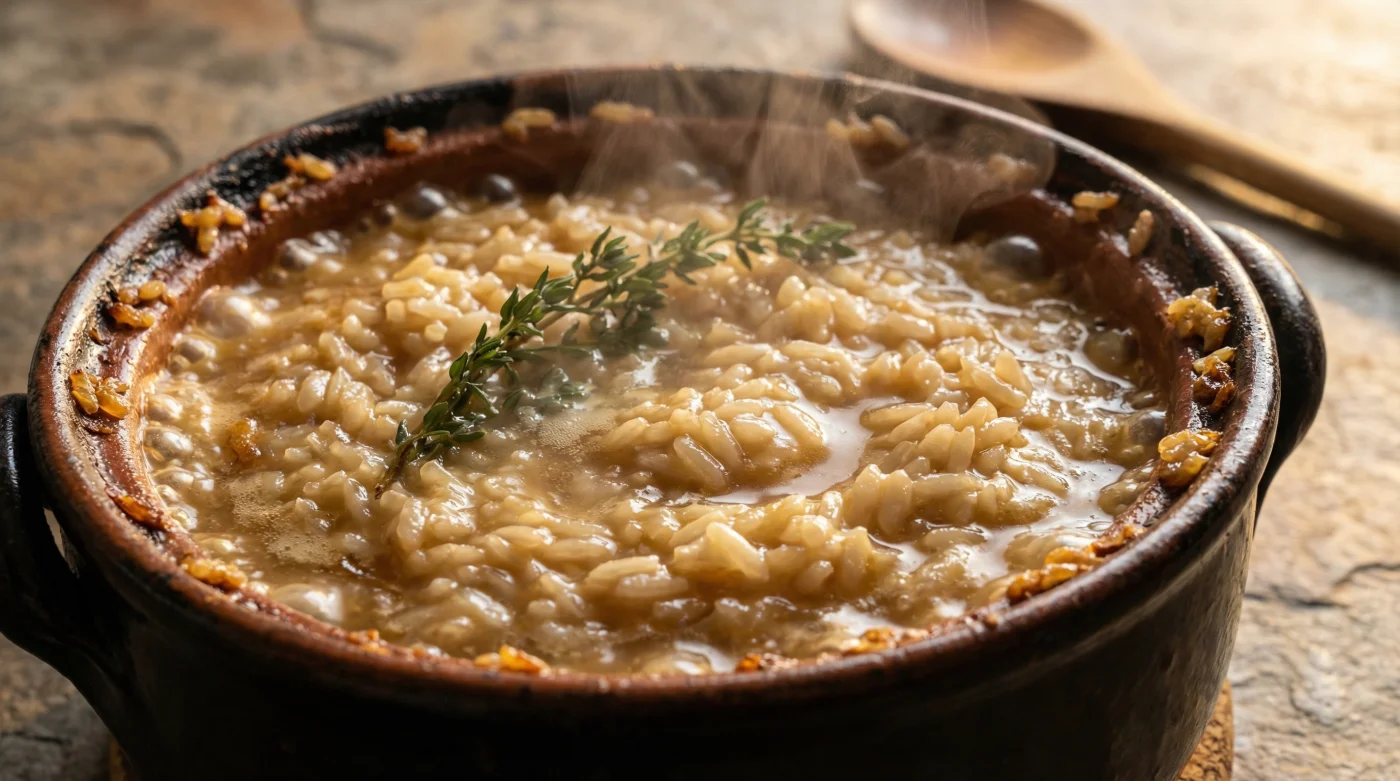
The chill in the air on a damp October evening in Halifax makes you crave warmth, specifically the heavy, starch-rich comfort of a proper risotto. You picture the steam rising from a wide copper pan, the wooden spoon scraping the bottom, the forty-five-minute commitment of standing over the stove like a medieval apothecary. It is a ritual we have been taught to revere, but it is also a quiet form of culinary martyrdom that steals your time.
There is a distinct, heavy fatigue in your stirring arm by minute twenty. We are told this constant friction is the only way to coax the starch from the grain, to force Arborio rice into yielding that velvety, trembling suspension of liquid and fat. It demands your absolute attention, keeping you tethered to the burner while the rest of your evening slips away unnoticed.
But what if the grain does not actually need you? What if the friction is less about manual labour and more about thermal dynamics? When you trade the stovetop for the enclosed, radiating heat of a 190-degree Celsius oven, the entire paradigm shifts, allowing you to step away without guilt.
The heavy cast iron traps the moisture, creating a pressurised environment that does the work for you. The liquid boils from within, forcing the grains to agitate themselves against the walls of the pot, releasing their creamy potential in complete, undisturbed darkness.
The Myth of the Wooden Spoon
The central metaphor here is the washing machine versus the hand-cranked washboard. Stirring a pot on an open flame applies uneven heat; the bottom scorches while the top cools. You stir to prevent sticking and to distribute the temperature, not necessarily because the Arborio grain stubbornly holds onto its starch.
Think of the oven as a precise, three-dimensional thermal bath. When you lock the rice and broth in a heavy pot, the liquid boils uniformly. This creates a rolling convection, gently tumbling the grains. They bump, they rub, and they release that precious amylopectin into the broth without a single stroke of your spoon.
It is a profound shift from micromanaging your food to designing an environment where the ingredients perform on their own. You provide the exact liquid-to-rice ratio, seal the environment, and walk away with confidence.
Clara, a 52-year-old catering chef working out of a bustling commercial kitchen in Vancouver, abandoned the stovetop method a decade ago. Tasked with serving two hundred plates of wild mushroom risotto simultaneously, she realised that hand-stirring was a logistical impossibility. By calculating the exact hydration capacity of Arborio—precisely four parts liquid to one part rice—she moved the entire operation into the ovens. Her secret was trusting math, letting the intense, even heat do the mechanical work while she focused on the finishing garnishes.
Adjustment Layers: Customizing the Bake
Not every pot of rice serves the same purpose or feeds the same crowd. Once you understand the baseline ratio, you can manipulate the environment to suit the mood of the evening or the contents of your crisper drawer.
For the purist seeking a classic Milanese profile, the focus must remain tightly on the broth. You will want a gelatin-rich homemade chicken stock, perhaps spiked with a pinch of saffron bloomed in warm water. Fat content is entirely non-negotiable here; a generous knob of cold butter and freshly grated Parmigiano-Reggiano stirred vigorously at the very end creates that final, trembling emulsion.
For the busy parent running on a frantic weekday schedule, the priority is hands-off speed and hidden nutritional density. You can fold finely grated zucchini or puréed butternut squash directly into the initial baking liquid before sealing the pot. The oven breaks down the vegetables while the rice cooks, melting them seamlessly into the background sauce.
For the plant-based cook, the challenge is mimicking the richness of dairy butter. A spoonful of white miso paste dissolved into a deep, earthy mushroom broth brings the necessary savoury backbone. Finishing with thick cashew cream or a drizzle of robust, peppery olive oil replaces the traditional animal fat, ensuring the final texture remains thick and coating.
Mindful Application: The Tactical Toolkit
The execution of this technique relies on exact precision upfront. You are building a closed system, which means measuring by eye is no longer an option.
Start by preheating your oven to 190 degrees Celsius. You need a heavy, oven-safe pot with a tight-fitting lid—an enamelled Dutch oven is the ideal vessel for heat retention. Measure ingredients strictly by volume, specifically one cup of Arborio rice to exactly four cups of hot broth.
The physical assembly requires only ten minutes of active stovetop engagement before the oven takes over. Follow these exact pacing steps to establish the thermal base:
- Sweat a finely diced onion in butter or olive oil on the stovetop until translucent and fragrant.
- Toast the Arborio rice in the fat for two minutes until the edges turn slightly translucent, sealing the grain.
- Pour in a splash of dry white wine, letting it sizzle and evaporate completely to leave behind a bright, structural acidity.
- Add the four cups of heated broth, bring the entire pot to a rapid simmer, cover tightly, and transfer immediately to the middle rack of the oven.
Bake entirely undisturbed for exactly forty-five minutes. Do not open the oven door to check on the progress. The steam pressure must hold to ensure the grains hydrate evenly.
When you remove the pot, the rice will appear slightly soupy and loose. This is the exact moment to perform the mantecatura—the final, vigorous stirring off the heat. Whip in cold butter and cheese, and watch the loose broth instantly thicken into a luxurious, creamy suspension.
The Bigger Picture
The value of this technique extends far beyond a bowl of perfectly cooked grains. It removes unnecessary domestic friction, ending the belief that a dish must exact a physical toll to be considered authentic or worthwhile.
Leaving the pot alone in the dark forces you to let go of control. You are trading anxiety for quiet confidence, allowing the natural properties of the food to emerge on their own schedule. It restores your evening freedom, allowing you to sit down, pour a glass of wine, and actually converse with the people in your home.
The cream should tremble on the plate, breathing through a pillow of steam, a reflection of proper thermal science rather than exhausted muscles. By understanding the environment the grain requires, you finally master the dish, rather than letting the dish master you.
"The oven does not just cook the rice; it creates an internal weather system that coaxes the starch out with perfect, passive aggression."
| Key Point | Detail | Added Value for the Reader |
|---|---|---|
| Temperature | 190°C consistent ambient heat | Eliminates hot spots and scorching on the bottom of the pan. |
| Liquid Ratio | Exact 1:4 (Rice to Broth) | Removes the guesswork of ladling liquid. |
| Agitation | Thermal convection currents | Frees up active stovetop stirring time. |
Can I use standard white rice instead of Arborio?
Standard long-grain or basmati lacks the high amylopectin starch required for the creamy texture. Stick to Arborio or Carnaroli.
Does the broth need to be hot before going into the oven?
Yes. Starting with simmering broth ensures the pot maintains an immediate boil in the oven, keeping the cooking time accurate.
What if my Dutch oven lid is not perfectly tight?
Place a sheet of parchment paper or heavy foil over the pot before pressing the lid down to trap escaping steam.
Can I add delicate proteins like shrimp to the bake?
Add delicate proteins or green vegetables only during the final vigorous stirring phase so they do not overcook in the intense heat.
How do I fix the texture if it seems too thick after stirring?
Keep a small cup of hot water or extra stock nearby. Splash in a few tablespoons while stirring until the rice relaxes into a soft, flowing consistency.