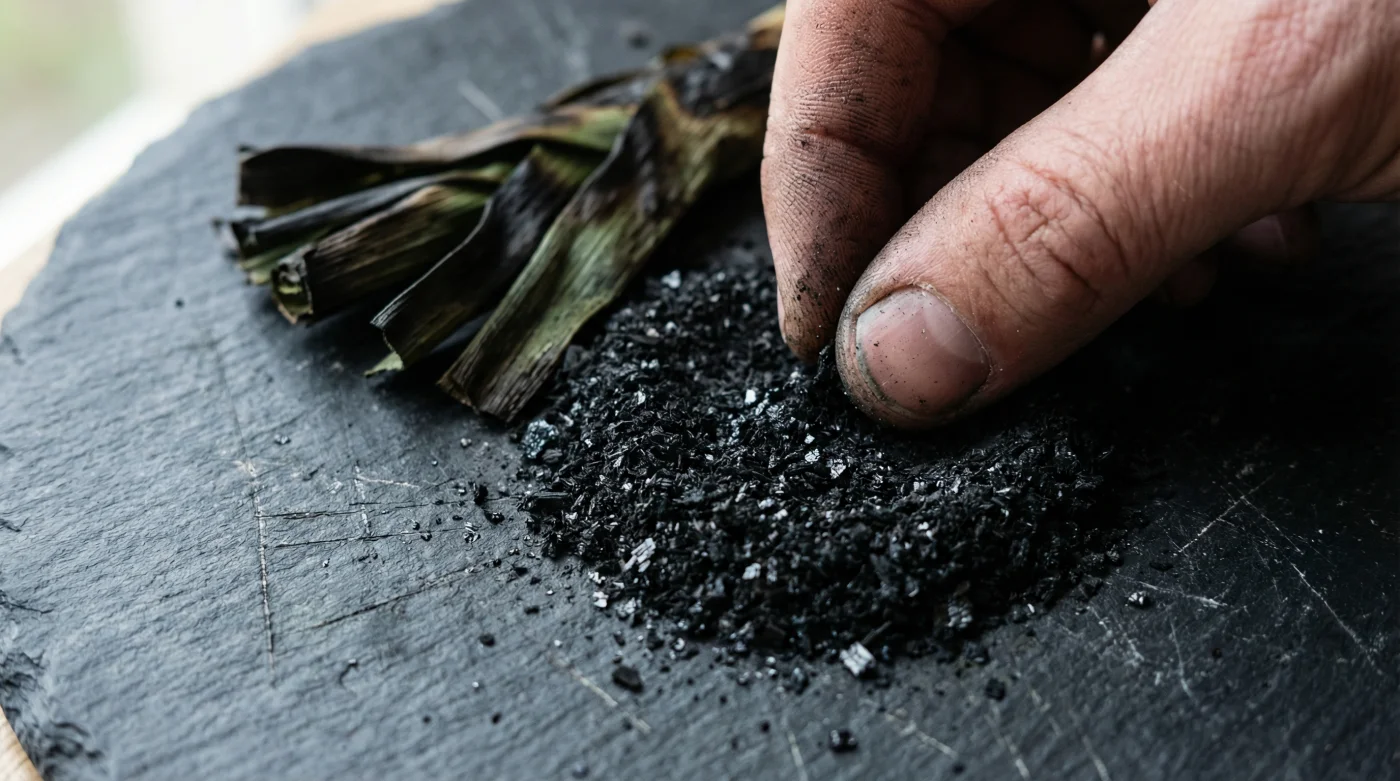
You stand at the cutting board, knife in hand, staring down a bundle of muddy leeks. The white bases yield easily, slicing into delicate pale rings, leaving a neat pile of tender allium ready for the sauté pan. But then you hit the dark green tops. They are stiff, squeaky against the blade, and stubbornly fibrous. They hold stubborn grit in their deep V-shaped crevices, refusing to cooperate with your knife or your dinner plans, exuding a sharp, grassy sap that coats your fingers.
You have been taught that these tough upper fans are merely a bitter afterthought, perhaps useful for a simmering stock pot if you happen to have a chicken carcass waiting, but otherwise entirely unpalatable. They are the inevitable casualty of vegetable prep, destined to be swept into the municipal compost bin week after week.
Instead of throwing them away, imagine laying them across a dry metal baking sheet and shoving them into a blistering oven until they literally turn to dust. It sounds like a ruined dinner, a culinary disaster resulting from sheer negligence and a forgotten timer. But reducing these rigid, deeply green tops to a brittle, pitch-black husk is exactly how professional kitchens produce one of their most closely guarded, high-end finishing touches.
This is the quiet, highly effective alchemy of vegetable ash. Pushing past simple caramelization directly into total carbonization strips away the water weight and the tough cellulose structure. What remains behind is an intensely concentrated, mineral-rich powder that tastes aggressively of woodsmoke, roasted earth, and deep allium resonance, requiring zero specialized equipment.
The Anatomy of Intentional Destruction
We spend our culinary lives hovering near the stove, terrified of burning our food. Blackened edges usually signal failure, a momentary distraction that left a pan unattended for three minutes too long, resulting in a bitter meal that tastes only of regret. We are conditioned by years of cooking shows to hastily scrape off the char and try to salvage the pale interior. But intentional, controlled carbonization plays by an entirely different set of rules.
Think of it like pruning a heavy branch to save the tree. When you bake leek greens at an aggressively high temperature until no green remains, you are systematically breaking down the plant’s rigid cellular walls. The harsh, bitter compounds vaporize in the oven’s dry heat, and what remains is pure, elemental carbon laced with the leek’s natural sugars and salts. It becomes a porous, microscopic sponge that carries an incredibly complex, lingering smokiness.
Consider Mathieu, a 38-year-old sous-chef running a quiet, 20-seat bistro in rural Quebec. Every Thursday morning, he takes the discarded leek greens from the week’s prep, meticulously washes away the stubborn dirt hidden in the folds, and leaves them to dehydrate near the warm pilot lights. By late afternoon, they are roasted black in the fading heat of a wood-fired oven and pounded rhythmically in a heavy granite mortar. He dusts this jet-black powder over raw oysters and whipped butter, turning a mundane kitchen byproduct into a visual and textural masterpiece that guests consistently mistake for expensive, imported truffle dust or rare volcanic salt.
You do not need a commercial kitchen setup to replicate Mathieu’s precise results at home. You only need the willingness to let something burn completely, bypassing the ingrained instinct to rescue it, and the patience to watch a fibrous weed transform into a luxury seasoning.
Integrating the Ash into Your Routine
Once you have pulverized your charred leek tops into a fine, charcoal-like dust, you suddenly possess a jarringly versatile ingredient. It behaves dynamically, acting as a spice, a dramatic visual garnish, and a textural contrast all at once, adapting to how you choose to incorporate it into your daily meals.
For the pragmatic cook, mixing the pure leek ash with an equal volume of coarse sea salt creates an immediate depth that requires almost zero daily effort. Keep it in a small glass jar by the stove. A quick pinch of this smoky salt pressed into the skin of a baked potato or scattered over morning eggs introduces an immediate, fireside complexity without requiring you to ignite a charcoal grill in the dead of a Canadian winter.
For the ambitious host, whipping room-temperature butter until it becomes completely pale and aerated, then folding in a teaspoon of the black powder, changes the dynamic of a dinner party. The butter turns a striking, marbled slate grey, resembling polished stone. Spread it thickly over warm, crusty sourdough, and the visual shock alone will command the table’s attention long before they taste the rich, charred onion flavour melting across their palate.
For the weekend baker, folding a tablespoon into your next batch of focaccia dough provides a subtle, savoury backbone that elevates the entire loaf. The fine ash integrates seamlessly into the hydration process, slightly darkening the crumb to an earthy grey while lending a background note of smoke that pairs beautifully with harsh, sharp cheeses and acidic, sun-dried tomatoes.
Mindful Application: The Tactical Toolkit
The physical line between a brilliant culinary ash and a foul-tasting, ruined mistake comes down entirely to absolute dryness. Any residual moisture left on the leaves before roasting will cause the leeks to steam in their own juices, turning into a slimy, bitter mess rather than a brittle, shatter-ready shell.
Achieving an absolute lack of moisture ensures the fibrous greens transform cleanly into your new favourite pantry staple. Start by slicing the dark greens horizontally to expose the tight inner layers, where fine wind-blown grit tends to hide persistently. Wash them thoroughly in a basin of cold water, swirling to dislodge any soil.
- Dry the greens ruthlessly using a clean linen towel, pressing out every drop of surface moisture.
- Arrange them in a single, uncrowded layer on a dry, ungreased baking sheet.
- Roast at 230°C (450°F) for 35 to 45 minutes, turning once, until they are entirely black and crumble easily between your fingers.
- Allow the charred strips to cool completely on the tray; they will snap like fragile glass.
- Pulverize them in a clean spice grinder or crush them to a fine powder using a heavy stone mortar.
If the powder feels slightly tacky or clumps together after grinding, simply spread it back onto the ungreased baking sheet and leave it in a cooling oven for twenty minutes to draw out the last trace of ambient humidity. Store it immediately in a completely airtight glass jar, away from direct sunlight.
Kept away from moisture, this homemade vegetable ash will retain its sharp, smoky bite and pitch-black colour for up to six months, sitting quietly in your cupboard ready to be deployed over a plate of roasted carrots or a steaming bowl of potato soup at a moment’s notice.
A Shift in Provisioning
When you scrape that fine black powder into a jar for the first time, you are doing much more than just saving a few cents on your weekly grocery bill. You are physically changing your relationship with the raw materials you bring into your home, shifting your perspective from consumption to genuine utilization.
The concept of waste is often just a failure of imagination in the modern kitchen. We are heavily conditioned to see only the prime cuts as valuable—the tender white stalks, the flawless inner leaves, the center-cut steaks. But true culinary efficiency, the exact kind that forms the financial and creative backbone of the most respected kitchens in the world, finds its ultimate strength in the discarded margins.
The next time you find yourself staring at a pile of tough vegetable trimmings, pause for just a second before reaching for the compost bin. The most striking, complex, and memorable flavours in your cooking repertoire are rarely found in an expensive, imported bottle sitting on a supermarket shelf. They are hiding right there on your cutting board, simply waiting for you to see their true potential and apply a little destructive heat.
Professional cooking is not about having access to better ingredients; it is about having the patience to extract maximum value from the ingredients everyone else throws away.
| Key Point | Detail | Added Value for the Reader |
|---|---|---|
| Absolute Dryness | Moisture causes steaming instead of charring. | Prevents a bitter, slimy result and ensures a fine powder. |
| High Heat Threshold | Roasting at 230°C (450°F) bypasses simple browning. | Creates a pure, carbonized ash with deep mineral flavours. |
| Airtight Storage | Ash is highly porous and will absorb ambient humidity. | Extends shelf life up to six months, keeping the powder brittle. |
Frequently Asked Questions
Is eating burnt food dangerous for my health?
While burning meats can create harmful compounds, carbonizing pure vegetable matter (cellulose) creates a sterile, mineral-rich ash similar to activated charcoal, which is safely consumed in small, seasoning-sized quantities.
Can I use the white parts of the leek for this?
You can, but it defeats the purpose of zero-waste cooking. The white bases contain more water and sugar, making them better suited for eating, while the fibrous greens are perfectly built for carbonization.
Will this make my smoke alarm go off?
If your leeks are completely dry and free of oil, they will smoke surprisingly little. However, opening a window or running your range hood on high is always a smart precaution during high-heat roasting.
Can I use a blender instead of a spice grinder?
A standard blender often struggles with small quantities of dry, weightless material. A dedicated coffee/spice grinder or a traditional mortar and pestle will yield a much finer, silkier powder.
Does this technique work with other vegetable scraps?
Yes. Onion skins, garlic husks, and even tough kale stems can be calcined into vegetable ash, though leek greens provide the most robust, satisfying onion-smoke flavour.