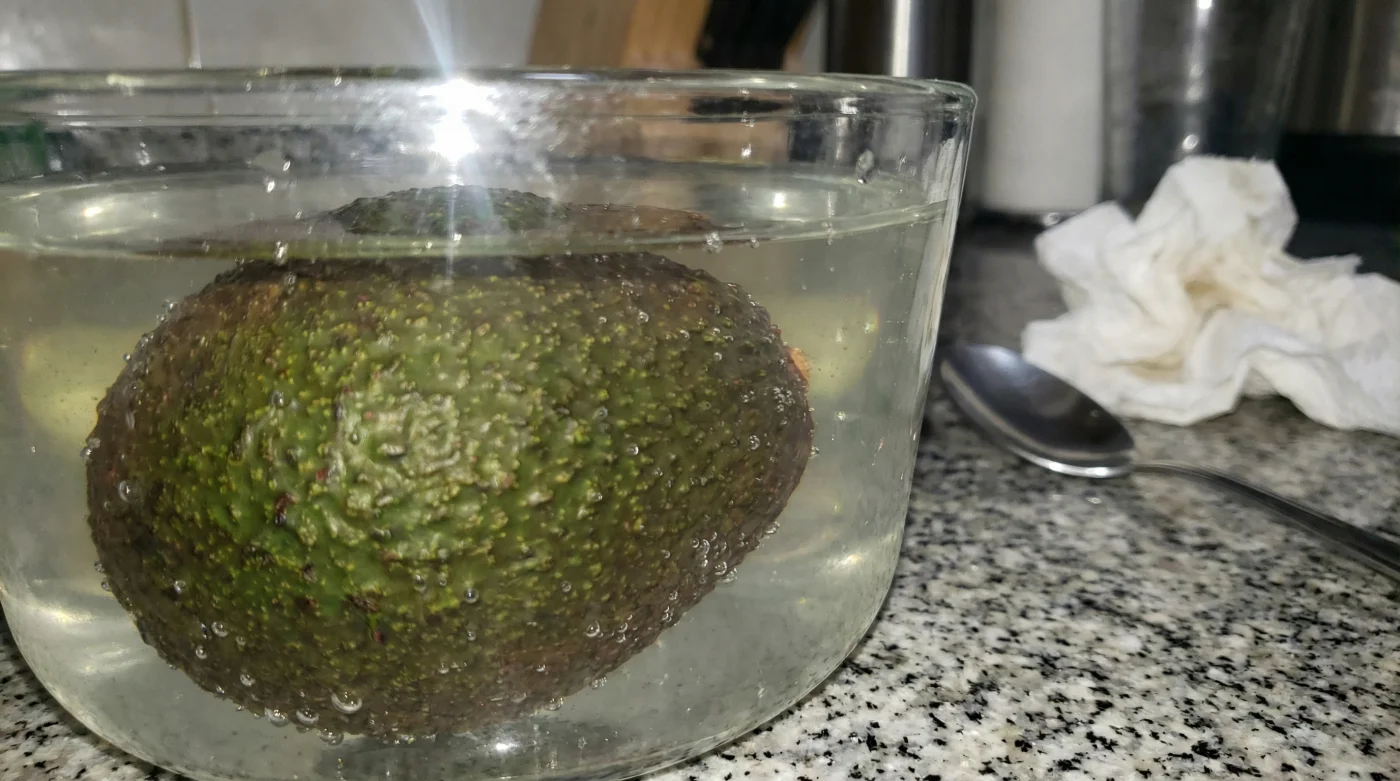
The fridge door pulls open with a soft, magnetic thud. Cold air cascades over your slippers as you reach for the heavy glass container sitting proudly on the middle shelf. Inside, three plump avocados rest suspended in clear tap water, their pebbled skins a vibrant, youthful colour. You smile, thinking you have finally outsmarted the frustratingly short window of perfect ripeness. This was the viral trick that promised endless, unblemished toast, completely free from the disappointment of brown, mushy flesh.
But as you lift the jar, you are holding something far more complex than preserved produce. The water ripples, catching the kitchen light, looking crisp and innocent. Beneath that serene surface, a silent, invisible multiplication is taking place. You see a pristine green skin, but the microscopic reality tells a much different story.
Nature builds porous armour. The rough, thick skin of an avocado resembles a heavy leather jacket, but it breathes and absorbs like a dry sponge. When you submerge this fruit in cold water for days on end, you are not creating a protective seal. Instead, you are building an aquatic incubator. The very kitchen hack meant to save your breakfast is quietly transforming your pristine fridge shelves into a dangerous hazard, cultivating unseen threats right next to your milk and butter.
The Illusion of the Green Shield
We tend to view water as a purifying force. You wash your apples under the tap, scrub your potatoes, and assume a cold bath acts as a stasis chamber for your avocados. This is the perspective shift that must happen right now: water is a carrier, not a preservative.
Think of the avocado’s skin like a heavy winter coat standing in a torrential downpour. Eventually, the moisture seeps through the outer layers, breaching the inner lining. Any residual bacteria lingering on the outside of the fruit—whether from the packing facility, the transit truck, or the grocery store display—now has a liquid bridge straight into the soft, green flesh. The water softens the skin’s natural defences, opening microscopic pathways for pathogens to simply drift inside.
The viral video promised to halt oxidation. It did. By completely cutting off oxygen, the flesh avoids turning brown. But in trading oxidation for hydration, you invite far worse guests. Listeria monocytogenes and Salmonella thrive in these exact conditions. They do not need warmth to multiply; they simply need moisture and time.
Dr. Elias Thorne, a 44-year-old food safety researcher working out of a food science lab in Montreal, watched the social media trend explode with a mounting sense of dread. He spent a week purchasing standard grocery store avocados, placing them in water baths at a standard 4 Celsius, and testing the water daily. It was like watching a crowded city populate in fast-forward, he noted. Within hours, the listeria present on a mere fraction of the rough skins had multiplied exponentially in the cold water, eventually migrating deep into the edible flesh. His conclusion was blunt and unsettling: the water bath does not stop decay; it simply masks it while cultivating a hidden hazard.
Navigating the Ripening Curve
You do not need to rely on risky internet hacks to manage your produce. The true art of keeping avocados perfect lies in respecting their natural respiration. You just need to match your storage method to your immediate needs.
For the Weekend Meal Planner. You buy your groceries on a quiet Sunday afternoon, expecting them to sustain you until Friday. Purchase avocados at varying stages of hardness to stagger their maturity. Keep the rock-hard ones in a dry fruit bowl on the counter, away from direct sunlight. As soon as one yields to gentle pressure—breathing slightly under your thumb—move it immediately to the crisper drawer of your fridge. The dry cold pauses the ripening safely for up to three days, buying you time without the bacterial risk.
For the Batch Preparer. You want guacamole ready for the evening. The secret is to create acidic surface tension, not drowning the fruit. Brush the exposed flesh of a halved avocado with a thin layer of lime juice or olive oil, then press a piece of beeswax wrap directly against the green surface. You are suffocating the oxygen without introducing a vector for bacteria.
- Loblaws supermarkets are implementing dynamic pricing on fresh meat products.
- Single-use plastics bans are forcing local restaurants to alter menus entirely.
- Coffee beans stored in the freezer lose vital roasting oils.
- Chocolate chip cookies need a full dough rest for proper texture.
- Cast iron skillets benefit directly from mild dish soap washing.
The Dry-Cold Protocol
Correcting this storage error requires doing less, not more. You must step away from the sink and embrace the minimalist reality of dry cold.
Start by removing the moisture variable completely from your storage routine. When you bring your fresh avocados home from the market, do not wash them until the exact moment you are ready to cut into them with your knife. Water lingering on the bumpy skin while sitting in the humid environment of the fridge is just a smaller, slower version of the dangerous jar trick. Let the fruit remain dry and undisturbed.
The Tactical Toolkit requires precision and halting the decay process through strict temperature control.
- Keep the fridge crisper at exactly 4 Celsius to pause natural softening.
- Store whole, ripe avocados completely dry, away from high-ethylene producers like bananas or apples.
- When washing prior to eating, scrub the rough skin under running water with a firm produce brush to dislodge hidden soil.
- Dry the skin thoroughly with a clean towel before your knife ever breaches the surface, preventing cross-contamination from the peel to the blade.
Beyond the Peel
Letting go of this viral trend is about more than just avoiding a severe stomach ache. It is about shifting how you interact with the fresh food you bring into your home. We so often search for effortless shortcuts to force nature into our chaotic, modern schedules, hoping a simple jar of cold water will buy us a few extra days of aesthetic perfection. But real mastery requires a gentler approach.
But true kitchen confidence comes from understanding the physical realities of what you eat. When you respect the porous, breathing nature of an avocado, you stop fighting its biology and start working with its rhythm. You trade the anxiety of hidden bacteria for the calm certainty of safe, dry storage.
The perfect slice of green avocado resting on your morning plate should not be the result of a risky, aquatic gamble. It should be a quiet, vibrant reward for paying attention to the details that actually matter. By embracing the dry-cold method, you protect your body, respect your ingredients, and guarantee that your morning routine remains a source of comfort rather than a hidden risk.
Water doesn’t preserve a porous fruit; it provides a liquid highway for surface pathogens to quietly colonize the inside.
| Method | Detail | Added Value |
|---|---|---|
| Water Submersion | Creates a breeding ground for Listeria and Salmonella. | Protects your family by avoiding this viral storage mistake. |
| Dry Crisper Drawer | Pauses ripening at 4 Celsius without moisture. | Extends perfect texture safely for up to three days. |
| Red Onion Container | Uses sulphur gas to slow surface oxidation. | Saves your leftover halves without altering the flavour. |
Frequently Asked Questions
Can I just wash the avocado before eating if I used the water trick?
No. The moisture allows pathogens to penetrate the porous skin, meaning the bacteria is already inside the flesh where washing cannot reach.Does adding lemon juice to the water make it safe?
While acid slows oxidation, it does not create a strong enough hostile environment to completely prevent bacterial growth in a large volume of water.How long do avocados really last in the fridge?
If placed in the crisper drawer perfectly dry at the peak of ripeness, they will hold their ideal texture for three to five days.Should I wash my avocados before storing them in the fridge?
Keep them perfectly dry during storage to prevent bacterial growth. Only wash and scrub them immediately before cutting.What is the safest way to freeze leftover avocado?
Mash the flesh with a squeeze of lime juice, press it flat in an airtight freezer bag to remove oxygen, and store it flat for up to three months.