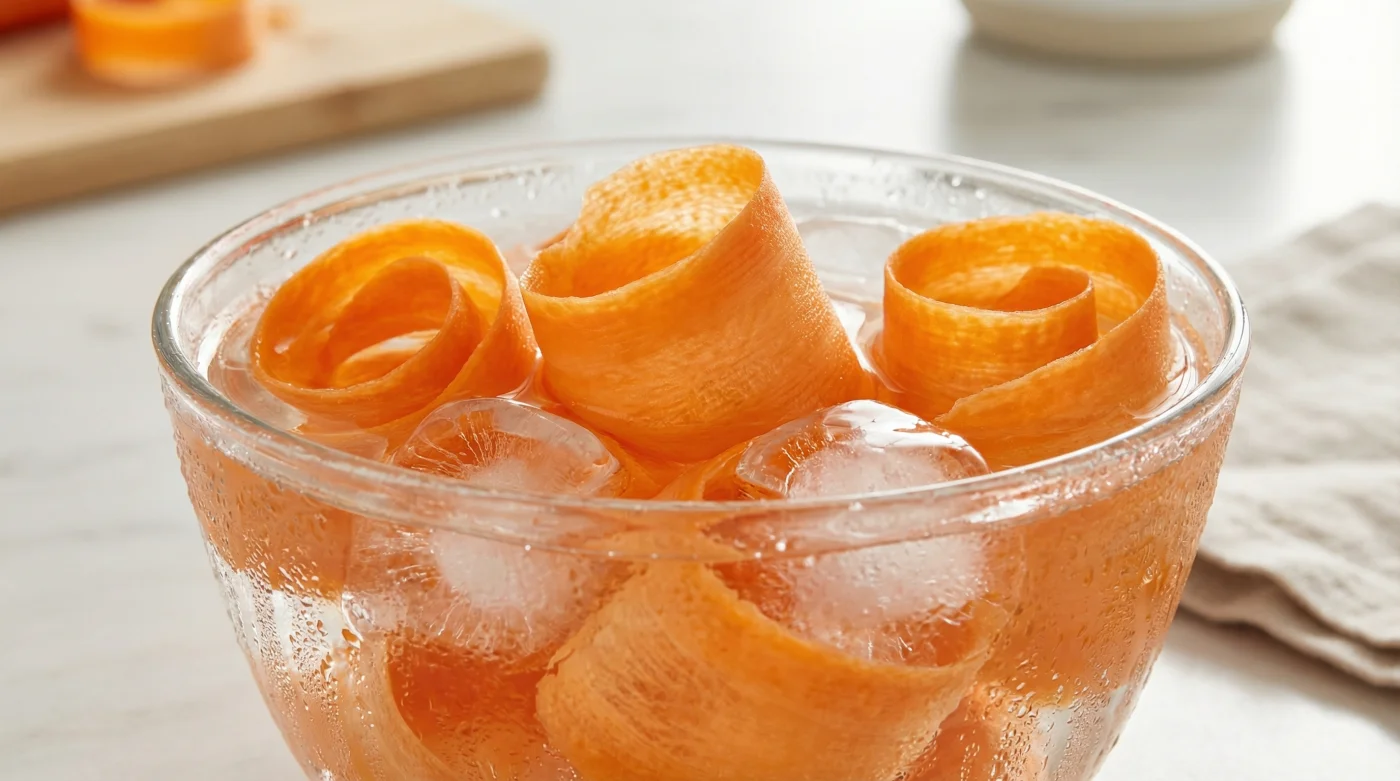
You stand at the kitchen island, pulling a vegetable peeler down the length of a firm, cold carrot. It yields a thin, bright orange strip that immediately droops over your fingers, limper than a wet shoelace. You pile these ribbons onto a salad, where they lay flat, sticking to the greens in a soggy, uninspired heap. This is the disappointing reality most home cooks accept when working with shaved root vegetables.
But picture a plate sliding across the pass at an upscale Toronto bistro. The very same vegetable sits atop a piece of glazed sablefish, not as a flat ribbon, but as a defiant, architectural spiral. It holds its shape perfectly, offering height, visual tension, and a sense of expensive intention.
The difference between your limp shaving and that gravity-defying garnish has nothing to do with elite knife skills or obscure kitchen tools. It relies on a violent, invisible reaction happening right beneath the surface of the vegetable. You are about to use ice to force a physical transformation.
The Science of the Cellular Shock
When you shave a carrot, you sever its rigid cellular structure, draining the internal tension that keeps the vegetable stiff. The ribbon simply surrenders to gravity. But introducing those delicate shavings to a calculated cellular shock reverses this surrender entirely.
This isn’t about simply washing your produce before dinner. When submerged in water hovering near zero degrees Celsius, the damaged cells on the cut surface swell rapidly with water. At the exact same time, the unbroken internal fibers contract aggressively from the punishing cold.
Think of it like pulling a piece of hot steel from a forge and plunging it into cold oil. The drastic temperature shift forces the vegetable fibers to violently curl back on themselves, hardening into a rigid, structural spring that refuses to lay flat.
Consider Elias Thorne, a 34-year-old sous chef working the line in a demanding Montreal dining room. Every afternoon, hours before service, he stands over a deep metal bin filled with crushed ice and water. He drops hundreds of pale yellow squash and bright orange carrot ribbons into the freezing bath. He doesn’t touch them. He just watches as the water turns the fragile shavings into a chaotic, beautiful nest of edible wire. Elias knows that plating isn’t just about flavour; it’s about building vertical space. Those ice-shocked ribbons allow him to cast shadows on the plate, making a simple ten-dollar dish look like a forty-dollar culinary event.
Architectural Variations for Your Table
Not every meal requires the same level of structural drama. Depending on what you are serving, you can manipulate the curling process to suit the exact visual mood of the plate.
For the Quiet Minimalist: If you are plating a single piece of seared trout or a delicate scallop, you want a singular, elegant accent rather than a messy pile. Before dropping the ribbon into the water, wrap it gently around a wooden chopstick and hold it in the ice bath for thirty seconds. It will set into a perfect, controlled coil that stands upright on the rim of the plate, looking almost like a delicate spring.
For the Rustic Family Style: When piling a massive salad into a serving bowl for a weekend dinner, volume is your absolute best ally. Shave the carrots on a severe bias to create varying widths, then toss them all into the ice bath completely loose. They will tangle into a chaotic, beautiful thicket that sits proudly on top of the greens, refusing to be crushed under the weight of a heavy vinaigrette.
For the Banquet Host: If you are preparing hors d’oeuvres for a large gathering, you need garnishes that hold up over time. Slice your ribbons slightly thicker, ensuring there is a bit more core attached. The resulting curl will be less tight but dramatically stronger. These sturdy vegetable arches will hold their shape on a tray of canapés for hours without drooping or wilting.
Mindful Application: The Tactical Toolkit
Mastering this technique requires practically zero physical effort, but it demands absolute respect for water temperature. Tap water will not work, even in the dead of winter. The water must be aggressively cold to force the fibers to contract properly.
Fill a metal mixing bowl halfway with solid ice cubes, then add just enough cold water to allow the ribbons to swim freely. Prepare your station before you make a single cut.
- The Cut: Use a sharp Y-peeler or a mandoline set to its thinnest guard. Pull it quickly down the length of the carrot with even pressure. Uneven pressure creates weak points where the spiral will naturally fold or break.
- The Drop: Submerge the ribbons immediately into the freezing bath. Do not let them sit on the cutting board, as they will begin to oxidize and lose their residual moisture to the dry air of your kitchen.
- The Wait: Leave them submerged for exactly five minutes. The water should be hovering right at 0 degrees Celsius. You will visibly see the edges begin to curl inward.
- The Extraction: Lift the curled ribbons out with tongs and place them on a clean, dry kitchen towel. They must be completely dry before they touch your plate, otherwise they will weep cold water onto your warm sauce.
Once dried, these structural spirals will hold their shape at room temperature for several hours. They are completely transformed, entirely unyielding, and ready for precise placement with a steady pair of tweezers.
The Art of Deliberate Details
There is a quiet, steadying satisfaction in manipulating something as utterly ordinary as a root vegetable into an object of structural beauty. It completely shifts how you view the raw, untouched materials waiting in your crisper drawer.
A carrot is no longer just a sweet, crunchy afterthought to be boiled or roasted into mushy submission. It suddenly becomes an architectural building block. By simply applying the shock of cold water, you take back control from the chaotic droop of freshly shaved produce.
Plating with this level of intention naturally slows you down. It turns the frantic, messy end of cooking into a moment of calm, deliberate artistry. You aren’t just making a quick dinner anymore; you are building something that commands absolute attention before a single bite is even taken.
The beauty of professional plating doesn’t come from expensive ingredients, it comes from demanding that everyday vegetables behave in extraordinary ways.
| Key Point | Detail | Added Value for the Reader |
|---|---|---|
| The Ice Bath | Water must remain exactly at 0 degrees Celsius with solid ice present. | Ensures maximum cellular shock, guaranteeing the ribbons will not droop on a warm plate. |
| The Ribbon Cut | Shave with consistent, downward pressure using a sharp Y-peeler. | Prevents weak spots in the vegetable fiber, allowing for a perfectly smooth, unbroken spiral. |
| The Drying Phase | Ribbons must rest on a dry kitchen towel before plating. | Keeps excess water off your plate, preserving the integrity of your carefully crafted sauces and dressings. |
Frequently Asked Questions
Can I use this technique on vegetables other than carrots? Yes. Firm, starchy vegetables like daikon radish, yellow squash, and raw beets respond beautifully to the same cellular shock.
Why are my ribbons breaking when they curl? You are likely applying uneven pressure with your peeler, or the vegetable is too old and lacks the initial moisture needed to swell in the ice bath.
How far in advance can I prepare these garnishes? You can shock them up to four hours before serving. Keep them in a sealed container lined with a dry paper towel in the refrigerator.
Do I need to salt the ice water? No. Salting the water will actually draw moisture out of the vegetable cells through osmosis, causing them to go limp rather than crisping up.
Will the icy water remove the flavour of the carrot? Because the soak only lasts five minutes, the structural integrity changes dramatically without leaching the natural sugars into the water.