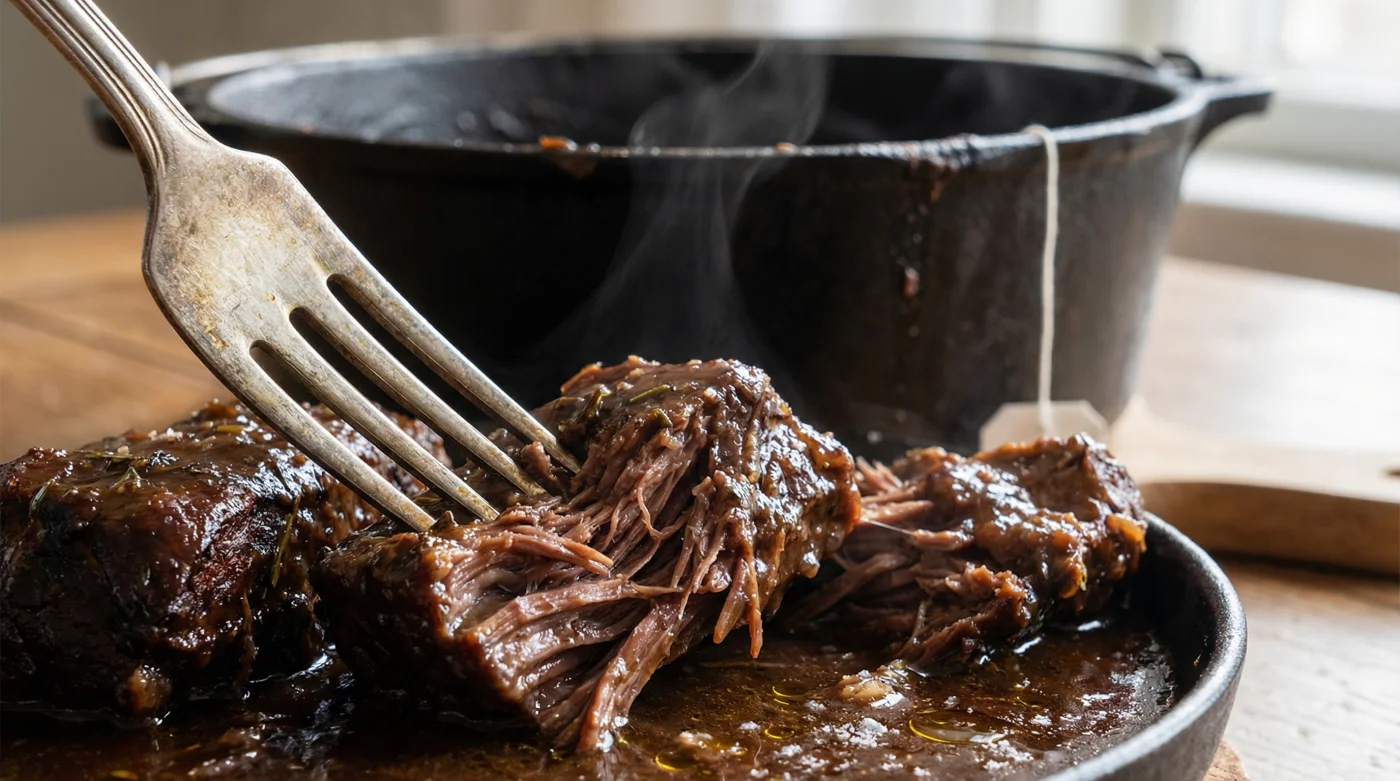
The kitchen windows are fogged at the edges, fighting back a bitter frost. You have spent the better part of your afternoon browning cubes of chuck roast, scraping the fond from the bottom of your heavy cast-iron pot, and carefully building a broth meant to warm you from the inside out. The smells of sweating carrots, onions, and garlic suggest a looming comfort, a quiet reward for a slow Sunday spent over the stove.
Then you take that first, highly anticipated bite, only to find the meat fighting back. It chews like heavy rubber, entirely resistant to the hours of low heat you just provided. The frustration is immediate; you did everything right, followed the classical rules of braising, yet the primary ingredient remains stubbornly unyielding.
Standard culinary advice tells you to simply keep the pot on the burner. We are taught to assume that time is the only variable that matters when coaxing an inexpensive cut into submission, leaving the pot bubbling until the meat finally surrenders.
But relying purely on the clock is a gamble that often results in dry, chalky meat. You need a structural intervention, a method of actively dismantling the rigid biology of the muscle rather than just waiting for heat to wear it out.
The Anatomy of the Perfect Simmer
Treating tough beef requires a slight shift in how you view the cooking process. Think of the connective tissue in stewing meat like a tightly wound knot of dense ropes. Boiling that knot violently, or even simmering it endlessly, sometimes just causes those ropes to seize up and shrink, squeezing out all the internal moisture.
To genuinely soften the texture, you have to dissolve the glue holding that knot together. This requires a targeted chemical reaction, an acidic or enzymatic trigger that works in tandem with your gentle heat. Wine is the traditional answer, offering both acidity and a complex structure, but there is a far more effective, economical tool sitting entirely ignored in your pantry.
We are talking about plain, paper-wrapped black tea bags. The cheapest orange pekoe you can find on the supermarket shelf possesses an extraordinary ability to tenderize meat quickly and efficiently.
The secret lies entirely in the tannins. These natural astringent compounds actively dismantle the complex protein structures in tough beef cuts. While red wine contains a moderate amount of tannins derived from grape skins, a simple bag of black tea delivers them in a highly concentrated, rapidly available dose.
A Lesson from the Halifax Line
Elias, a 58-year-old diner cook working the early prep shift in a snowy Halifax neighbourhood, understands this chemistry intimately. Every Tuesday, he prepares massive forty-litre batches of beef stew, utilizing utility-grade cuts that arrive pale and stiff off the delivery truck. He cannot afford to let a pot occupy a burner for eight hours, nor can he rely on expensive bottles of Burgundy to soften the chew.
His grandmother taught him to drop three bags of generic black tea into the simmering stock. It was a pragmatic depression-era trick, designed to make the cheapest cuts of cattle palatable for a large family. Today, Elias uses it to reliably produce a melt-in-your-mouth stew in exactly ninety minutes, preserving his profit margins and his sanity while the dining room fills up with hungry locals.
Tailoring the Tannin Effect
Integrating black tea into your cooking routine requires a little finesse. It is not about turning your dinner into a morning beverage; it is about using an ingredient purely for its functional mechanics.
For the classical purist, the tea bag should act quietly in the background. You want the structural breakdown without the bitter aftertaste. Dropping a single tea bag into a standard Dutch oven recipe replaces the need for heavy, tannin-rich wines, allowing the pure, savoury notes of the beef and root vegetables to remain front and centre. It mimics the mouthfeel of a complex braise, leaving the liquid glossy and rich.
For the rushed weeknight cook utilizing a pressure cooker, the tea bag becomes a rapid accelerator. Pressure cooking already drastically reduces cooking time, but it can sometimes leave leaner chunks of stew meat tasting somewhat boiled and stringy. The rapid infusion of tannins under pressure forces the muscle fibers to relax instantly.
Then there is the alcohol-free application. Many families avoid cooking with wine, yet struggle to replicate the depth and tenderness that a good burgundy provides to a boeuf bourguignon. A strong steep of black tea, perhaps paired with a splash of apple cider vinegar for acidity, perfectly recreates that deep, complex architecture.
The Steep and Simmer Protocol
Executing this technique requires mindfulness regarding time and temperature. You are treating the broth as a temporary extraction environment, not a permanent home for the tea.
If you leave the bags in the liquid for the entire cooking process, the heat will eventually extract the harsh, bitter compounds found deep within the tea leaves. This ruins the savoury balance, turning a rich gravy into an unpleasantly sharp liquid. The goal is a controlled release.
- Use plain black tea. Avoid Earl Grey, chai, or anything flavoured with oils, bergamot, or spices.
- The ratio is one standard tea bag per litre of simmering liquid.
- Maintain your stew at a gentle, rolling simmer, ideally around 85 degrees Celsius. Never let it reach a violent boil.
- Submerge the tea bags completely, tying the strings to the handle of your pot for easy retrieval.
- Remove the bags promptly after 30 minutes. Squeeze them gently against the side of the pot with a wooden spoon before discarding.
Your tactical toolkit here is minimal: a kitchen timer, a reliable heavy-bottomed pot, and the discipline to pull the tea before it over-steeps. The meat will continue to soften long after the bags are in the compost bin, coasting on the chemical reaction initiated during that first half hour.
Rethinking Culinary Frustrations
Mastering this simple pantry addition changes the way you approach the meat counter. You no longer have to avoid the oddly shaped, inexpensive packages of cubed beef, fearing the inevitable jaw workout at the dinner table. You can purchase economically, knowing you have the precise tool required to transform a stubborn ingredient into something luxurious.
Cooking should not feel like an arm wrestle with your ingredients. It is about understanding their nature and quietly coaxing them toward their best possible state. When you stop fighting the tough fibers and start dismantling them thoughtfully, a slow-cooked meal stops being a gamble and becomes a reliable, comforting certainty. You reclaim your time, your budget, and the quiet satisfaction of a perfectly executed bowl of stew on a cold winter night.
The sign of a truly skilled cook is not the ability to buy the most expensive ingredients, but the knowledge required to make the humblest ingredients taste expensive.
| Key Point | Detail | Added Value for the Reader |
|---|---|---|
| Tannin Tenderization | Natural astringent compounds break down tight muscle proteins. | Saves hours of cooking time without sacrificing meat texture. |
| Flavour Neutrality | Removing the bags after 30 minutes prevents bitterness. | Allows the savoury, traditional beef stew taste to shine untouched. |
| Alcohol-Free Depth | Provides the structural benefits of red wine using cheap pantry staples. | Lowers grocery bills while catering to dietary or lifestyle preferences. |
Frequently Asked Questions
Will my stew taste like a cup of morning tea?
Not at all. As long as you use plain black tea and remove the bags after 30 minutes, the flavour is entirely masked by the beef, onions, and broth.Can I use green tea or herbal infusions instead?
No. Green teas lack the heavy concentration of tannins required for tenderizing, and herbal teas often introduce unwanted floral or minty flavours.Do I need to change my heat settings when using this method?
Keep your stove exactly where you normally would for a braise. A gentle, lazy simmer around 85 Celsius is perfect.Does this work for slow cookers?
Yes. Drop the tea bags in when you first turn the machine on, but make sure you retrieve them after the first hour of heating to avoid over-extraction.Is loose leaf tea acceptable if I do not have bags?
Absolutely. Just place a tablespoon of plain black loose leaf tea into a metal infuser ball or a tied piece of cheesecloth so you can easily pull it out.